
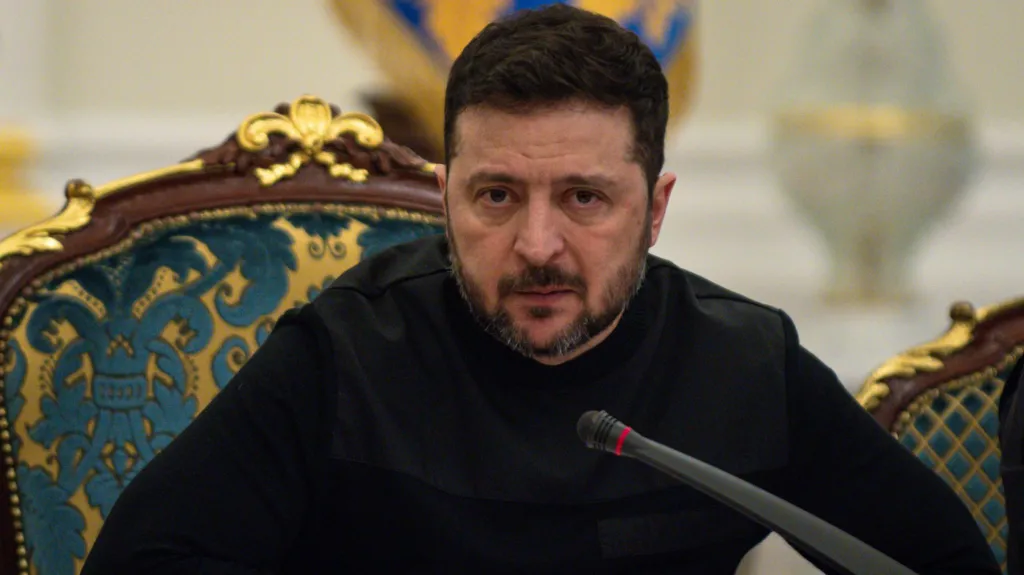
The United States has requested Ukraine’s assistance in helping Gulf allies defend against Iranian drones, President Volodymyr Zelensky said.
He confirmed that Ukraine’s partners had been in contact and that there were “requests from the American side.” Zelensky added that he had instructed officials “to provide the necessary means and ensure the presence of Ukrainian specialists who can guarantee the required security.”
When asked about Ukraine’s offer, former US President Donald Trump remarked: “I’ll take any assistance from any country.”
Earlier, Zelensky had emphasized that Ukraine would provide support only if its own defence capabilities were not weakened and if the assistance resulted in diplomatic benefits for Kyiv.
President Volodymyr Zelensky indicated that Ukraine would, in particular, be open to exchanging its interceptor drones for additional US Patriot air defence systems to protect against Russian ballistic missiles.
The ongoing conflict in the Middle East has raised concerns that Ukraine could be negatively affected if its allies become preoccupied with the crisis. Analysts have also warned of potential shortages of interceptor missiles and the risk of Russia benefiting from rising oil prices, which provide a significant source of funding for its war effort.
While acknowledging these risks, Zelensky appears determined to leverage the situation to advance Ukraine’s national interests. He has engaged with leaders across the Gulf—including the United Arab Emirates, Qatar, Bahrain, Jordan, and Kuwait—promising “concrete steps” to help them defend their military bases and civilian infrastructure against potential Iranian attacks.
“It is clear what their main request to Ukraine is,” President Volodymyr Zelensky said on social media.
“Anyone who has faced Iranian strikes encounters a serious challenge—Shahed drones—which are difficult to intercept without the proper expertise and adequate weaponry,” he added.
Zelensky stressed, “It is in our common interest to help partners defend themselves and to restore stability in critically important supply routes. Partners are reaching out to Ukraine for assistance against Shaheds, seeking both expertise and practical support. There have also been requests from the American side.”
Ukraine has long faced strikes from Russian-made Shahed drones, which are one-way unmanned aircraft based on Iranian designs.
The request from the United States has drawn attention in Ukraine, given previous concerns over former US President Donald Trump’s inconsistent policies toward Ukrainian defence amid Russia’s full-scale invasion.
While direct military support under Trump’s administration had been reduced, the US continues to provide vital intelligence, which helps Ukraine both defend against drones and missiles and carry out strikes deep within Russia.
After years of Ukraine requesting international support, the situation has shifted, and it appears that President Volodymyr Zelensky is seeking to leverage the moment as a diplomatic, military, and financial opportunity.
Ukraine may aim to earn US goodwill by assisting American allies in the Gulf, particularly Saudi Arabia. At the same time, Kyiv could seek to strengthen ties with Arab nations, some of which have historically maintained close relations with Russia and attempted to remain neutral in the Ukraine conflict.
Delegations from Gulf countries have already arrived in Kyiv for talks. Sources indicate that some were asked to remain in the capital until agreements were reached. Meanwhile, the United Kingdom is reportedly exploring ways to support Qatar.
Zelensky appears to be considering a strategic approach to air defences, providing Gulf partners with sufficient protection while preserving Ukraine’s own limited resources. He highlighted the country’s shortage of Patriot air defence missiles, noting that about 800 Patriot PAC-3 missiles had already been used in recent days—more than Ukraine had received throughout the entire war.
He proposed a potential swap, saying: “We would like to quietly work with countries—both those we can name and those we cannot—to obtain some of the deficit missiles for our Patriot systems and, in exchange, transfer the appropriate number of [drone] interceptors.”
This strategy would allow Ukraine to support its Gulf partners while mitigating the risk of expending scarce and expensive missiles against low-cost drones.
Any assistance from Ukraine will come with strict conditions. President Volodymyr Zelensky stated on social media: “Of course, any assistance we provide will only be on the condition that it does not weaken our own defence in Ukraine and that it serves as an investment in our diplomatic capabilities.”
Ihor Fedirko, head of the Ukrainian Council of Defence Industry, told the BBC that Ukraine could scale up interceptor-drone production to as many as 10,000 units per month.
However, any decision to deliver these systems to foreign partners would require political approval at the highest level in Ukraine, he added.
Even with such approval, Fedirko cautioned that providing allies with the weapons alone would not be enough. Training and expertise are essential for effective use of air defence systems.
“The weapons are just plastic and metal without teaching and training,” he explained. “We can send you these goods, but what will you do with them? How will you apply the weaponry? Who will train you?”
He noted that Ukraine’s training centres are currently fully occupied by its own armed forces and civilians, limiting the capacity to provide instruction to foreign partners.
About the Author