
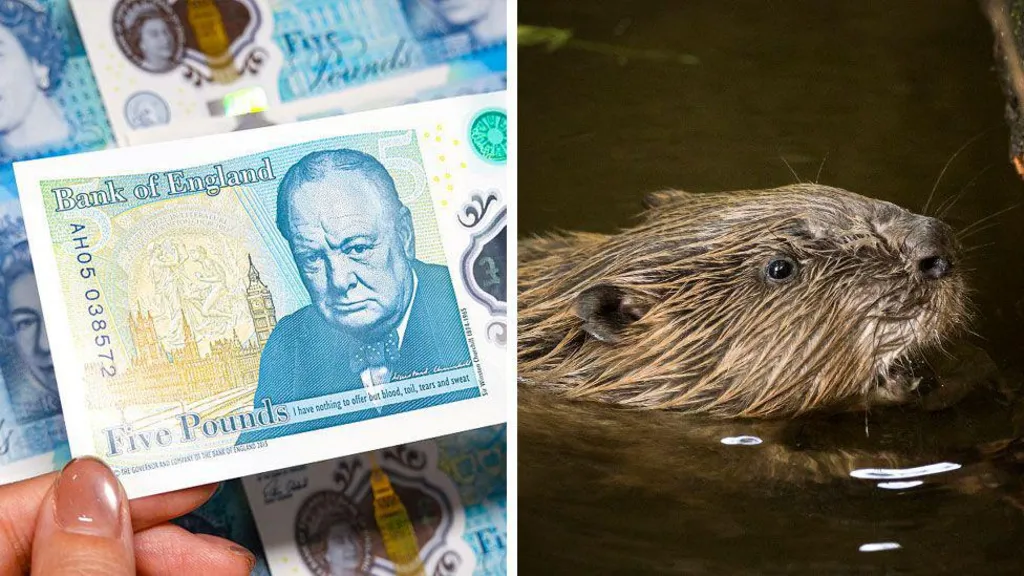
The Bank of England has told the BBC that it is responding to public opinion by replacing Sir Winston Churchill and Jane Austen with British wildlife on its upcoming series of banknotes.
Political figures have criticized the move. Tory leader Kemi Badenoch described it as “a silly thing to do,” while Reform Party’s Nigel Farage called it “absolutely crackers.”
The Bank, however, said the change is mainly aimed at preventing counterfeiting, noting that historical figures like Churchill would eventually need to be phased out for security reasons.
Now, the RSPCA has joined the discussion, suggesting that animals such as pigeons, rats, and gulls should be featured on the new banknote designs.
On Wednesday, the Bank of England announced that, following public consultation, native British wildlife will feature on its next series of £5, £10, £20, and £50 notes.
These new designs will replace historical figures who have appeared on the reverse side of banknotes since 1970, starting with William Shakespeare.
Currently, the notes feature, in ascending order of value: former Prime Minister Sir Winston Churchill, author Jane Austen, artist JMW Turner, and mathematician and wartime codebreaker Alan Turing.
The decision to remove wartime leader Churchill has sparked particular backlash from politicians.
“They propose we replace people like him with a picture of a beaver,” said Nigel Farage—although no specific animals have yet been confirmed for the new designs.
Kemi Badenoch said: “Removing Churchill from banknotes is erasing our history. Changing the pictures to feature wild animals is a silly thing to do. I absolutely do not support it.”
Liberal Democrat leader Sir Ed Davey added: “I can’t think of a worse time to do this with a war waging in Europe.”
However, a YouGov poll of over 5,000 people last July suggests party voters may feel differently. Among Lib Dem supporters, 34% wanted nature on banknotes, compared with 19% who preferred notable British historical figures.
Opinions among Conservative and Reform supporters were closer: about 30% of Tories and Reform voters favored historical figures, while 26% of Conservatives and 25% of Reform supporters preferred wildlife.
Churchill’s granddaughter, Emma Soames, told the BBC she never expected her grandfather’s image on the £5 note “was going to go on forever.”
When asked how she would feel if he were replaced by a badger, she joked: “Well, lucky badger or lucky grandpapa,” adding that any replacement should be a brave and courageous animal.
The RSPCA suggested that rats and pigeons could fit that description.
“Rats have been trained to detect disease and locate landmines, while pigeons played key roles in both world wars, carrying messages—and we think that’s worth celebrating,” said Geoff Edmond, a wildlife expert at the charity. He also recommended other intelligent and “under-appreciated” animals, such as foxes and gulls, for the new banknotes.
During an interview with the BBC, Victoria Cleland, the Bank of England’s chief cashier whose signature appears on the notes, was interrupted by gulls. Whether lobbying for inclusion or not, Cleland acknowledged that the Bank’s decision could ruffle feathers.
“People will have views on whatever goes on banknotes,” she said. “That’s why it’s really important to consult with the public.”
Nature emerged as the most popular theme in the 44,000 responses to the Bank’s public consultation and focus groups on banknote imagery. About 60% of respondents selected it as a preferred theme, ahead of architecture and landmarks (56%), historical figures (38%), arts, culture and sport (30%), innovation (23%), and noteworthy milestones (19%).
In response to criticism from political leaders, the Bank said it was proud that historical figures had appeared on its notes for over 50 years, but noted that wildlife was the most popular choice among respondents.
A Bank spokesperson added: “Importantly, wildlife imagery as a theme provides unique opportunities to explore the latest anti-counterfeiting and security features, such as moving elements like a bird flapping its wings or a deer running.”
Wildlife is already featured on UK banknotes, with mackerel, otters, red squirrels, and osprey appearing on notes issued by the Royal Bank of Scotland.
Social media frenzy
The Bank of England may have expected a calmer reaction to its decision, especially after the often divisive choices of historical figures over past decades.
It has faced criticism for previously featuring few women—with only Queen Elizabeth II appearing on notes in 2013—and for never including a historical figure who is Black or from an ethnic minority background.
While the move to feature wildlife has sparked political debate, it has also given many people a chance to have fun with the topic on social media.
Aldi UK has put forward its Cuthbert the Caterpillar cake as a contender to appear on banknotes, even creating a mock job application to the Bank of England.
So far, the Bank has not ruled out baked goods representing wildlife in its discussions, though it has confirmed that household pets would not be allowed.
A panel of experts will compile a shortlist of wildlife to present to the public this summer. The final decision rests with the Bank’s governor, and it could be several years before the new notes enter circulation.
About the Author