
Kyiv’s battle‑proven tools, sharpened by years of daily Russian drone attacks, could give a crucial boost to Middle Eastern nations seeking to defend against Iranian strikes.
KYIV, Ukraine — With tensions rising in the Middle East, Ukraine’s hard‑earned, battle-tested experience from its conflict with Russia could become an invaluable resource for nations facing similar threats.
After months of intense pressure and strong messaging from Washington to end the war in Ukraine, Kyiv is now receiving requests for assistance as Iran’s Gulf neighbors confront the growing threat of drone warfare.
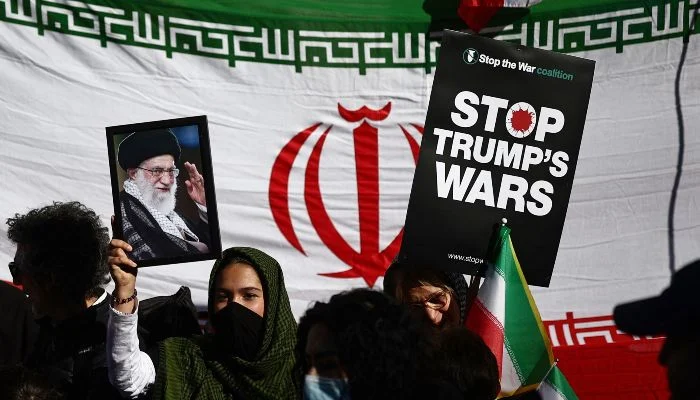
Hotels, airports, and residential areas across the Gulf have been struck, causing widespread disruption as Iran targets U.S. military bases in the region. The situation mirrors Ukraine’s experience, where hundreds of Russian drones—many of them Iranian-designed Shahed models—fill the skies nightly.
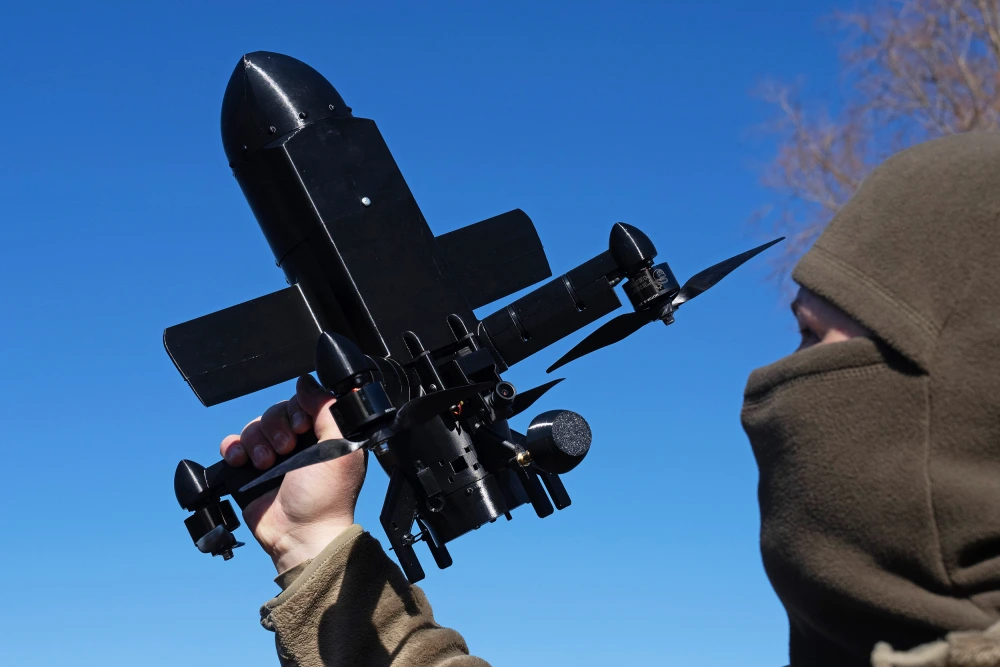
Kyiv’s forces intercept most drones each night—not with costly air-defense missiles, as many Middle Eastern nations do, but using far cheaper and highly effective interceptor drones, a technology refined through four years of relentless drone warfare.
“The ongoing conflict has created a unique ecosystem for real-time testing of innovative drone technology on the battlefield,” said Marko Kushnir, spokesperson for General Cherry, one of Ukraine’s leading drone manufacturers.
“The feedback loop between the front lines and the manufacturer is extremely short,” Kushnir added. “We can receive feedback in the morning and deploy a solution by evening to tackle new challenges on the battlefield.”
Founded in 2023 by a group of veterans and volunteers, the Kyiv-based company produces nearly 100,000 drones each month, Kushnir said. One of its flagship interceptor drones is specifically designed to stop Shaheds and is already in active use by Ukraine’s armed forces. The company was even invited to participate in the Pentagon’s $1 billion Drone Dominance initiative before the Iran conflict escalated.
Kushnir emphasized that Ukraine’s expertise has come at a high cost: “with lives, territory, and a prolonged war against a larger, better-resourced enemy.”
“There are only two countries in the world that truly understand how to wage a daily, technologically intense drone war—us and Russia,” he added.
Ukraine’s allies are increasingly acknowledging that experience. President Volodymyr Zelenskyy said earlier this week that he has received nearly a dozen requests from the U.S., Middle Eastern, and European countries seeking “Ukraine’s expertise in protecting lives, relevant interceptors, electronic warfare systems, and training.”
Describing Ukraine’s counter-drone experience as “irreplaceable” and “the most advanced in the world,” Zelenskyy said Kyiv has already dispatched teams to the Middle East, signaling potential weapons exchanges as Ukraine seeks air defense missiles to counter the sophisticated systems Russia uses daily against Ukrainian cities and infrastructure.
“This is not about engaging in operations. We are not at war with Iran,” Zelenskyy told Reuters on Sunday. “This is about protection and conducting a thorough, complete assessment of how to counter the Shaheds.”
He added that the terms of what Ukraine would receive in exchange for its assistance are still under discussion, noting: “Honestly, right now, both the technology and the funding are important for us.
Zelenskyy said he was uncertain whether Ukraine and the U.S. would finalize a deal on drone cooperation. Earlier, senior U.S. officials showed little interest when a Ukrainian delegation presented battle-tested counter-drone technology over the summer.
That attitude shifted after Iran’s attacks across the Middle East began, according to a European official familiar with the matter. “They suddenly became very interested,” the official said.
In a phone interview with NBC News on Saturday, former President Donald Trump commented: “We don’t need help,” adding, “the last person we need help from is Zelenskyy.”
Yuriy Ihnat, a spokesperson for Ukraine’s air force, told NBC News on Wednesday that Ukraine faces 150 to 200 Russian drone attacks daily, with some larger assaults involving up to 700 drones. Between 80% and 90% of these are routinely shot down. “This is the experience we have, and it’s the best in the world,” Ihnat said. “That’s why they came to us,” he added, referring to countries now seeking Ukraine’s expertise.
It wasn’t always this way.
Before Russia’s full-scale invasion in 2022, Ukraine’s military leadership was skeptical of drone technology. “In their eyes, a drone — next to a tank or artillery — looked like a toy. They couldn’t get it into their heads that it was the way of the future,” said Yaroslav Honchar, co-founder of drone innovation nonprofit Aerorozvidka. That perception has shifted, and a new industry has emerged from wartime necessity.
More than a dozen Ukrainian drone and defense tech companies toured the U.S. this month, a roadshow planned before the Iran war, aiming to secure investment. “In the moment of history when the world needs Ukraine’s technology and capabilities the most, here we are,” Ukraine’s ambassador to the U.S., Olga Stefanishyna, told reporters Monday in Washington, D.C., in a briefing attended by NBC News.
It was crucial for Ukraine to demonstrate that what we offer is not political posturing, concern, or condolences,” Stefanishyna said. “What we provide is immediate action with a tangible impact.”
When asked if Ukrainians are currently assisting U.S. forces in the Middle East, she added: “I don’t believe any of us have the liberty to disclose that information at this time.”
Iran has issued warnings to Ukraine over its support operations, echoing its threats to neighboring countries and European states seen aiding the U.S. or Israel.
Ebrahim Azizi, an Iranian MP and head of the National Security Commission, said on Saturday that helping Israel with drone operations makes “the entire territory of Ukraine” a “legitimate and lawful target for Iran.”
Russia, a key Iranian ally, appears to be monitoring the situation closely.
When asked about Kyiv deploying drone teams to the Middle East, Kremlin spokesman Dmitry Peskov told NBC News on Thursday, “Moscow is not giving any assessments. It’s rather a matter of bilateral relations between the Kyiv regime and the countries that requested such assistance.”
Russian Foreign Ministry spokeswoman Maria Zakharova dismissed the move as a “public relations exercise” for Ukraine’s leadership, noting that Kyiv is usually “begging” for weapons. Last week, four sources told NBC News that Moscow has provided intelligence support to Iran, including data that could help Tehran locate U.S. warships.
Kushnir, a spokesperson for General Cherry, said the company has been approached by both private groups and governments in the Middle East seeking assistance. The support would go beyond simply selling drones, he explained, and would include the infrastructure needed to operate them — such as batteries, maintenance systems, and, most importantly, operational know-how.
“We can quickly train their military to use this technology under their own conditions,” he said.
However, Yaroslav Honchar, co-founder of the drone innovation nonprofit Aerorozvidka, cautioned that Ukraine’s drone warfare experience cannot simply be replicated in the Middle East. Offering such expertise is a smart diplomatic move, he said, but “we have our own context, and simply copying it won’t work.”
Honchar added that while potential partnerships could bring new revenue for Kyiv to sustain its war effort at home, the stakes go beyond financial benefits.
“We have been in this position before — we were attacked and had to ask the world for help,” he said. “Now it’s happening to others. Ukraine’s commitment shows that it’s not only about cold calculations, but also about moral principles that still matter and are worth defending.
About the Author