

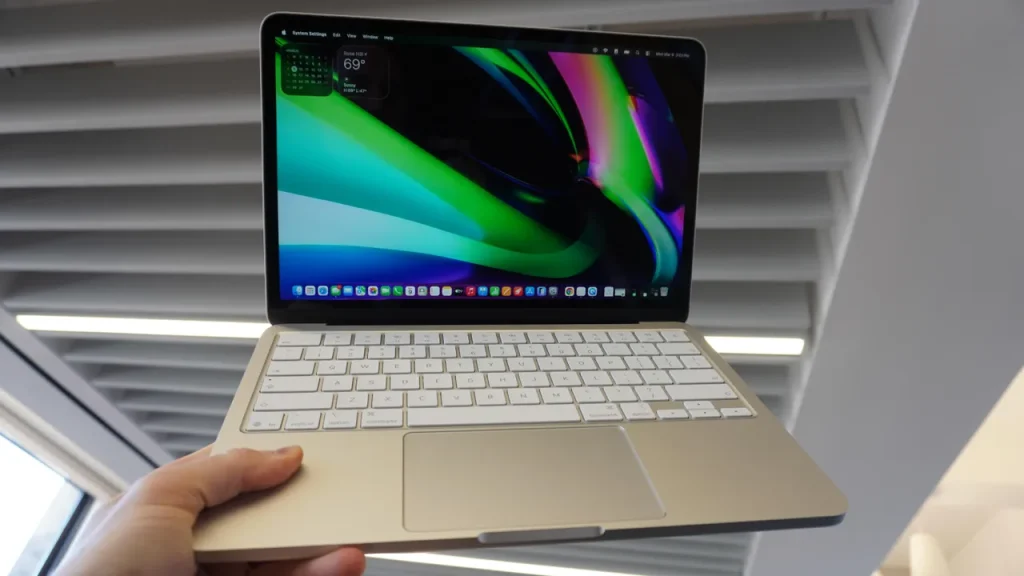
For years, Apple avoided the budget laptop market — but the launch of the new MacBook Neo changes the game. Here’s a look at who stands to gain and who could lose from this move.
ZDNET’s Key Takeaways
- Apple’s MacBook Neo has redefined what a “budget PC” looks like.
- This shift poses a challenge for Windows PC makers.
- The impact on Chromebooks could be even more significant.
I haven’t had a chance to use the MacBook Neo firsthand yet, but I plan to visit my local Apple Store this weekend to see it in person.
Even without hands-on testing, it’s clear this is a major move for Apple. Historically, Apple has dominated the high-end computing market, maintaining premium prices and high profit margins while leaving mid-range and low-end devices to Windows PC manufacturers, who survive on razor-thin margins.
For years, the MacBook Air, Apple’s entry-level Mac, has hovered around $1,000, with Apple deliberately avoiding the “cheap PC” segment — a space filled with basic, often underpowered Windows laptops priced between $500 and $800.
In that price range, expectations are low. While occasional surprises emerge, these devices are usually defined by “good enough” performance at an affordable price. With the MacBook Neo, Apple is challenging that standard.
So, with the launch of the MacBook Neo, Apple has effectively reset expectations for PCs in the under-$800 segment. While there are some design compromises, none are dealbreakers. For most users in this price range, 8GB of RAM is sufficient, and limiting it to that amount also helps Apple protect the MacBook Air from internal competition.
The $699 model includes biometrics, making it a strong option for home users, while the $599 model—priced at $499 for the education market—omits that feature, which isn’t essential for students.
Who is the MacBook Neo for?
It’s perhaps easier to say who won’t be lining up for one. We’re in a replacement-driven PC market, with few first-time buyers. The challenge for PC makers has always been convincing people to upgrade more frequently.
Platform preference remains the biggest factor. Mac users will naturally choose Apple, while Windows users will stick with the ecosystem they know. The introduction of a sub-$1,000 Mac is unlikely to sway large numbers of Windows users, just as it probably won’t convert anyone to desktop Linux this year.
The enterprise market is the least likely area to see MacBook Neo switchers. Historically, this has been Microsoft’s stronghold. Most corporate environments run on Windows (art departments aside), and there’s a wide selection of midrange PCs from Dell, HP, and Lenovo designed for cautious, conservative business buyers. Cloud PCs—modern equivalents of mainframe terminals—also provide an option, particularly for frontline workers who don’t need to take a laptop home for evenings or weekend work.
The next group includes a mix of prosumers, knowledge workers, digital nomads, solopreneurs, influencers, hobbyists, and enthusiasts. These users rely on their computers for serious work—content creation, consulting, coding, and more—and would never settle for a budget laptop capped at 8GB of RAM, no matter how well-built. Most in this category have already committed to their preferred platform, and the MacBook Neo is unlikely to sway them.
Also: MacBook Neo shows Microsoft had the right idea, but wrong execution
Now, let’s look at the home segment—consumers, students, side-hustlers, and those on fixed incomes. This group typically doesn’t have strong platform loyalty and has mainly opted for Windows PCs because MacBooks were too expensive. That dynamic is about to shift. Apple’s budget-friendly MacBook Neo will be especially appealing to iPhone users who want seamless device integration. Some families might even buy MacBook Neos for their kids.
The education market is another key battleground. Chromebooks have thrived here due to their low cost and ease of management, though they are tied to Google services. With a $499 education version, the MacBook Neo now presents a compelling alternative for schools seeking high-quality, secure devices.
So, who wins and who loses? In some ways, Apple is actually helping Microsoft. Low-end PC buyers are often less lucrative in terms of add-on services, so losing these customers won’t make a significant dent in Redmond’s revenue.
But eating into that segment is a serious concern for Microsoft’s hardware partners. Low-cost PCs may not deliver huge margins, but their volume is crucial—it helps major OEMs negotiate better deals on components used across all price ranges. When that volume drops, so do margins. The PC market has struggled in recent years, and this launch isn’t likely to help.
Also: After using the MacBook Neo, it’s clear Windows needs a new PC strategy
At least one top PC maker is already taking notice. During an earnings call last week, ASUS CFO Nick Wu described the MacBook Neo as “certainly a shock to the entire market” (translated from Chinese). He added, “I believe our PC vendors, including upstream partners like Microsoft, Intel, and AMD, are all taking this very seriously, discussing how to compete with this product across the entire PC ecosystem.”
Those who should be most worried? Chromebook managers. While Chromebooks have traditionally argued for stability and easy management in the low-cost segment, those points carry less weight against a MacBook priced under $500.
It will be intriguing to watch how these products perform in the market and what profit margins Apple can achieve with them.
Meanwhile, I’m sure there are some executives in Redmond and Mountain View burning the midnight oil, strategizing on how to stay competitive in this changing landscape.
About the Author