
The mission, expected to last about 10 days, would mark a major step toward the United States returning to the lunar surface.
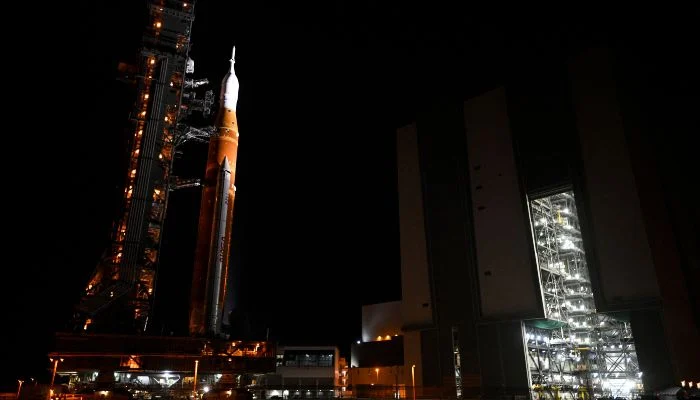
At Cape Canaveral, NASA began moving its towering Space Launch System (SLS) rocket and Orion spacecraft back to the launch pad on Thursday, following necessary repairs ahead of a planned Moon flyby.
Engineers working on the Artemis 2 mission started the rollout at 8:00 p.m. Eastern time, a process that can take up to 12 hours. The rocket and spacecraft were transported from the Vehicle Assembly Building at the Kennedy Space Center and carefully moved about four miles (6.5 kilometers) to Launch Pad 39B.
If all tests proceed as planned, the mission could send three American astronauts and one Canadian around the Moon as early as April, marking the first crewed lunar flyby in over 50 years. The roughly 10-day mission represents a major step toward returning humans to the lunar surface.
However, the ambitious program has faced several delays. Late last month, NASA identified a helium flow issue and returned the Artemis 2 stack—measuring around 11 million pounds—to the assembly building for inspection and repairs. Earlier, a liquid hydrogen leak had already disrupted a key “wet dress rehearsal,” further postponing the launch timeline.
Despite these setbacks, NASA remains optimistic that the mission could launch in early April, with April 1 as the earliest opportunity and additional windows available in the following days.
Meanwhile, the Artemis 2 crew has entered quarantine in Houston as they prepare for what could be a historic journey back to the Moon.
About the Author