
On March 20, 1886, a quiet but historic transformation took place on Main Street in Great Barrington. For the first time, an alternating current (AC) system delivered electric lighting to an entire community. Gas lamps gave way to the steady glow of electricity, marking the beginning of a new era.
More than a century later, electricity is no longer just about illumination—it powers nearly every aspect of modern life, from homes and businesses to transport and digital systems. That early AC network sparked a technological revolution that continues to shape the world today.
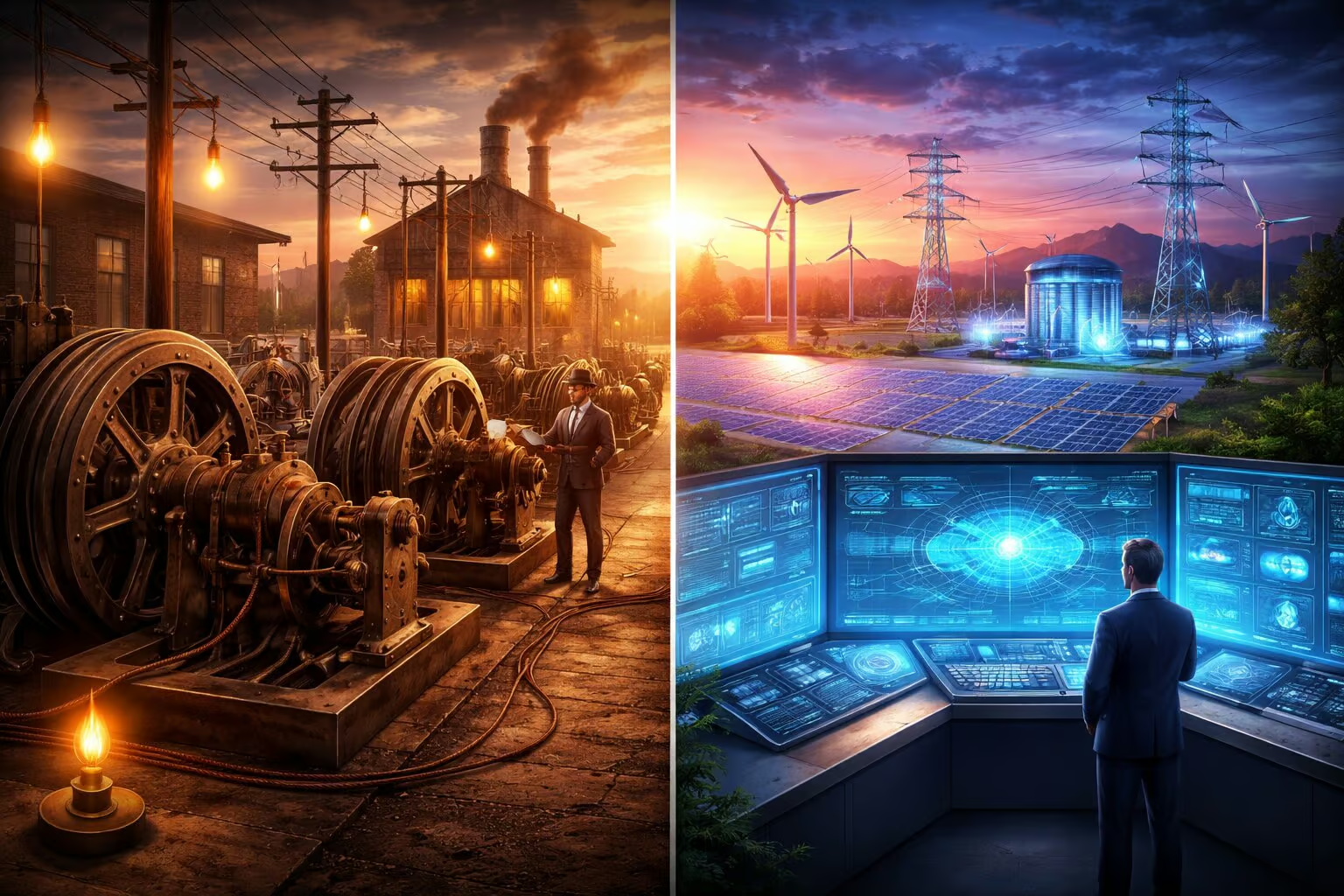
Then: Lighting the Streets
In 1886, electricity was still experimental. Thomas Edison had popularised direct current (DC), but it struggled to transmit power over long distances. Communities needed a more efficient solution.
Alternating current provided the answer. Its ability to carry electricity over large distances without major loss made it ideal for expanding power networks. The system in Great Barrington powered streetlights, shops, and a handful of homes—demonstrating that electricity could reliably serve entire communities.
Though simple by today’s standards, this was a turning point. It proved electricity could move beyond factories and elite households into everyday public life.
Now: Powering the World
By 2026, electricity spans the globe. Modern power grids deliver energy to cities, towns, and even remote regions. Homes now feature smart systems, automated controls, and renewable energy sources such as solar and wind.
While AC remains the backbone of power distribution, advances in technology have transformed how electricity is generated and used. From large-scale power plants to microgrids and rooftop solar panels, energy systems have become more efficient, flexible, and sustainable.
Technologies unimaginable in 1886—like computers, smartphones, electric vehicles, and AI—now depend on the same core principles first proven in Great Barrington. What once lit a single street now drives global communication, transportation, and innovation.
Then & Now: A Lasting Impact
The first AC system did more than provide light—it changed the course of history:
- Accessibility: Electricity expanded from limited use to widespread availability
- Efficiency: AC enabled long-distance transmission with reduced energy loss
- Innovation: Reliable power fueled industrial growth and modern technology
Today, electricity is so deeply integrated into daily life that it often goes unnoticed. Yet it all traces back to that first breakthrough—when a small town street became the starting point for the electrified world we live in now.
Looking Ahead: The Future of Power
Even in 2026, the story of electricity continues to evolve. Advances such as smart grids, energy storage, and renewable integration are making power systems more efficient and environmentally sustainable. Electric vehicles are transforming transportation, while emerging technologies aim to reduce dependence on fossil fuels even further.
What began as a single AC system in Great Barrington has grown into a vast global network powering billions of people. The journey from a few streetlights to an electrified planet highlights how innovation can reshape everyday life.
On March 20, 1886, Great Barrington’s Main Street became a symbol of possibility, demonstrating that alternating current could safely and efficiently power entire communities.
By 2026, that milestone stands as a reminder of how far technology has progressed. From lighting streets to enabling digital lifestyles, AC electricity remains central to modern society. Its humble beginnings show a powerful truth: even small breakthroughs can spark revolutions that endure for generations.
About the Author