
The warning comes after an Israeli strike on South Pars, while the chief of QatarEnergy stated that an Iranian attack had disrupted about 17% of Qatar’s LNG export capacity.
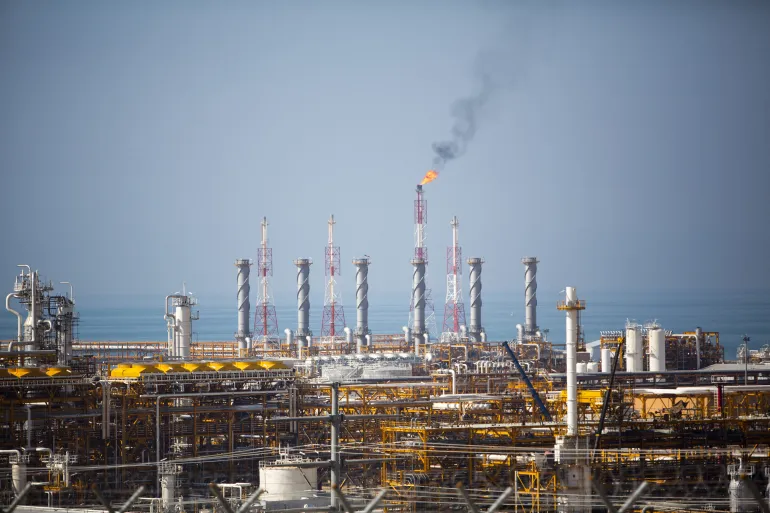
Iran has warned that it will show “zero restraint” if its energy facilities are targeted again, following an Israeli strike on the critical South Pars gas field and Iran’s retaliatory attacks on energy sites across the Gulf region.
Foreign Minister Abbas Araghchi said in a post on X on Thursday that Iran’s response to the Israeli strike used only a fraction of its capabilities, adding that restraint was exercised in response to calls for de-escalation.
“Zero restraint will be exercised if our infrastructure is targeted again,” the statement warned.
South Pars is Iran’s largest source of domestic gas, supplying around 80% of the country’s natural gas needs.
The warning comes as Qatar continues to assess damage at its Ras Laffan Industrial City site, which processes about 20% of the world’s liquefied natural gas (LNG) supply, following an Iranian strike.
According to the CEO of QatarEnergy, the attack disrupted roughly 17% of Qatar’s LNG export capacity, resulting in an estimated $20 billion in annual revenue losses and raising concerns over supplies to Europe and Asia.
Saad al-Kaabi told Reuters that two of Qatar’s 14 LNG trains—units used to liquefy natural gas—as well as one of its two gas-to-liquids facilities were damaged in Iranian strikes this week.
He added that the repairs will reduce LNG production by 12.8 million tonnes per year, with the affected capacity expected to remain offline for three to five years.
“I never imagined, even in my wildest dreams, that Qatar—and the region—would face such an attack, especially from a fellow Muslim country during the month of Ramadan,” Saad al-Kaabi said in an interview.
Tehran has been launching missiles and drones across the Middle East in response to the United States–Israel conflict with Iran, which began on February 28.
Meanwhile, Israeli Prime Minister Benjamin Netanyahu reiterated in a news conference that the goal of the campaign against Iran is to eliminate nuclear and ballistic missile threats “before they’re buried deep underground and become immune from aerial attack.”
He added that Israel and the United States are “destroying the factories that produce the components to make missiles” and weakening Iran’s industrial base, claiming that Iran’s “command and control structure is in utter chaos.”
Netanyahu also stated that Israel “acted alone” in striking Iran’s South Pars gas field, adding that further attacks on energy infrastructure would be paused at the request of Donald Trump.
Earlier on Thursday, Donald Trump said he had advised Israel not to carry out further strikes on Iran’s natural gas infrastructure, following a series of retaliatory attacks on energy facilities that pushed energy prices sharply higher.
Iran’s attacks on energy infrastructure have increased tensions with its Arab Gulf neighbors, who have condemned the strikes as a violation of international law.
The situation has also disrupted the Strait of Hormuz, a vital waterway through which about one-fifth of the world’s oil and LNG supplies pass, contributing to rising fuel prices and growing concerns about global inflation.
“Stay away from oil and gas facilities”
In an interview with Reuters, Saad al-Kaabi said QatarEnergy may need to declare force majeure on long-term LNG contracts for up to five years, affecting supplies to countries such as Italy, Belgium, South Korea, and China, due to damage to two production trains.
He added that while force majeure had already been declared for a shorter period, it may now need to be extended depending on the situation.
QatarEnergy had earlier declared force majeure on its entire LNG output following attacks on its Ras Laffan production hub, which was struck again on Wednesday.
“For production to restart, hostilities must first come to an end,” said Saad al-Kaabi.
He noted that the damaged facilities cost around $26 billion to build and warned that the scale of the destruction has set the region back by 10 to 20 years.
“If Israel attacks Iran, that is between Israel and Iran and has nothing to do with us or the region,” he said.
He also stressed that all countries, including Israel and the United States, should avoid targeting oil and gas infrastructure.
Jasem Mohamed Albudaiwi said that the Iranian attacks “reflect the aggressive nature of the Iranian regime and its disregard for the security and stability of both the region and the world.
About the Author