

Oil prices dropped sharply during early trading in Asia after US President Donald Trump claimed that negotiations to end the war are currently underway — a statement Iranian officials have denied.
Brent crude fell 6.6% to $97.56 (£72.65) per barrel, while US crude declined by more than 5.5% to $87.20.
Speaking on Tuesday, Trump said talks to end the conflict are happening “now,” adding that those involved in discussions with the US are eager to reach an agreement.
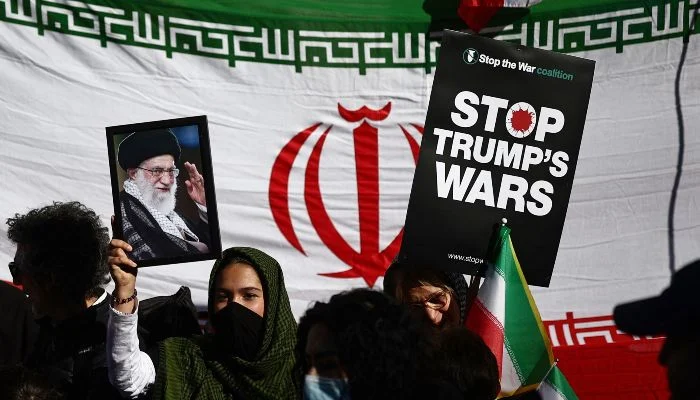
However, officials in Tehran dismissed the claims a day earlier, calling reports of US-Iran talks “fake news,” as Israel and Iran continued to exchange strikes.
US President Donald Trump said Vice President JD Vance and Secretary of State Marco Rubio are involved in ongoing discussions aimed at ending the war.
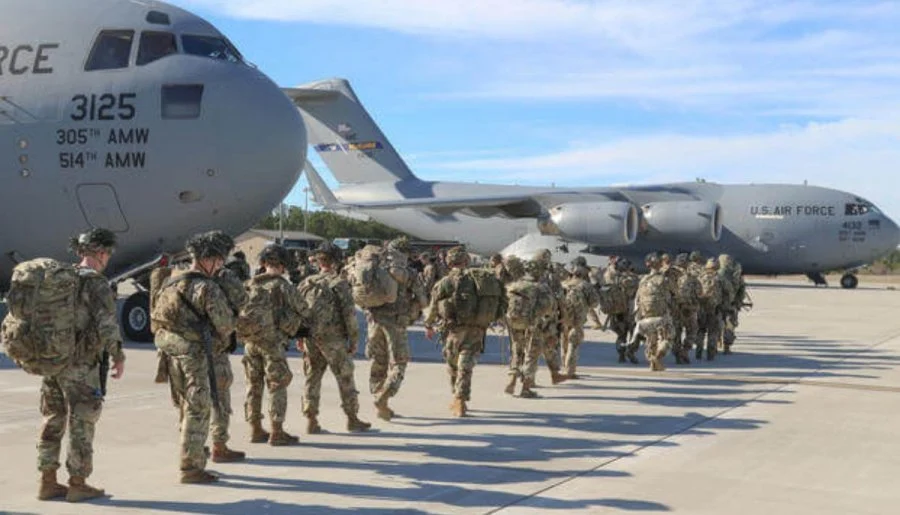
Trump also claimed that recent US-Israeli strikes on Tehran have triggered “regime change,” reiterating his assertion that Iranian leaders have agreed never to develop nuclear weapons.
However, Tehran has repeatedly denied any contact with the US, dismissing such claims as an attempt to influence markets.
According to reports by The New York Times, Reuters, and Channel 12, the US has presented Iran with a 15-point proposal, citing unnamed sources. Channel 12 reported that the plan includes reopening the Strait of Hormuz as a free maritime zone.
The proposal also outlines incentives for Iran, including the lifting of sanctions, according to the report. The BBC has not independently verified the document and is continuing to assess the claims.
Meanwhile, Iran and Israel continue to exchange missile strikes across the Middle East. The Israel Defense Forces said it has launched a “new wave of strikes” targeting infrastructure linked to what it described as the “Iranian terror regime” in Tehran.
Israel has also issued evacuation warnings to residents in southern suburbs of Beirut, as strikes on Hezbollah targets continue. Earlier, the IDF said Iranian missiles had been launched toward Israel.
Major stock markets across the Asia-Pacific region moved higher in early trading as investors assessed the latest developments in the Middle East.
Japan’s Nikkei 225 and South Korea’s Kospi both climbed more than 2%. The gains come despite both countries’ heavy reliance on oil shipments passing through the Strait of Hormuz.
Australia’s ASX 200 rose over 1.8%, while Hong Kong’s Hang Seng Index and China’s Shanghai Composite each gained around 1%.
Meanwhile, the price of Brent crude surged back above $100 a barrel on Tuesday and, despite the latest pullback, remains significantly higher than levels seen before the US and Israel launched strikes on Iran on 28 February.
The conflict has sparked a global energy crisis, prompting governments worldwide to roll out measures aimed at cushioning the economic impact. Oil and gas prices have jumped sharply since the war began, largely due to Iran effectively blocking the Strait of Hormuz — a crucial route through which roughly 20% of the world’s oil and liquefied natural gas normally passes each day.
The situation has also caused major volatility in global financial markets, with business leaders warning of serious economic consequences.
Wael Sawan, chief executive of Shell, said on Tuesday that Europe could face oil shortages as soon as next month. Speaking at an energy conference in Houston, he noted that supply pressures initially hit South Asia before spreading across Southeast Asia, Northeast Asia, and now increasingly toward Europe.
Meanwhile, Larry Fink, head of BlackRock, warned in an interview with the BBC that a global recession could be triggered if oil prices climb to $150 a barrel.
He added that crude prices could remain above $100 — or even approach $150 — for years if the conflict continues and Iran is not reintegrated into the international community. Such a scenario, he said, would have “profound implications” for the global economy and could lead to a severe recession.
About the Author