
Former Venezuelan general willing to cooperate with prosecutors
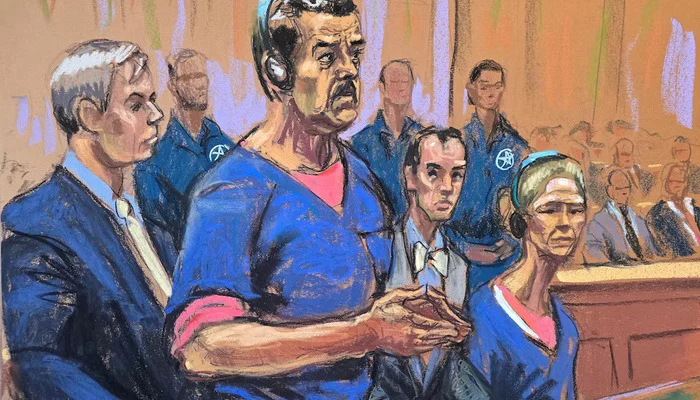
Former Venezuelan President Nicolás Maduro appeared again in a U.S. courtroom on Thursday to face criminal counts that include narcoterrorism — a rarely invoked statute that has seen few successful verdicts at trial.
Maduro, 63, who led Venezuela from 2013 until his capture by U.S. forces in Caracas on January 3, has pleaded not guilty to all charges in the United States.
The narcoterrorism law at the center of the case, passed in 2006 to combat drug trafficking linked to terrorism‑related activities, has yielded just four convictions at trial, according to a Reuters review — and two of those were later overturned due to questions about witness credibility.
That limited track record underscores a key hurdle for prosecutors: convincing a jury that testimony from cooperating insiders can reliably show that alleged drug‑related offenses were knowingly tied to terrorism‑related conduct.
“These two cases do not suggest that the narcoterrorism statute is unworkable,” said Alamdar Hamdani, a partner at Bracewell and former U.S. Attorney in Houston.
He said the key takeaway from those cases “is not that the narcoterrorism statute is unworkable.” Rather, the most challenging part of the law — proving that a defendant knew the alleged drug‑related activities were tied to terrorism — demands exceptionally strong evidence and meticulous preparation by prosecutors, with no tolerance for gaps in institutional records, simple errors, or unquestioning reliance on witness testimony.
Prosecutors have not yet identified who will take the stand against Maduro, although one former Venezuelan general indicted with him has told Reuters he is prepared to cooperate.
Congress established the narcoterrorism statute 20 years ago to go after drug traffickers who finance activities the United States considers acts of terrorism. Since then, 83 people, including Maduro, have been charged under this law; 31 have pled guilty to narcoterrorism or related offenses, eight are awaiting trial, and many remain outside U.S. custody, according to a review of federal court records.
Reversals of previous convictions do not affect Maduro’s case, and the defendan8ts in those earlier trials faced additional charges that were upheld. Maduro also faces three other counts, including conspiracy to import cocaine.
Maduro, a socialist, is accused of leading a conspiracy in which Venezuelan officials helped move cocaine through the country in cooperation with traffickers, including Colombia’s Revolutionary Armed Forces of Colombia (FARC), which the U.S. designated a terrorist organization until 2021. Maduro and the other indicted officials have consistently denied the accusations, calling the U.S. charges part of an imperialist effort to undermine Venezuela.
Maduro’s attorney, Barry Pollack, did not answer inquiries about the narcoterrorism law’s limited track record in court or who might be called to testify against him. A spokesman for the U.S. Attorney’s Office in Manhattan also declined to comment on those points.
Under the law, a conviction for narcoterrorism carries a mandatory minimum sentence of 20 years — double the minimum for ordinary drug trafficking — and both types of offenses can lead to life imprisonment if proven.
Under U.S. law, the narcoterrorism statute characterizes terrorism as premeditated, politically motivated violence against non‑combatants, a broad legal standard that can encompass a wide range of conduct.
“If you look at the legal definition of terrorism and terrorist activity, you can paint a pretty broad brush around the kind of activity we’re discussing,” said Shane Stansbury, a law professor at Duke University and a former federal prosecutor.
For a conviction in Maduro’s case, prosecutors would need to prove that he understood the drug trafficking he is accused of facilitating provided financial support to a group whose actions the United States regarded as terrorism, even if that wasn’t his sole or primary motive.
“It doesn’t have to be the motivation,” explained Artie McConnell, a former federal prosecutor and current partner at law firm BakerHostetler.
In previous narcoterrorism trials, the statute’s demanding standards have shown how challenging such cases can be. In the first trial under the law in 2008, an Afghan man with alleged ties to the Taliban was convicted for helping a U.S. informant buy opium and heroin, but years later a judge threw out the narcoterrorism charge after determining the defense attorney had not properly challenged the government’s only witness linking him to the Taliban.
Another narcoterrorism trial in 2011 ended in a hung jury. Although the defendant was later convicted at a second trial in 2012, the narcoterrorism count was dismissed in 2015 after prosecutors acknowledged that a U.S. government agency had deemed the cooperating witness who connected him to the Taliban unreliable.
The 2015 conviction of a Colombian man on narcoterrorism charges—for attempting to ship cocaine on behalf of the FARC and procure weapons for the group—has been upheld.
Earlier this week, a fourth narcoterrorism trial also ended in a guilty verdict.
Case may hinge on insider testimony
Legal experts say the government’s case against Maduro could rely on testimony from two former Venezuelan generals charged alongside him in 2020: Cliver Alcalá and Hugo Carvajal. Both have pleaded guilty to charges tied to their dealings with the FARC, though neither agreed to cooperate at the time.
In a phone interview from a federal prison in Cumberland, Maryland, Alcalá said he is now willing to cooperate. However, he claimed prosecutors had previously required him to admit involvement in drug trafficking—an allegation he denies—as a condition for cooperation.
About the Author