

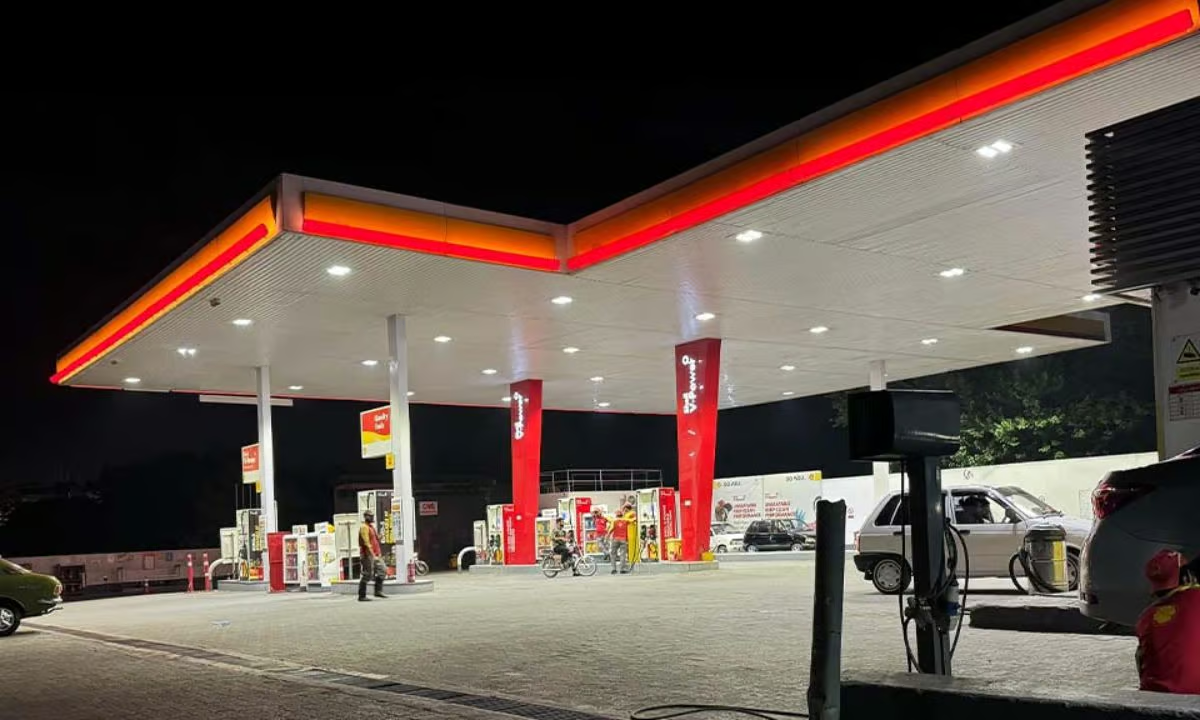
In March, Pakistan’s fuel consumption surged by 24 percent compared to February, despite several government-imposed measures to curb petrol use.
The figures, covering fuel usage up to March 30, highlight a sharp increase in demand, casting doubt on the effectiveness of the recent conservation policies.
Authorities had rolled out several measures to curb fuel demand, including reducing working days, closing educational institutions, and lowering motorway speed limits from 120 km/h to 100 km/h. These steps aimed to limit commuting and overall petrol consumption, easing pressure on the country’s foreign exchange reserves due to high oil imports.
Despite these restrictions, fuel usage rose sharply in March, suggesting that limitations on movement and transport did not translate into lower consumption.
Renowned economist Ashraf Malkham noted that the increase remained significant even after accounting for March being longer than February in the data. He suggested that the spike may not indicate higher daily usage but could reflect large-scale fuel hoarding by industrial sectors or entities with storage and financial capacity.
Malkham pointed out that international oil prices are significantly lower than domestic rates, with an estimated gap of around 100 rupees, creating incentives for stockpiling. He emphasized that such hoarding is likely restricted to industrial players and oil marketing companies, as ordinary consumers typically lack the resources to store fuel.
The economist also questioned the lack of government response, noting the absence of high-level meetings to address the unexpected consumption surge. He raised concerns about enforcement, asking whether authorities were monitoring industrial activity and fuel storage to prevent misuse of conservation policies.
Citing Iran as a regional example, Malkham observed that similar economic pressures there did not result in large-scale fuel hoarding or artificial price manipulation. He concluded that the current situation in Pakistan indicates potential gaps in policy enforcement, where restrictions affect the public while certain sectors may profit from price differences and supply conditions.
About the Author