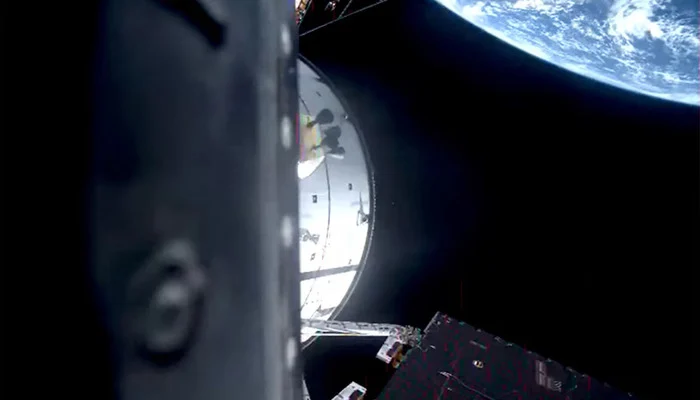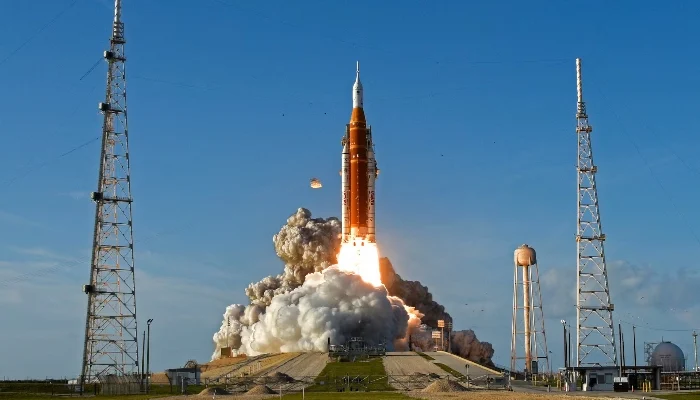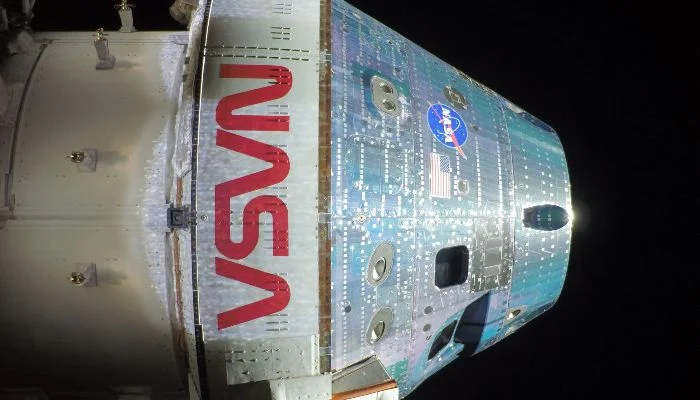

NASA continues to depend on astronauts’ visual observations to study the Moon and its surface features.
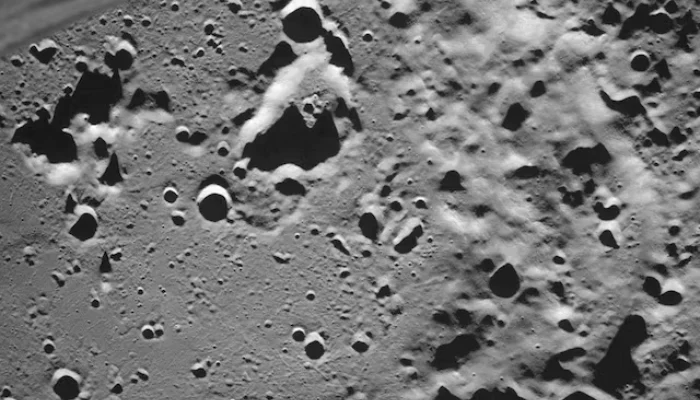
More than 50 years after humans first orbited the Moon, Artemis astronauts are set to repeat the journey on Monday, relying on the most basic tool for exploration: their own eyes.
Despite the technological advances since the Apollo missions, NASA continues to depend on astronauts’ visual observations to study the Moon.
“The human eye is basically the best camera that could ever or will ever exist,” Kelsey Young, lead scientist for the Artemis 2 mission, told AFP.
“The number of receptors in the human eye far exceeds what any camera can capture.”
While modern cameras may surpass human vision in certain aspects, Young explained that “the human eye is exceptional at perceiving color, understanding context, and making photometric observations.”
Astronauts can interpret how lighting affects surface features, such as how angled light highlights texture while muting colors. In an instant, humans can detect subtle shifts in color and contours on the Moon’s surface—details that are scientifically valuable but hard to capture in photos or videos.
Artemis 2 astronaut Victor Glover, the Orion spacecraft pilot, described the eye as a “magical instrument” ahead of liftoff.
Field Scientists in Training
To make the most of their lunar flyby, the Artemis 2 crew underwent over two years of intensive preparation. Young said the training aimed to transform the astronauts into “field scientists” through classroom lessons, geological fieldwork in Iceland and Canada, and simulated Moon flybys replicating their mission.
The crew—American commander Reid Wiseman, pilot Victor Glover, and mission specialist Christina Koch, along with Canadian astronaut Jeremy Hansen—memorized the Moon’s “Big 15,” the key features that would help them orient themselves during the mission.
Using an inflatable Moon globe, they practiced observing how the Sun’s angle alters lunar colors and textures, refining their observation and note-taking skills for the flyby.
“I can tell you, they are excited and ready,” Young said with a smile.
Observing the Moon
The Artemis 2 mission aims to study selected lunar sites and phenomena, following 10 objectives prioritized by NASA for scientific value. During the several-hour flyby, astronauts will rely on their naked eyes alongside onboard cameras.
Noah Petro, head of NASA’s planetary geology lab, told AFP that the Moon will appear to the crew “about the size of a basketball held at arm’s length.”
“The question I’m most interested in is whether they’ll be able to see color on the lunar surface—not rainbow colors, but shades of dark brown or tan,” Petro said. “These subtle hues reveal information about the Moon’s composition and history.”
David Kring of the Lunar and Planetary Institute noted that while the Moon has been extensively photographed since the Apollo era, firsthand astronaut descriptions remain rare.
“Having astronauts describe what they see… that’s something at least two generations on Earth have never experienced,” he said.
NASA will broadcast the Artemis 2 flyby live, except when the spacecraft passes behind the Moon.
“Just hearing their practice mission descriptions gives me chills,” Young said. “I am absolutely confident these four astronauts will deliver incredible observations.”
About the Author