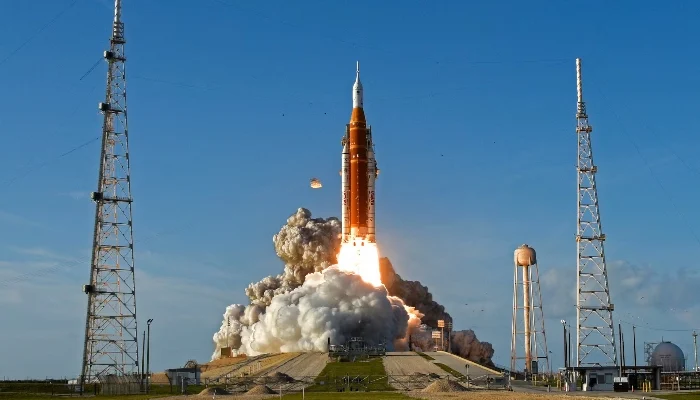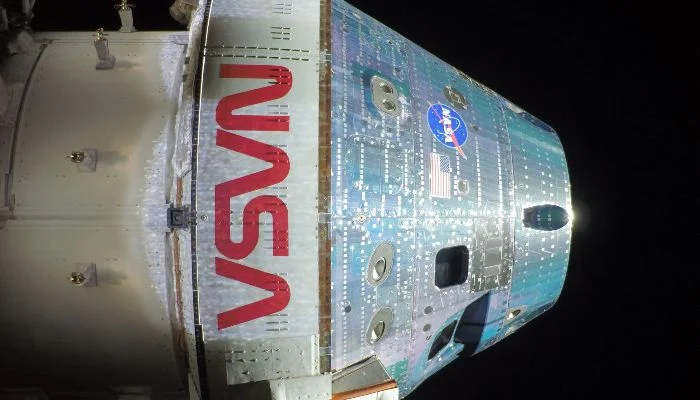

The Orion capsule is now set to loop around the Moon, putting the crew on track to venture farther from Earth than any humans in history.
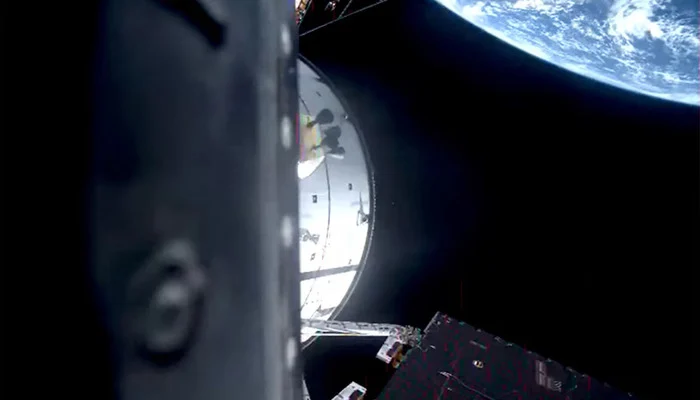
The Artemis astronauts reached the final stage of their approach to a lunar loop on Monday, marking the point at which the Moon’s gravity now exerts more influence on the Orion spacecraft than Earth’s.
The capsule is set to swing around the Moon, sending the crew farther from Earth than any humans have ever traveled.
The Artemis astronauts entered what Nasa calls the lunar sphere of influence at around 0442 GMT on Monday, marking the moment when the Moon’s gravity now dominates over Earth’s. They are on track to achieve the first human lunar flyby since 1972.
At the time, the crew was approximately 39,000 miles (63,000 kilometers) from the Moon and 232,000 miles from Earth, according to a Nasa official during the agency’s livestream.
This historic mission features several firsts for the crew of three Americans and one Canadian. Victor Glover will become the first person of color to orbit the Moon, while Christina Koch is the first woman to do so. Canadian astronaut Jeremy Hansen will be the first non-American to complete the feat. Mission commander Reid Wiseman joins them in documenting the lunar flyby.
Exploring the far side of the Moon
The astronauts have already begun observing lunar features never before seen by human eyes. Nasa released an image taken by the Artemis crew showing the Orientale basin, a massive crater often compared to a bullseye. “This mission marks the first time the entire basin has been seen with human eyes,” the agency said.
Koch, speaking live to Canadian schoolchildren, called the basin the Moon’s “Grand Canyon” and expressed excitement over seeing a crater that no human had previously observed.
Later in the flyby, the crew will witness a solar eclipse, with the Sun obscured by the Moon except for its outer atmosphere, the corona.
The astronauts will also test their new Orion Crew Survival System (OCSS) spacesuits. These orange suits, worn during launch and reentry, can provide up to six days of breathable air in emergencies. This marks the first time OCSS suits are being used in space, and the crew will test their donning speed and pressurization capabilities.
While Artemis II will not land on the Moon, the crew is set to break the record for the farthest distance from Earth. Nasa Administrator Jared Isaacman noted that over the next day, the astronauts will be on the Moon’s far side, eclipsing the previous distance record, while gathering critical data on the spacecraft’s systems.
The crew has already completed a manual piloting demonstration and reviewed the lunar flyby plan, including the surface features they will observe and photograph. Isaacman emphasized that much of the mission focuses on testing Orion’s life support and ecosystem, as this is the first crewed flight of the spacecraft. The data collected will inform future Artemis missions, including Artemis III in 2027 and the planned lunar landing on Artemis IV in 2028.
About the Author