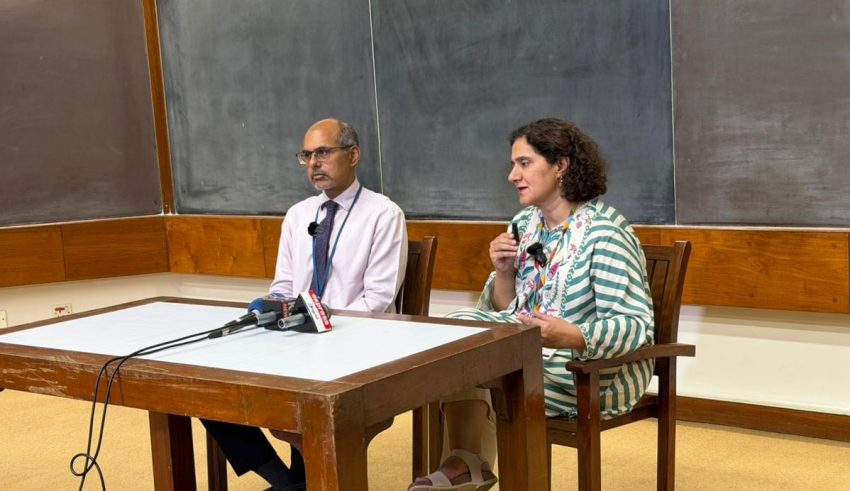

Foreign Minister Ishaq Dar said that a significant Israeli attack on Iran, followed by a retaliatory strike near Jubail in Saudi Arabia, had made the situation far more dangerous and undermined ongoing peace efforts.
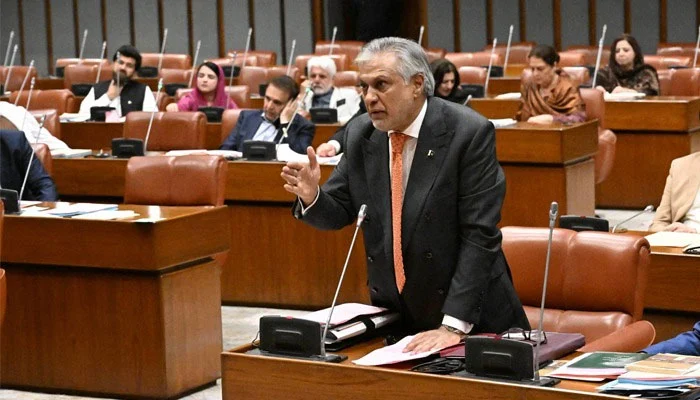
On Tuesday, Deputy Prime Minister and Foreign Minister Ishaq Dar accused Israel of attempting to undermine Pakistan’s efforts to facilitate ceasefire talks between the United States and Iran by launching an attack on Tehran just as both sides were preparing to engage.
“A major Israeli strike on Iran, followed by an attack on Jubail in Saudi Arabia, has made the situation more dangerous and sensitive,” he said while briefing the Senate on the current regional developments and Islamabad’s mediation efforts.
Pakistan has emerged as a key mediator in one of the region’s most serious conflicts, which erupted following joint US-Israeli attacks on Iran on February 28. The war has caused a sharp rise in global fuel and energy prices, exacerbated by Tehran’s effective blockade of the Strait of Hormuz.
Speaking in the Upper House about the Middle East situation, DPM Dar thanked Leader of the Opposition Senator Raja Nasir Abbas for acknowledging the government’s efforts and highlighted that Pakistan has been actively engaged from the very start of the crisis.
Deputy Prime Minister and Foreign Minister Ishaq Dar told the Senate that when the first Israeli attack on Iran occurred, he was in Madina after attending an OIC meeting. He immediately contacted the Foreign Office, instructing it to issue a strong condemnation of the strike on a sovereign nation.
FM Dar said he also reached out directly to the Iranian foreign minister, expressing Pakistan’s support and sympathy, and assured him that Islamabad would work to rally regional countries behind de-escalation efforts.
Since then, Pakistan has maintained continuous engagement with countries in the region and beyond, including China, Japan, the UK, Canada, and several European nations, promoting restraint and preventing escalation.
He emphasized that Pakistan has acted as a facilitator and mediator, proceeding cautiously to protect sensitive diplomatic initiatives. Prime Minister Shehbaz Sharif, Chief of Army Staff and Chief of Defence Forces Syed Asim Munir, and the Foreign Office have remained fully involved in the diplomatic process.
Dar highlighted Saudi Arabia’s hosting of a 12-country meeting in Riyadh on March 19, where Pakistan helped secure a balanced joint statement condemning Israel. He also noted the efforts of a four-country peace group—Saudi Arabia, Egypt, Turkey, and Pakistan—whose follow-up meeting was shifted from Istanbul to Islamabad.
On March 29, the foreign ministers of the three countries visited Pakistan for bilateral and quadrilateral meetings to advance diplomacy. He further mentioned engaging China at a high level on March 31 to discuss a five-point regional peace initiative, later made public.
FM Dar said the UN Secretary-General personally called to appreciate Pakistan’s role and offered support. He stressed that Pakistan had worked until the last moment to create space for dialogue, though fresh developments had complicated the situation.
He warned that prolonged conflict could have serious global and domestic consequences, including on oil prices and Pakistan’s economy. He expressed hope that continued diplomacy would ultimately restore peace and lead to a dignified resolution of the conflict.
About the Author