
It was a historic moment: the Artemis II mission completed its highly anticipated lunar flyby yesterday, passing within just 4,067 miles of the moon.
Aboard the Orion capsule, the crew ventured beyond the moon’s far side and reached approximately 252,756 miles from Earth, surpassing Apollo 13’s record for the farthest distance traveled by humans in space.
The seven-hour flyby offered astronauts breathtaking views of the lunar surface previously unseen, with roughly 21% of the moon’s far side illuminated by sunlight from their vantage point.
Working in two shifts over roughly five hours, NASA astronauts Reid Wiseman, Victor Glover, Christina Koch, and Canadian Space Agency astronaut Jeremy Hansen captured around 10,000 photos, according to NASA’s mission livestream.
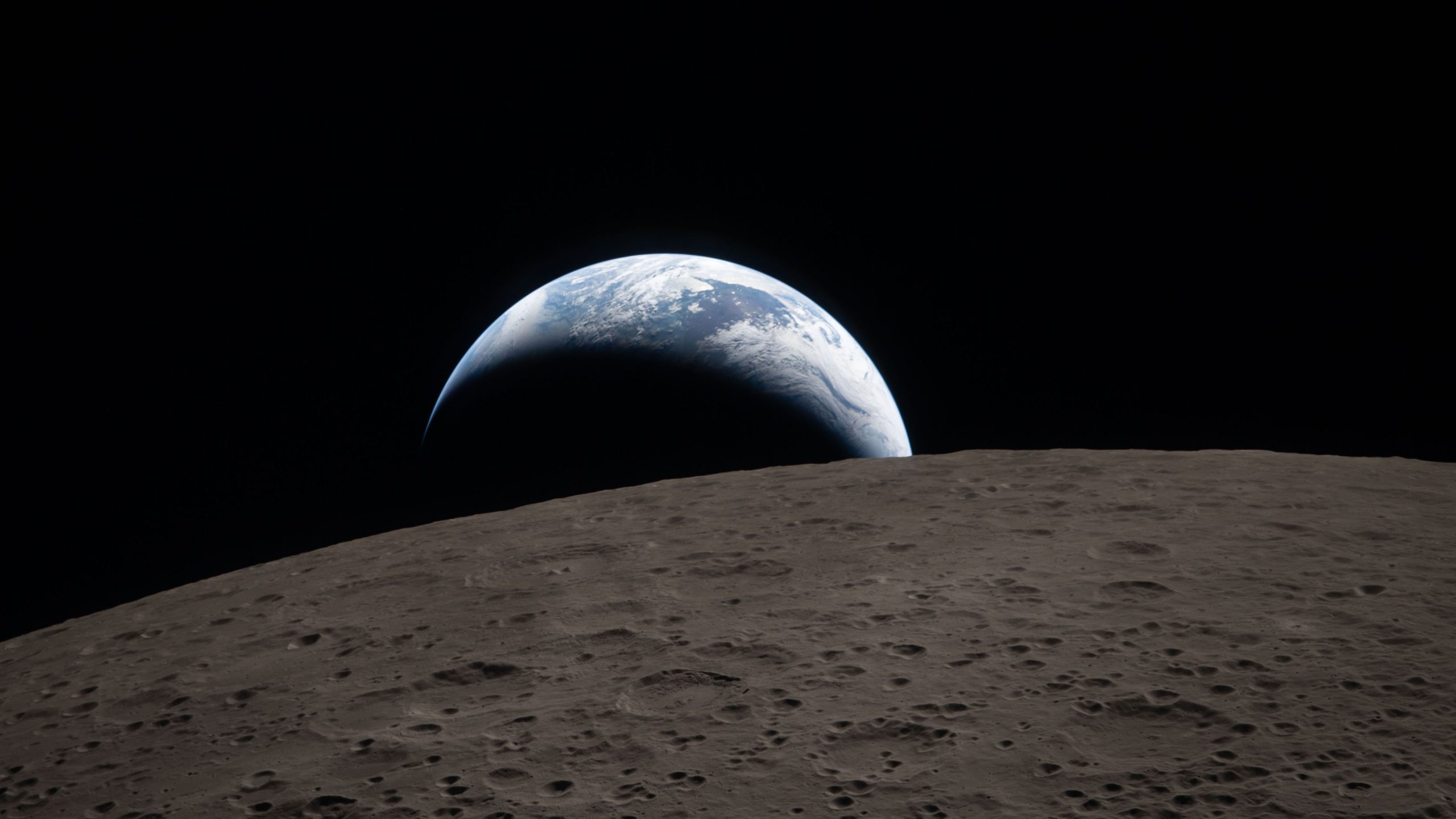
Communications were briefly lost for about 40 minutes while Orion passed behind the moon. During this time, the crew witnessed “Earthset,” watching Earth appear to set behind the lunar horizon, reminiscent of what Apollo astronauts saw in 1968.
They also experienced a rare solar eclipse. From their perspective inside Orion, the moon appeared much larger than it does from Earth. As it partially blocked the sun, the astronauts observed parts of the solar corona—the sun’s outer atmosphere—including delicate structures called streamers, which they described as looking like “baby hairs.”
During the eclipse, totality—when the sun is completely obscured—lasted nearly an hour for the Artemis II astronauts, compared with just a few minutes on Earth. From their vantage point, they also observed planets like Mars, Venus, and Saturn, as well as stars and Earthshine, the subtle glow of sunlight reflected from Earth.
After the flyby, Commander Reid Wiseman expressed his gratitude to NASA’s science team for creating such an immersive observing program, describing it as “some great, truly human experience moments.”
“We were well prepared, and we appreciate all of you. This is what we do best when we come together as a team. You really knocked it out of the park—thank you for giving us this opportunity,” he said.
Science Officer Dr. Kelsey Young added her thanks: “I can’t say enough about how much science we’ve already learned and the inspiration you’ve given to our team, the lunar science community, and the world. You really brought the moon closer for us today.”
The thousands of photos taken will help scientists better understand the moon and its origins, while laying the foundation for future lunar missions.
Reflecting on the experience, Canadian Space Agency astronaut Jeremy Hansen told NASA Administrator Jared Isaacman: “Seeing Earth from the far side of the moon was surreal. It didn’t feel like we were in a capsule—you really felt transported. It was an extraordinary human experience, and we’re so grateful for it.”
About the Author