

Both sides arrived determined to test each other’s resolve. It was likely unrealistic to expect a dispute that has been under discussion for years to be resolved in a single marathon session.
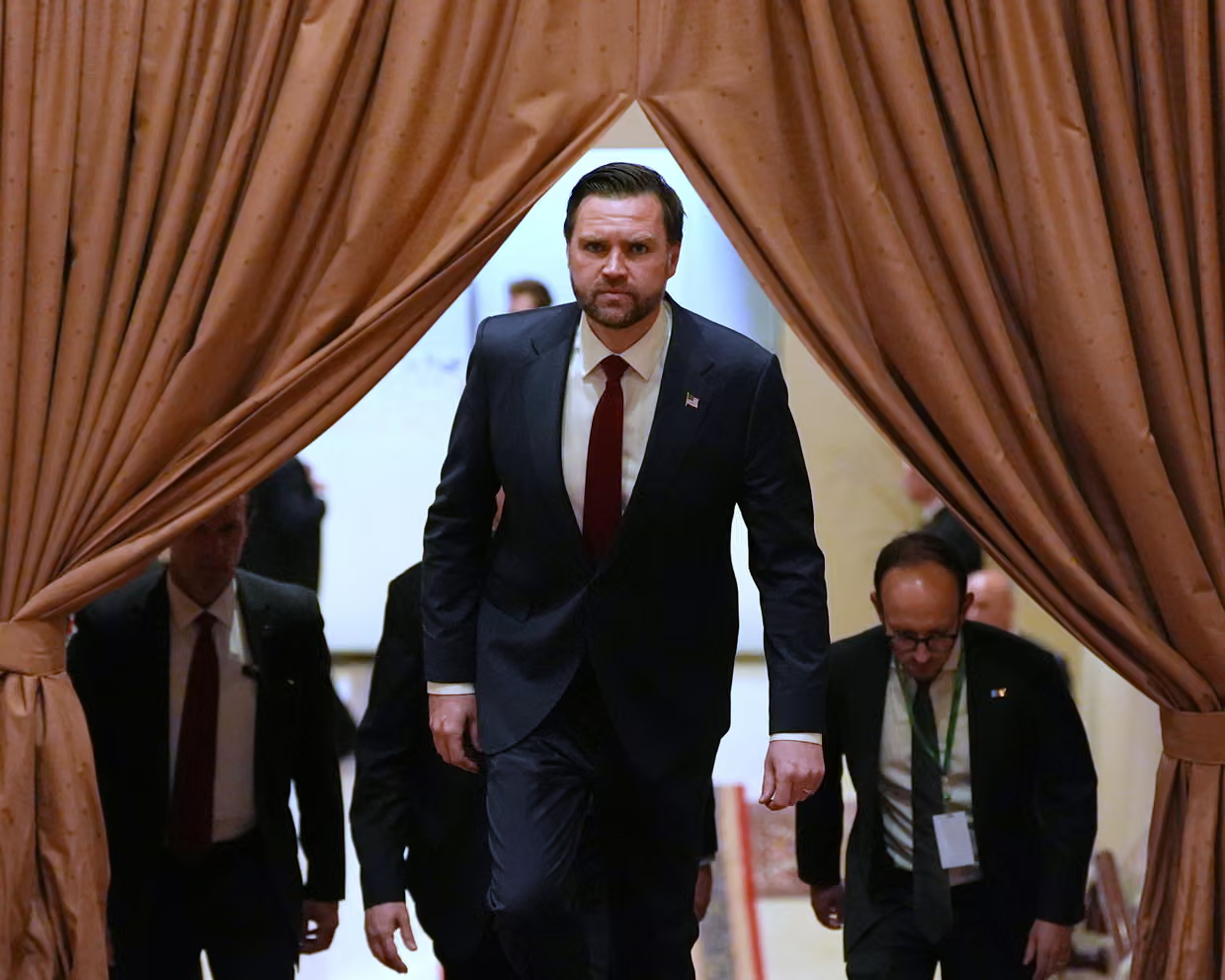
It was as if both delegations at the Iran–US peace talks in Islamabad believed that bringing in large numbers of negotiators could somehow offset the limitation of time needed to resolve a two-decade-old dispute over Iran’s nuclear programme, now further complicated by issues such as future control of the Strait of Hormuz and US compensation for recent strikes on Iran.
Iran reportedly sent two planeloads of officials, including members of the Islamic Revolutionary Guard Corps (IRGC), tasked with ensuring that any battlefield gains were not conceded at the negotiating table. Its delegation was spread across political, legal, security, economic, and military portfolios, with one Iranian technical document on nuclear facility safety reportedly exceeding 100 pages.
The United States, often criticised for relying heavily on special envoy Steve Witkoff, also brought a large team, including Vice President JD Vance and nearly 300 officials. The move appeared to reflect recognition that Iran’s experienced negotiating team — including figures such as Ali Bagheri Kani, a senior security council official and former nuclear negotiator, and Foreign Minister Abbas Araghchi, a key figure in the 2015 deal — was highly prepared and well-briefed.
Vance reportedly consulted with former President Donald Trump multiple times during the talks, and also spoke once with Israeli Prime Minister Benjamin Netanyahu, a call Iranian officials said contributed to a tougher US stance. However, observers noted it was unrealistic to expect such deeply entrenched issues — previously debated for years in Vienna — to be resolved in a single extended session.
Robert Malley, a former US nuclear negotiator, remarked: “Twenty-one hours was 20 hours too many if the goal was to reiterate a demand Iran had already rejected. It was many hours too few if the goal was to negotiate.”
Another former US State Department official, Aaron David Miller, added that if the administration expected Iran to abandon uranium enrichment after just 21 hours of talks, it had fundamentally misread both the situation and the Iranian delegation.
It appeared that both delegations at the Iran–US peace talks in Islamabad believed that deploying large numbers of negotiators might compensate for the limited time available to resolve a two-decade-long dispute over Iran’s nuclear programme, now further complicated by issues such as future control of the Strait of Hormuz and US compensation for recent strikes on Iran.
Iran is reported to have sent two planeloads of officials, including members of the Islamic Revolutionary Guard Corps (IRGC), whose role was to ensure that battlefield gains were not surrendered at the negotiating table. The delegation was divided across political, legal, security, economic, and military areas, with one Iranian technical report on nuclear facility safety reportedly exceeding 100 pages.
The United States, often criticised for relying heavily on special envoy Steve Witkoff, also assembled a large delegation that included Vice President JD Vance and nearly 300 officials. The scale of the team suggested recognition that Iran’s negotiating side — featuring experienced figures such as Ali Bagheri Kani, a senior security council official and former nuclear negotiator, and Foreign Minister Abbas Araghchi, a central figure in the 2015 agreement — was highly prepared and deeply informed.
Vance reportedly held multiple discussions with former President Donald Trump during the talks and also spoke once with Israeli Prime Minister Benjamin Netanyahu, a conversation Iranian officials said contributed to a tougher US stance. Still, observers noted it was unrealistic to expect such long-standing and complex issues — previously negotiated over years in Vienna — to be resolved in a single extended session.
Former US nuclear negotiator Robert Malley commented: “Twenty-one hours was 20 hours too many if the goal was to reiterate a demand Iran had already rejected. It was many hours too few if the goal was to negotiate.”
Another former US State Department official, Aaron David Miller, added that if the administration expected Iran to abandon uranium enrichment after just 21 hours of talks, it had clearly misjudged both the situation and the Iranian delegation.
About the Author