

“Because of the risk of nuclear war, humanity may have only about 35 years left,” said David Gross.
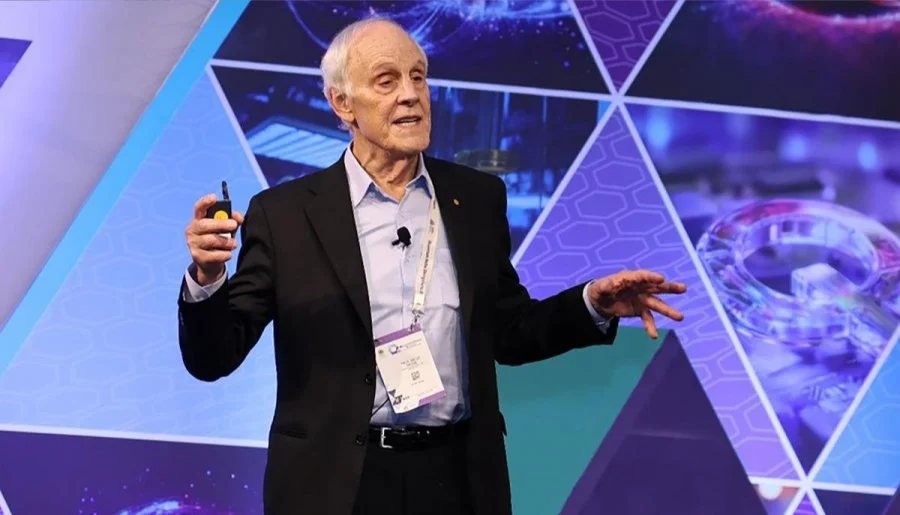
David Gross, a Nobel Prize–winning physicist, has raised concerns about humanity’s long-term future while reflecting on the pursuit of a unified quantum framework, often referred to as the “Theory of Everything.”
He was recently awarded the $3 million Special Breakthrough Prize in Fundamental Physics in recognition of his lifetime contributions to theoretical physics and his advocacy for global science.
In an interview with Live Science, David Gross said the greatest obstacle to achieving a unified theory isn’t mathematics—it’s whether humanity will survive long enough to complete the task.
“I spend part of my time trying to tell people that the chances of you living another 50 years are very small. Because of the danger of nuclear war, you may have only about 35 years,” he said while discussing the future of humanity and scientific progress.
Gross estimates there is roughly a 2% annual risk of nuclear war, driven by the erosion of arms control agreements and the increasing number of nuclear-armed states. Based on that estimate, he suggests the expected lifespan of modern civilization could be around 35 years before a catastrophic nuclear event.
He also cautioned that advances in AI-powered warfare could further accelerate the risk of global catastrophe.
What is the Theory of Everything?
The “Theory of Everything” refers to a proposed unified framework in quantum gravity that would merge the two foundational pillars of modern physics: general relativity—which explains gravity and the large-scale structure of the universe—and quantum mechanics, which describes the behavior of particles at atomic and subatomic levels.
If successfully developed, such a theory could explain the origin of the universe, shed light on what happens inside black holes, and reveal deeper, fundamental laws governing reality.
About the Author