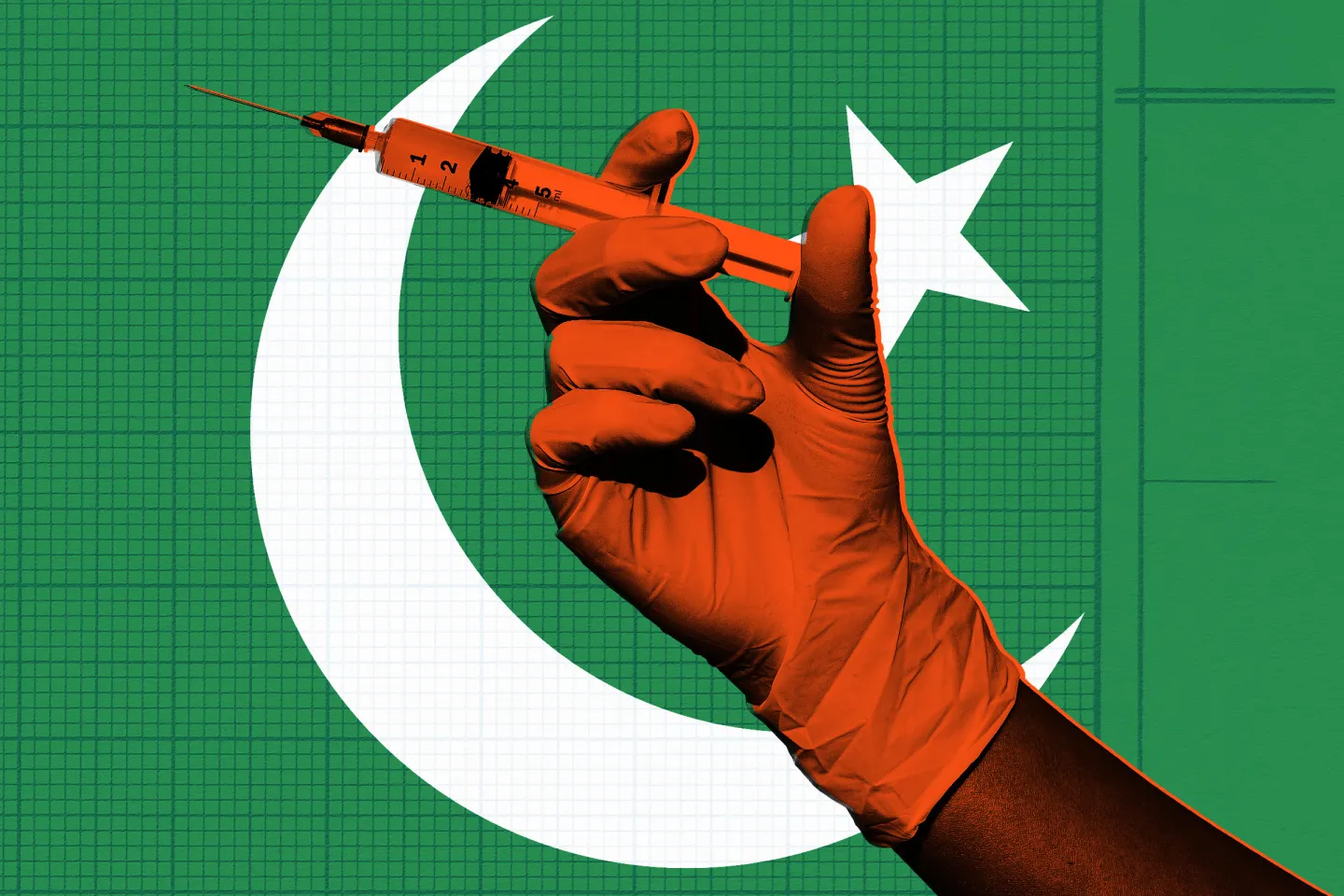

Unsafe medical practices are still contributing to the spread of life-threatening diseases within Pakistan’s healthcare system.

A recent BBC London documentary has highlighted how hundreds of young children were infected with HIV in a public sector hospital in Punjab, Pakistan. The undercover footage reportedly showed staff reusing syringes and other unsafe infection control practices.
The report is particularly concerning as a similar outbreak was raised a year ago, and the Punjab government had pledged reforms to prevent such incidents in the future. However, the Department of Health has rejected claims that the issue is ongoing, while the BBC maintains that its footage is recent and accurate.
Meanwhile, in Sindh, over 100 people—mostly children—were reported with Mpox (commonly known as monkeypox). Around 30 cases were laboratory-confirmed, with nine deaths. Most infections were linked to Khairpur and traced back to public healthcare facilities.
Although a high fatality rate in Mpox cases is unusual, experts suggest that poor infection control in healthcare settings may be a key contributing factor.
Beyond Mpox and HIV, unsafe medical practices remain a broader public health concern. Unsafe blood transfusions, inadequate sterilisation of equipment, and poor procedural hygiene continue to contribute to the spread of infections such as HIV and hepatitis. In addition, injectable drug use and unsafe sexual practices also play a significant role in disease transmission. Other serious infections, including Crimean-Congo Hemorrhagic Fever (CCHF), also continue to cause deaths each year.
Past investigations have repeatedly shown how such outbreaks develop over time. In 2009, an HIV outbreak in Jallal Pur Jattan was initially thought to be recent, but further analysis suggested it was an endemic issue that had persisted for over a decade. It also revealed that the virus had begun spreading from high-risk groups into the general population, including a significant number of children—warnings that went largely unaddressed.
A decade later, a major HIV outbreak in Larkana in 2019 showed similar patterns on a much larger scale, with over 1,000 infected children. Investigations suggested that unsafe injection practices and unnecessary use of syringes in healthcare settings were major contributing factors, with only a small proportion of cases linked to mother-to-child transmission.
Experts argue that administrative overreach and lack of clinical expertise in decision-making are also part of the problem. They stress the need for qualified healthcare professionals to be given autonomy, resources, and respect to improve the system effectively.
The human cost remains severe. Many HIV-positive children are not expected to reach adulthood, and reports suggest hundreds have already died in recent outbreaks. Public health experts warn that similar conditions may exist in many parts of Pakistan, where systemic issues in infection control continue to go unaddressed, often with devastating consequences.
About the Author