

Currently, about half of Norges Bank Investment Management’s 700 employees are developing their own AI tools.
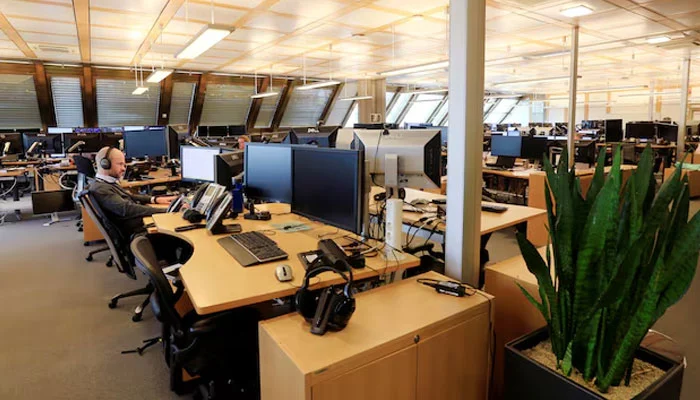
Norway’s $2.1 trillion sovereign wealth fund, the largest in the world, plans to let AI systems handle some investment decisions under human oversight in the future—but not yet, as officials said the tools still produce errors.
Currently, around half of the 700 employees at Norges Bank Investment Management are developing their own AI tools using Claude to Stian Kirkeberg.
Staff mainly use these AI tools to gather information to support decision-making, Kirkeberg told a fund seminar. Applications include monitoring the 7,000 companies the fund invests in for ESG and financial risks, simulating contract negotiations, and preparing for company meetings.
Kirkeberg said that over time, some AI agents may be permitted to make limited decisions autonomously. “The principle is that we make better human decisions by getting AI to analyse it for us,” he told Reuters. “At some stage, we’re going to trust that the agent can make some of the decisions and we just monitor what it does.” He emphasized that human oversight remains essential, and the approach is not yet being implemented.
Strong AI Support from Leadership
Nicolai Tangen, chief executive of the fund, has been a vocal advocate of AI, both internally and for the companies in which the fund invests, once calling firms that ignore the technology “complete morons.”
He noted that, unlike short-term investment firms, the fund—which manages Norway’s oil and gas revenues for future generations—is under less pressure to automate investment decisions. “You have investment firms which have automated investment decisions … We’re not doing that. But we are also not a high-frequency trader … we are a long-term investor, so it’s a bit different,” Tangen told Reuters. One exception is using AI to analyse trading timing to reduce transaction costs.
Tangen said the fund has invested “millions of crowns” in AI and achieved benefits “in the billions,” without specifying exact figures or a timeframe. While headcount is expected to remain around 700 across offices in Oslo, London, New York, and Singapore, roles are likely to shift from back-end administration to front-end investment work.
He advised other companies implementing AI not to set explicit job-cut targets. “Because then you will just create a lot of resistance. I think instead what you have as a target is to increase sales, profits, and efficiency, just to gain market share and do what you do better. I think that’s a much more constructive way of implementing it,” Tangen said.
About the Author