
HOUSTON: The Artemis astronauts spent Saturday preparing for their highly anticipated lunar flyby, reviewing the surface features they are set to observe and photograph while orbiting the Moon.
Upon waking around 1635 GMT, the crew was about 169,000 miles (271,979 kilometres) from Earth and closing in on the Moon at a distance of roughly 110,700 miles (178,154 kilometres), according to NASA.
The next key milestone of the roughly 10-day mission is expected overnight Sunday into Monday, when the crew will enter the “lunar sphere of influence”—the point at which the Moon’s gravity exerts a stronger pull on the spacecraft than Earth’s.
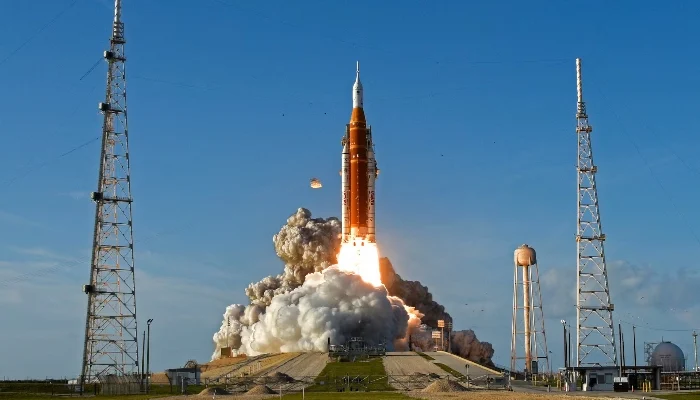
If all goes as planned, the Orion spacecraft could carry the astronauts farther from Earth than any humans in history during its swing around the Moon.
The crew began their day with a breakfast of scrambled eggs and coffee, NASA said, after waking up to Chappell Roan’s hit song “Pink Pony Club.”
“Morale is high on board,” commander Reid Wiseman told Houston’s Mission Control as the crew began their workday.
The father of two said he was especially uplifted after speaking with his daughters from space.
“We’re up here, so far away, and for a moment I felt reunited with my family,” he said during a live press conference. “It was one of the greatest moments of my life.”
Wiseman, along with fellow Americans Christina Koch and Victor Glover, and Canadian astronaut Jeremy Hansen, is on a historic mission around the Moon, preparing for a slingshot maneuver.
He described the journey as a “Herculean” feat—one that humanity has not achieved in more than half a century.
“Morale is high on board,” commander Reid Wiseman told Houston’s Mission Control as the crew began their workday.
The father of two said he was especially uplifted after speaking with his daughters from space.
“We’re up here, so far away, and for a moment I felt reunited with my family,” he said during a live press conference. “It was one of the greatest moments of my life.”
Wiseman, along with fellow Americans Christina Koch and Victor Glover, and Canadian astronaut Jeremy Hansen, is on a historic mission around the Moon, preparing for a slingshot maneuver.
He described the journey as a “Herculean” feat—one that humanity has not achieved in more than half a century.
“Last night, we got our first look at the Moon’s far side, and it was absolutely breathtaking,” mission specialist Christina Koch said during a live interview from space.
John Honeycutt, manager of NASA’s Space Launch System (SLS) program, shared a newly transmitted image from the crew during a Saturday briefing.
“On the far left, you can see parts of the Moon that had never been viewed by human eyes until now,” Honeycutt said, noting that only robotic instruments had previously captured images of that region.
The Artemis 2 crew has been actively taking photographs, including with smartphones—devices NASA has recently approved for use on space missions.
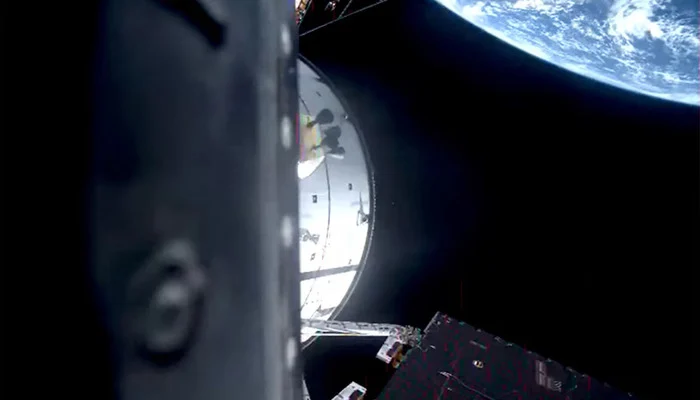
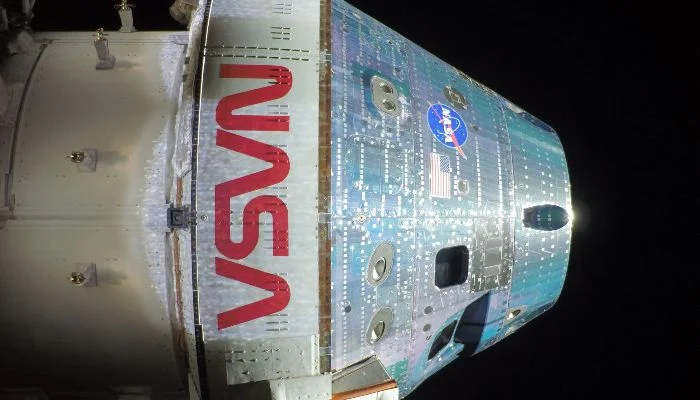
Earlier, the agency released images from the Orion spacecraft, including a full view of Earth highlighting its deep blue oceans and swirling clouds.
However, the spacecraft’s toilet system has remained a recurring issue, with astronauts occasionally instructed to rely on backup urinal bags.
NASA said an attempt to dump wastewater—venting urine into space—was unsuccessful, likely due to an ice-related blockage, and efforts to resolve the problem are ongoing.
The Artemis 2 mission is part of a broader plan to return humans to the Moon on a regular basis, ultimately aiming to establish a permanent lunar base to support future exploration.
Despite the mission’s technical demands and precision, the astronauts are still finding moments to enjoy the experience.
“It just makes me feel like a little kid,” Hansen said, describing the thrill of floating in space.
About the Author