

DPM describes it as a significant step toward peace, emphasizing that it will bolster collective efforts in that direction.
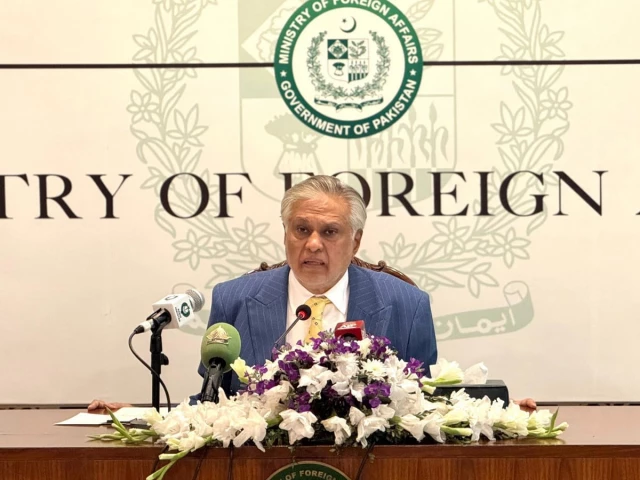
Deputy Prime Minister and Foreign Minister Ishaq Dar announced on Saturday that Iran has agreed to allow 20 additional ships under the Pakistani flag to pass through the Strait of Hormuz.
“I am pleased to share that the Government of Iran has permitted 20 more Pakistani-flagged ships to transit the Strait of Hormuz,” Dar said in a post on X, noting that two ships will cross the Strait daily.
The development follows Pakistan’s intensified diplomatic efforts since the outbreak of tensions between the US, Israel, and Iran, aimed at de-escalating the situation in the Middle East. These efforts reportedly contributed to President Donald Trump postponing planned military strikes on Iranian power plants.
Describing Iran’s move as a “welcome and constructive gesture,” Dar said it signals hope for peace and regional stability.
“This positive announcement represents a meaningful step toward peace and will reinforce our collective efforts in that direction,” he added, emphasizing that “dialogue, diplomacy, and confidence-building measures remain the only way forward.”
Earlier on Saturday, sources from the Ministry of Maritime Affairs confirmed that Iran had allowed two Pakistani cargo ships to transit the Strait of Hormuz.
The vessels, Multan and P-Akili, which had been held after Iranian forces took control of the strategic strait — a vital global oil route — have now crossed and are heading toward Karachi. According to a source familiar with the matter, they are expected to arrive at Karachi port on March 31.
“It is the second occasion on which Tehran has allowed a Pakistani ship to transit the Strait of Hormuz since the conflict began on February 28, 2026. Previously, a Pakistani oil tanker made the passage on March 16 under similar arrangements.”
The Middle East remains on high alert following the joint US-Israel offensive on Iran that began on February 28, resulting in over 3,000 casualties, including then-Supreme Leader Ali Khamenei.
In response, Tehran has launched drone and missile strikes targeting Israel, Jordan, Iraq, and Gulf nations hosting US military assets, causing human casualties, infrastructure damage, and disruptions to global markets and air travel.
About the Author