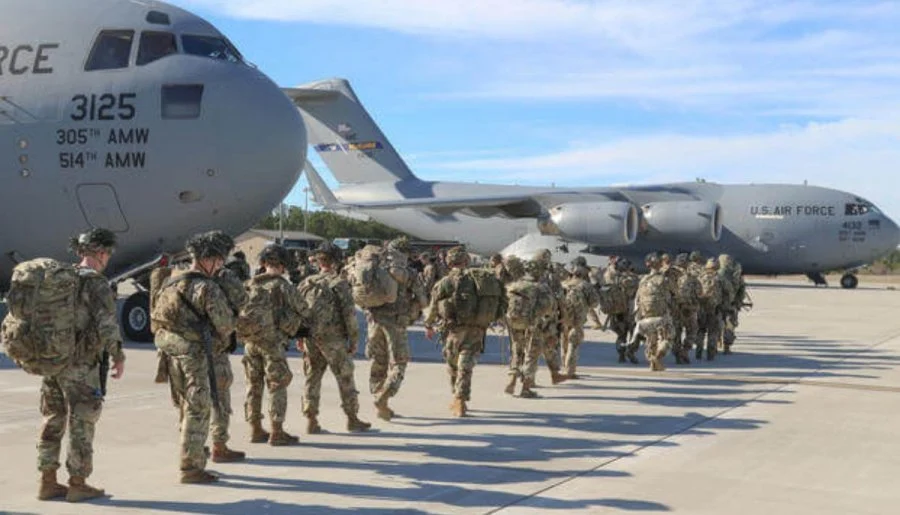

Last year, NASA’s Perseverance rover detected leopard-spot patterns on Martian rocks, indicating the possible presence of life.
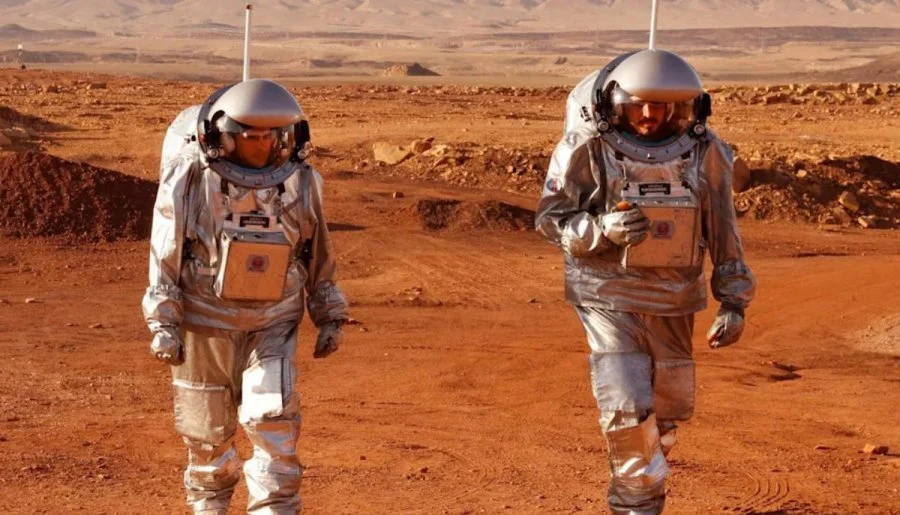
While Earth has long been regarded as the birthplace of humanity, a new, radical theory challenges this idea and adds a new layer to the mystery of human origins.
The Martian ancestry hypothesis, proposed by scientists at Johns Hopkins University, suggests that humans may have originally come from Mars.
Astrobiologists have long theorized that life could travel between planets when asteroids crash, a concept known as the lithopanspermia hypothesis. However, until recently, it was unclear whether microbes could survive the violent impact and hazardous journey through space.
In a recent experiment, scientists fired projectiles at the ultra-resilient bacterium Deinococcus radiodurans and discovered that these microbes can withstand the extreme pressure and shock of being ejected from a planet’s surface during an asteroid impact.
Published in PNAS Nexus, the study found that Deinococcus radiodurans survived pressures up to three gigapascals—roughly 30 times greater than the pressure at the Mariana Trench.
“We expected it to be dead at that first pressure. We kept firing faster and faster, trying to kill it, but it was incredibly difficult,” said Dr. Lily Zhao, the lead author and a NASA fellow at Johns Hopkins University.
Given Mars’ past habitability, including the presence of liquid water, the researchers suggested that Earthly life, potentially including humans, could be descended from Martian microbes. If interplanetary microbial travel is possible, Mars emerges as a compelling candidate for the cradle of life that eventually took root on Earth.
“We have shown that life can survive large-scale impact and ejection. That means life could potentially move between planets. Maybe we’re Martians,” Zhao added.
Evidence supporting Mars’ past habitability continues to grow. Last year, NASA’s Perseverance rover found leopard-spot markings on rocks containing organic compounds, indicating the possible presence of life on the Red Planet.
Prof. Kaliat Ramesh, the senior author at Johns Hopkins, said the groundbreaking study could change our understanding of the origin of life and humanity itself.
The findings also carry significant implications for space missions. If hardy microbes can survive interplanetary travel, agencies like NASA must be even more cautious about contaminating planets or moons previously considered sterile.
About the Author