
The government is reducing its financial contributions at a crucial stage of the campaign to eradicate the disease, writes Gillian Russell.
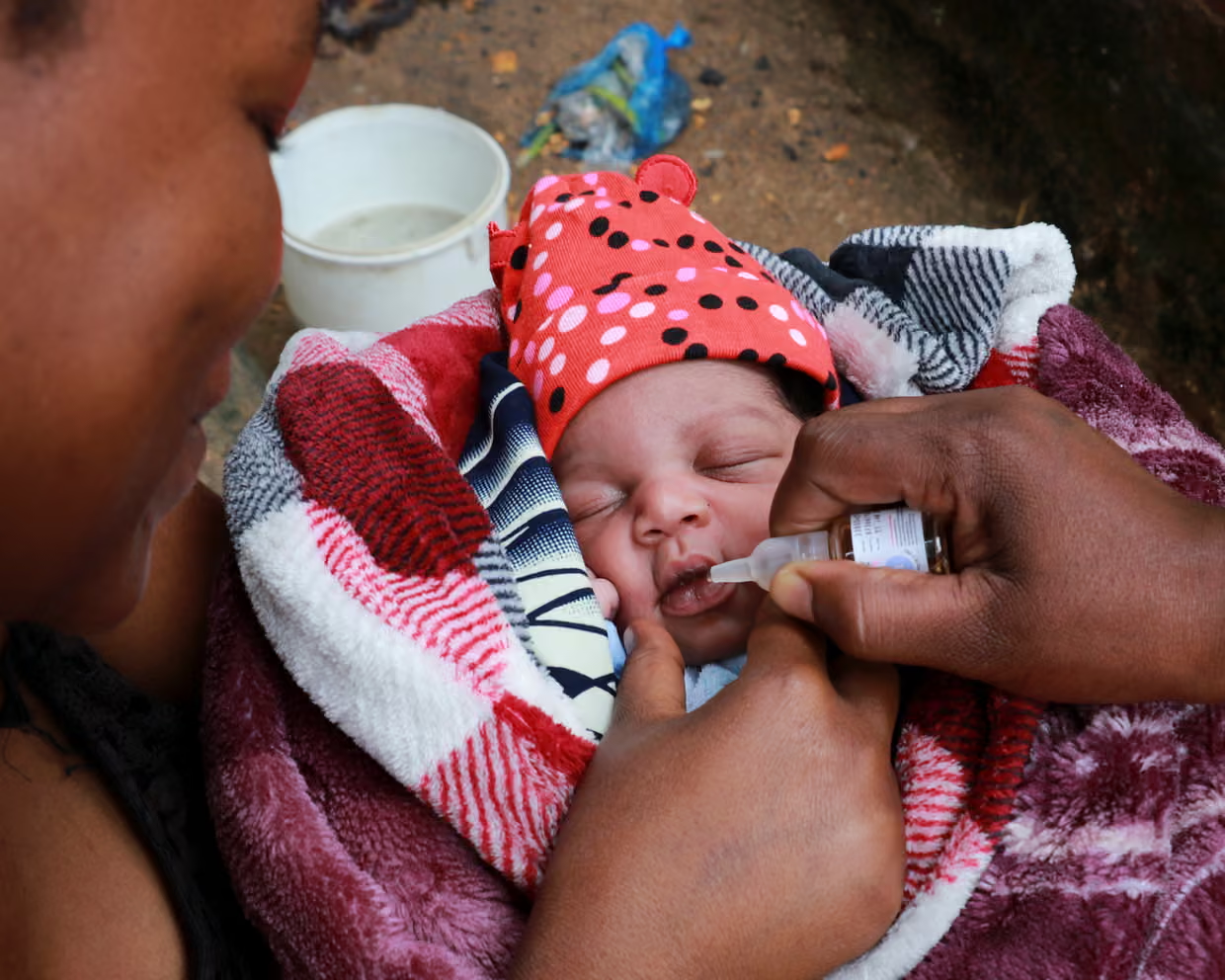
It is deeply concerning to learn that the UK government plans to end its funding contributions to the Global Polio Eradication Initiative (GPEI) after 2026, a move that could undermine decades of progress aimed at improving the health and wellbeing of children worldwide (Polio virus detected in London days before ministers cut global eradication funding, 27 March).
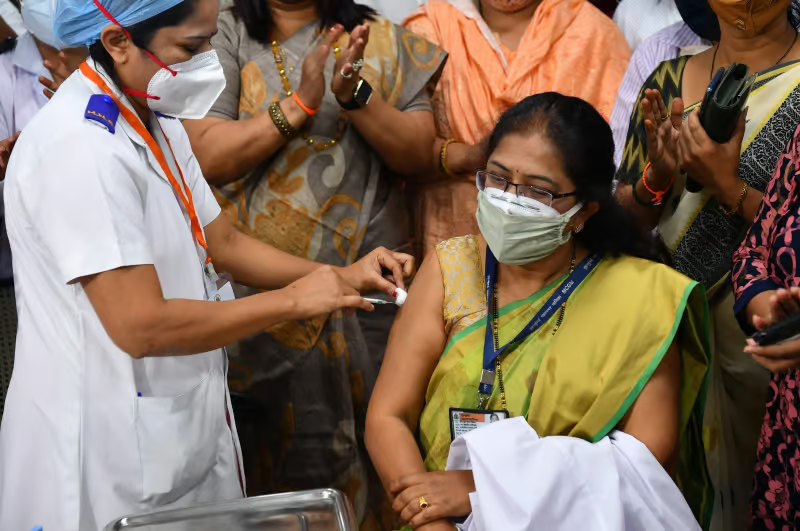
The eradication of polio remains a central focus of Rotary International’s humanitarian work, as part of the GPEI partnership. I am among many Rotary members who have participated in vaccination campaigns in India and witnessed the commitment of local health workers working tirelessly to ensure that every child is immunised.
We are now at a decisive stage in the fight against polio. Although infection rates in Pakistan and Afghanistan are currently very low, this achievement is the result of sustained efforts in the world’s last two endemic countries. A recent vaccination drive in Pakistan alone reached 45 million children.
I contracted polio in 1954 at the age of 18 months, before the vaccine was introduced in the UK. The disease left me with permanent disability in my left arm, and I underwent multiple surgeries on my left leg during childhood. I consider myself fortunate compared to many others. This devastating illness, which primarily affects young children and can cause lifelong disability, must be eradicated, and the effort to achieve this goal must be properly funded.
About the Author