
ISLAMABAD: The government on Thursday agreed in principle to introduce weekly petroleum price adjustments starting March 8, allowing additional costs—such as higher insurance, freight, and war risk premiums—to be passed on to consumers.
As part of an energy contingency plan to be presented to Prime Minister Shehbaz Sharif ahead of approval by the Economic Coordination Committee, authorities are also considering the revival of several measures introduced during the COVID-19 pandemic. These may include distance learning, work-from-home arrangements, and car-pooling initiatives aimed at reducing fuel consumption and limiting foreign exchange losses.
The federal government has also asked provincial administrations to closely monitor petrol stations to prevent hoarding or artificial shortages.
Meanwhile, the Oil Marketing Association of Pakistan has accused local oil refineries of reducing supplies below previously agreed levels, raising concerns about potential disruptions in the fuel supply chain.
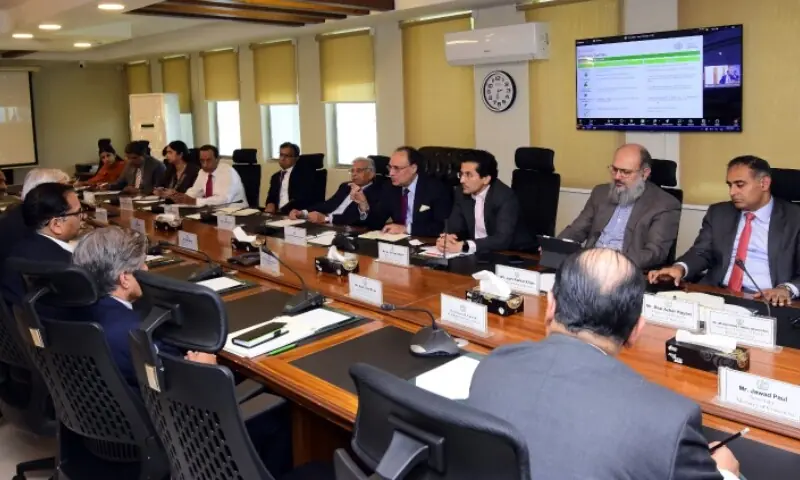
The national action plan to address the emerging crisis was finalised in consultation with provincial and regional governments during a meeting of the Cabinet Committee to Monitor Petrol Prices in light of the evolving regional situation. The committee was constituted by Prime Minister Shehbaz Sharif.
The meeting took place as tensions between the United States and Israel with Iran entered their sixth day, disrupting global supply chains as shipping activity through the Strait of Hormuz remained severely affected.
The action plan is scheduled to be presented to the prime minister on Friday for approval. After further adjustments, it will be submitted to the Economic Coordination Committee (ECC) of the cabinet for formal endorsement and implementation.
Given the urgency of the situation, back-to-back meetings of the relevant forums have been scheduled. Sources revealed that the proposed contingency measures were also discussed with the International Monetary Fund.
During the cabinet committee meeting on oil pricing, chaired by Finance Minister Muhammad Aurangzeb, officials from federal ministries and provincial governments recalled that the country faced a similar challenge during the COVID‑19 pandemic, when Pakistan dealt with even greater financial and foreign exchange pressures.
Except for health-related restrictions, most of the austerity measures introduced during that period are expected to be reinstated next week to conserve fuel, energy, and foreign exchange while ensuring priority sectors remain operational.
The meeting also reviewed developments in the energy sector and assessed the country’s preparedness, including a detailed evaluation of petroleum product stock levels across the country.
“In line with broader preparedness planning, the committee reviewed a phased set of fuel conservation measures based on protocols previously used during national emergencies. These steps aim to manage fuel demand if necessary, while ensuring that public communication remains measured to avoid creating unnecessary concern,” an official statement said after the meeting.
The committee agreed to finalise its recommendations by Friday and submit them to the prime minister along with a detailed implementation plan. The plan will outline strategies for maintaining fuel supply, enforcing regulations, adjusting pricing mechanisms, and introducing conservation measures.
Officials also decided that the committee would meet daily to closely monitor the situation, review fuel stock levels and supply chain movements, and ensure timely coordination and implementation among all relevant stakeholders.
Members were informed that national fuel reserves remained at comfortable levels, with adequate stocks available for key petroleum products, and that there was no immediate risk to the availability of fuel supplies across Pakistan.
However, the committee noted that the situation remained fluid and uncertain, requiring constant vigilance as global supply chains and shipping routes faced increasing risks and rising costs.
Officials were also briefed on developments in the international oil market, including trends in global benchmarks, freight and insurance costs, maritime activity, and the potential for congestion at critical chokepoints such as the Strait of Hormuz.
The committee examined several supply and pricing scenarios to ensure preparedness under different circumstances and to maintain stability in domestic energy supplies.
In this context, members observed that rising “war premium” costs and growing competition for energy cargoes—particularly in Asian markets—could place additional pressure on Pakistan’s external accounts if market volatility continues.
The committee also reviewed ongoing efforts to strengthen supply security through diversified sourcing and improved logistics arrangements.
Officials shared updates on diplomatic and commercial engagements with friendly countries and suppliers aimed at securing additional crude oil and refined petroleum products through alternative shipping routes and ports, including options outside high-risk corridors.
To maintain stable market conditions, the committee discussed steps to prevent hoarding, illegal storage, and the diversion of petroleum products. These measures would involve coordinated enforcement by provincial governments in collaboration with the Oil and Gas Regulatory Authority and other relevant agencies.
In his remarks, Finance Minister Muhammad Aurangzeb emphasised that ensuring the uninterrupted supply of petroleum products across the country remained the government’s top priority.
Officials said the situation was being managed through daily monitoring, scenario planning, and coordinated decision-making. Where international price movements create unavoidable pressure, the government will respond through established mechanisms to maintain market stability.
The committee also reviewed the supply situation of liquefied natural gas and liquefied petroleum gas, assessing potential risks in supply chains, shipment schedules, and terminal operations. Members discussed contingency options to manage demand if disruptions continue.
Monitoring of petrol stations
Separately, the federal government directed provincial administrations to ensure strict monitoring and physical inspections of retail petrol stations through deputy commissioners to prevent hoarding and profiteering.
The government also appointed Hamed Yaqoob Sheikh, a Grade-22 officer of the Pakistan Administrative Service, as secretary of the Petroleum Division — a position that had remained vacant for the past two months. Mr Sheikh previously served as secretary for finance and planning and was most recently the secretary of the Ministry of National Food Security and Research.
In a separate statement, the Oil and Gas Regulatory Authority assured the public that the country currently had sufficient petroleum stocks to meet national demand and that there was no need for panic buying or hoarding.
The regulator added that, given the prevailing geopolitical situation, authorities were closely monitoring the supply chain to ensure uninterrupted availability of petroleum products nationwide.
“The existing stock position remains comfortable and well within the prescribed requirements,” the authority said.
It warned that strict action would be taken against any individual or entity involved in illegal hoarding or storage of petroleum products at unauthorised locations, particularly outside licensed oil depots and retail outlets of oil marketing companies.
According to the authority, any premises found involved in illegal storage would be sealed. The public was also advised not to pay attention to rumours and to continue normal consumption, as the petroleum supply situation in Pakistan remained stable.
Concerns raised about local refineries
Meanwhile, the Oil Marketing Association of Pakistan wrote to the chairman of the Oil and Gas Regulatory Authority highlighting what it described as a “serious concern” regarding product supply commitments made by local refineries during the latest product review meeting.
According to the letter, seen by Dawn, the supply volumes from local refineries had been mutually agreed upon and finalised during the meeting. Based on those commitments, most oil marketing companies planned their supply strategies and did not arrange import cargoes, expecting local refinery allocations to meet the required demand.
However, during the current month, the association claimed that local refineries had unilaterally deviated from those commitments and introduced a new allocation system.
Under this arrangement, refineries are supplying limited product quantities to oil marketing companies based on certain averages rather than the previously agreed volumes.
“This action constitutes a clear violation of the commitments made during the meeting,” the letter stated.
About the Author