

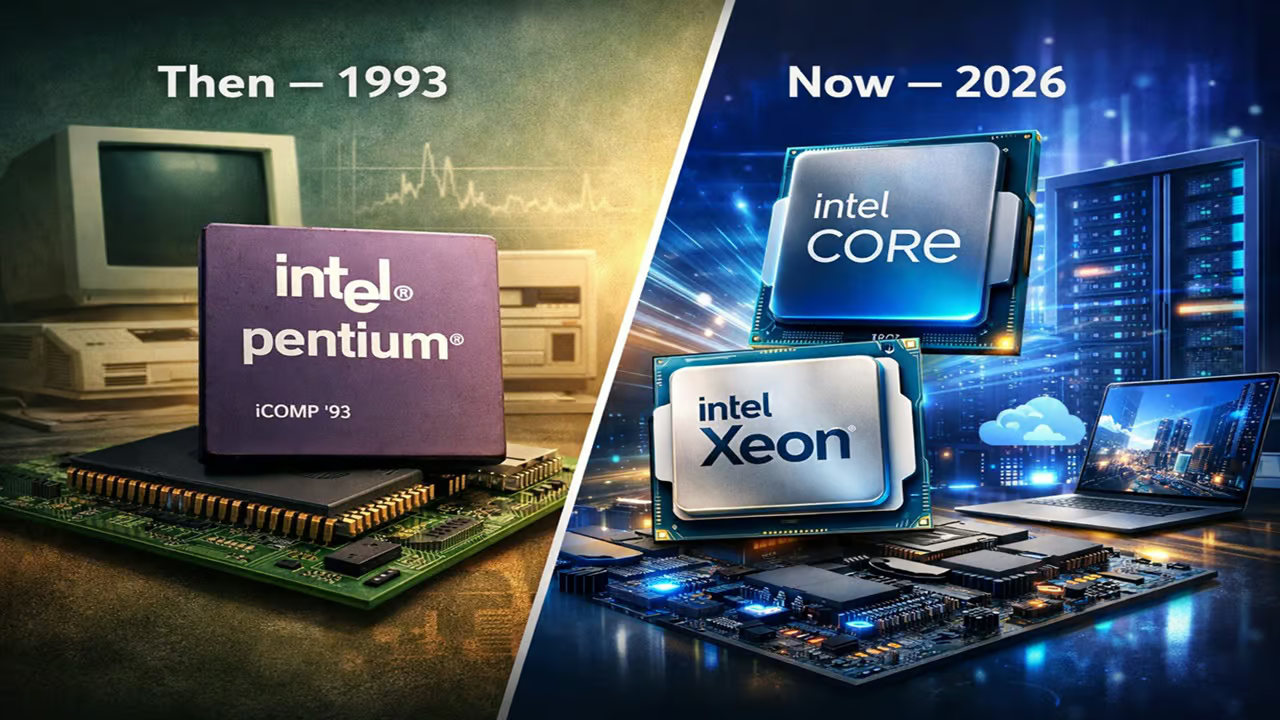
The Launch of the Intel Pentium processor: A Turning Point in Computing
March 22, 1993, stands as a landmark date in the history of personal computing. On this day, Intel Corporation introduced the Pentium processor—a breakthrough chip that significantly improved performance, efficiency, and overall computing power. More than just an upgrade, it marked a shift that helped accelerate the global adoption of personal computers and influenced the evolution of modern computing.
The Rise of a New Era
In the early 1990s, computing was rapidly evolving. Earlier processors like the 386 and 486 had already advanced PC capabilities, but the growing demand for complex software—such as multimedia applications, CAD tools, and games—required even greater performance. Intel responded with the Pentium, introducing a superscalar architecture that allowed the processor to execute multiple instructions in a single clock cycle.
Key Innovations
The Pentium brought several important advancements:
- A 64-bit data bus, enabling faster data transfer between the processor and memory
- An enhanced floating-point unit (FPU) for improved graphics, scientific tasks, and 3D modeling
- On-chip cache memory to reduce delays in accessing frequently used data
- A dual pipeline design to process instructions simultaneously and boost efficiency
These features made the Pentium far more powerful and versatile than its predecessors.
Development and Branding
Founded in 1968 by Robert Noyce and Gordon Moore, Intel had already established itself as a leader in microprocessor innovation. The Pentium was developed by a team of engineers, including John H. Crawford, and represented years of research and advancement.
The name “Pentium” was chosen to signify Intel’s fifth-generation x86 processor while also serving as a distinctive, trademarkable brand—strengthening Intel’s presence in the CPU market.
Impact and Popularity
The launch of the Pentium generated widespread excitement. Its performance enabled PCs to run advanced software, from multimedia tools to early 3D games, transforming how people worked and entertained themselves.
Intel also partnered with major PC manufacturers such as Dell, Compaq, and IBM, helping the Pentium reach a broad audience quickly. Early reviews praised its speed (initially 60–66 MHz), reliability, and multitasking capabilities.
Market Influence
The Pentium became a commercial success and set a new standard for both business and home computers. It fueled growth in the software industry and strengthened Intel’s position against competitors like AMD, shaping the future of processor development.
Legacy and Relevance Today
Even in 2026, the Pentium’s influence is still evident. Modern processors, including Intel’s Core and Xeon lines, are built on principles introduced with the Pentium—such as pipelining, cache memory, and advanced processing techniques.
Its impact extended beyond technology, making personal computers more accessible and useful across industries like education, business, gaming, and creative work.
Then vs. Now
The original Pentium processors operated at 60–66 MHz with a single core and limited cache. In contrast, today’s CPUs exceed 5 GHz, feature multiple cores and threads, advanced caching systems, and even AI acceleration—demonstrating how far computing has progressed while still building on Pentium’s foundation.
A Lasting Milestone
The release of the Intel Pentium processor was a defining moment in tech history. It reshaped computing by delivering unprecedented performance and helping to establish the modern digital world we rely on today.
About the Author