

The US military has been deploying advanced artificial intelligence systems in its ongoing conflict with Iran, but the Pentagon’s ties to tech firms stretch back many years.
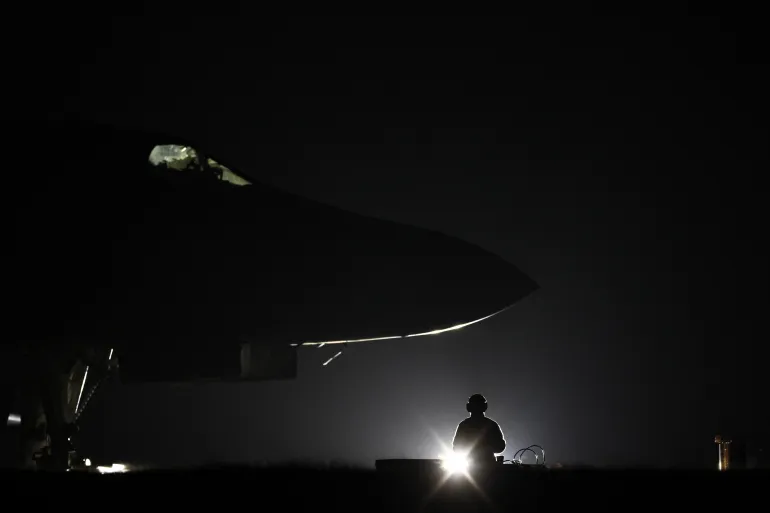
The United States military confirmed on Wednesday that it is employing multiple artificial intelligence (AI) tools in the ongoing US‑Israel conflict in Iran.
This is far from the first instance of the military partnering with tech firms. For decades, technology companies and universities have worked with the US armed forces on weapons development. Notably, the commercial internet itself originated from a military-funded initiative — ARPANET — designed to ensure secure communications during the Cold War.
In this explainer, we examine the Pentagon’s long history of collaboration with tech companies and how major firms like Google, Amazon, Microsoft, Meta, and Palantir have become increasingly integrated into the US military.
How is the US using AI in the Iran conflict?
Brad Cooper, head of US Central Command (CENTCOM), stated in a video message: “Our warfighters are leveraging a range of advanced AI tools. These systems allow us to process vast amounts of data in seconds, enabling leaders to cut through the noise and make smarter decisions faster than the enemy can respond.”
For military and defence applications, AI tools—such as large language models (LLMs)—can summarise extensive documents, analyse data, translate languages, transcribe speech, and draft memos. In theory, they could also support autonomous or semi-autonomous weapons systems capable of identifying and striking targets without direct human input.
However, most AI companies include terms of service that explicitly forbid such uses.
A large language model (LLM) is an AI system that produces text, visual, or audio content resembling human-created material by learning from massive datasets, including books, archives, websites, images, and videos.
“Humans will always make the final call on what to target and when to engage, but advanced AI tools can reduce processes that once took hours or even days to just seconds,” CENTCOM’s Brad Cooper said.
According to reports, the US military used AI tools from Anthropic — specifically its Claude model — in its 2026 operation to capture Venezuelan President Nicolás Maduro in January, despite the company’s usage policies that prohibit Claude from being used for surveillance, weapons development or inciting violence.
US media have also noted that Anthropic has worked with Palantir Technologies, whose platforms are widely used by the Department of Defense and federal law enforcement agencies, and through this partnership Claude has been integrated into military systems.
Earlier this month, the Pentagon blacklisted Anthropic after the company refused to remove AI safeguards that prevent its technology from being used for domestic surveillance in the US or to operate autonomous weapons capable of striking targets without human oversight.
Meanwhile, UK-based health advocacy group Medact has opposed Palantir Technologies, which has been contracted to build a Federated Data Platform (FDP) for NHS England. Palantir has also faced criticism for supplying AI products and services to the Israeli military and intelligence agencies during the ongoing conflict in Gaza, which scholars and campaigners describe as a genocide.
Earlier this month, OpenAI, the parent company of ChatGPT, revised its agreement with the US government to explicitly prohibit its technology from being used for domestic surveillance after facing similar criticism.
Is the US military the only one doing this?
With rapid advancements in AI, concerns are growing over the use of such technology by militaries in warfare.
Multiple reports indicate that Israel has also relied heavily on AI during its campaign in Gaza, which has resulted in the deaths of over 72,000 Palestinians since October 2023 and left much of the territory in ruins.
In July 2025, Francesca Albanese, the United Nations special rapporteur on human rights in the occupied Palestinian territories, published a report detailing the corporations supporting Israel in the displacement of Palestinians and its actions in Gaza, which violate international law. Palantir Technologies was listed among the companies mentioned.
How has the US military used technology over the decades?
The United States military has long turned to technological innovation to gain an edge in warfare. During World War II, for example, the US and its partners developed and deployed some of the earliest electronic computing machines to automate complex calculations that were previously done by hand. One of the most significant early computers, the Electronic Numerical Integrator and Computer (ENIAC), was created to calculate ballistic trajectories for artillery, massively speeding up calculations that previously took hours or days.
In later years, the military continued to collaborate with tech firms and research institutions on advanced systems. Machines like the ORDVAC and the BRLESC computers were developed in the early 1950s to handle high‑precision ballistic computations and logistical tasks for the US Army.
These early partnerships between military organisations and technology developers laid the foundation for subsequent innovation, influencing everything from early supercomputers to modern defence computing systems.
Many technologies widely used today were originally developed for military purposes. One prominent example is the Global Positioning System (GPS), which uses a network of satellites and receivers to provide global positioning and navigation, now commonly applied for mapping and everyday navigation.
GPS was initially developed by the US military in the 1970s to enable precision-guided bombing. The first satellites were launched in the 1980s, and the system was first tested during the 1990–91 Gulf War.
Similarly, while the internet does not have a single, clear origin, the US military played a significant role in its early development, contributing to the technologies that eventually made global digital communication possible.
During the Cold War space race with the Soviet Union, the US Department of Defense established the Advanced Research Projects Agency (ARPA) in 1958. By 1962, an ARPA scientist had proposed a network of computers that could communicate with one another—a foundational idea that contributed to the development of the internet. (The Cold War lasted from 1947 to 1991.)
During the Vietnam War (1955–1975) and the broader Cold War era, early Silicon Valley companies like Fairchild Semiconductor and Hewlett-Packard (HP) relied on contracts from NASA and the Pentagon to develop radar systems, missile guidance, and communications equipment.
The CIA also supported a venture fund that eventually led to the creation of Palantir around 2003. Palantir’s Gotham software became a critical tool for US forces in Iraq and Afghanistan, condensing vast datasets—including surveillance footage—into searchable databases.
In 2017, the US Department of Defense launched Project Maven, which used Google’s AI technology to automate portions of drone and satellite imagery analysis.
In 2021, the US military partnered with Microsoft to develop the Integrated Visual Augmentation System (IVAS), a headset designed to enhance soldiers’ situational awareness and improve battlefield safety.
Under the Pentagon’s Joint Warfighting Cloud Capability contract, Amazon Web Services (AWS) provides secure cloud infrastructure for US forces, supporting everything from logistics systems to AI workloads across unclassified, secret, and top‑secret networks.
In 2022, billionaire Elon Musk’s SpaceX created Starshield, a spy satellite network for the US military.
About the Author