
India could soon see a major shift in weight-loss treatment—at least in theory.
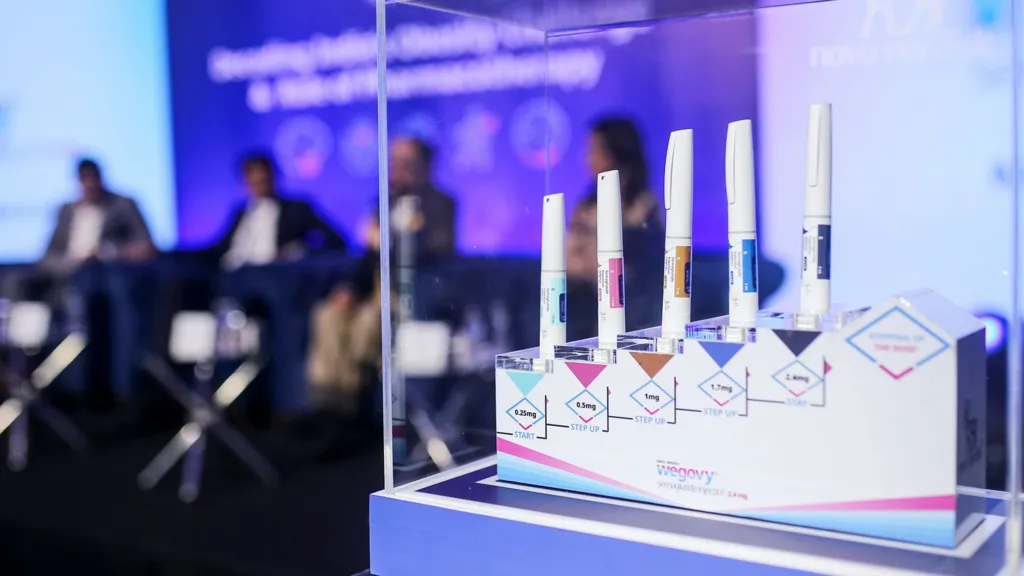
On Friday, the patent for semaglutide—the active molecule behind Danish drugmaker Novo Nordisk’s blockbuster weight-loss drugs Wegovy and Ozempic—expired in the country.
This opens the door for domestic pharmaceutical companies to produce cheaper generic versions, sparking competition that could cut prices by more than half and dramatically expand access in India, and eventually in other markets.
Investment bank Jefferies has described the development as a potential “magic-pill moment” for India, forecasting that the semaglutide market could reach $1 billion domestically with the right pricing and uptake.
Analysts predict roughly 50 branded semaglutide generics could hit the market within months—a familiar trend in India’s highly competitive pharmaceutical sector. When the diabetes drug sitagliptin went off patent in 2022, about 30 branded versions appeared within a month, and nearly 100 within a year.
India’s pharmaceutical industry, currently valued at around $60 billion, is projected to double by 2030. Much of its strength lies in generics—a manufacturing edge that now sets the stage for intense competition over semaglutide. What was once an expensive injection largely accessible only to affluent patients could soon become far more widely available.
Originally developed to treat diabetes, semaglutide is now being hailed as a breakthrough for weight loss, delivering results few previous treatments could match. The drug belongs to a class called GLP-1 receptor agonists, which mimic a hormone that regulates appetite and blood sugar.
By enhancing insulin release and slowing stomach emptying, these medications help people feel full faster and stay satiated longer. While first designed for diabetes, semaglutide has quickly become one of the world’s most sought-after weight-loss therapies.
Several Indian pharmaceutical companies are gearing up to enter the semaglutide market. According to Sheetal Sapale, vice-president at research firm Pharmarack, major players such as Cipla, Sun Pharma, Dr Reddy’s Laboratories, Biocon, Natco, Zydus, and Mankind Pharma are preparing branded generics, with many more likely to follow. Prices are expected to drop significantly.
Currently, monthly treatment costs remain high: Ozempic sells for roughly 8,800–11,000 rupees ($95–$119; £71–£89), while Wegovy can range from 10,000–16,000 rupees ($108–$173). Sapale predicts that generic competition could reduce prices to around 3,000–5,000 rupees ($36–$54) per month.
Lower costs could dramatically reshape the market. India’s anti-obesity drug sector—including injectables and oral medications—has already seen rapid growth, climbing from about $16 million in 2021 to nearly $100 million. The launch of Rybelsus, the first oral semaglutide, in 2022 accelerated demand.
This surge reflects a broader shift in public health priorities toward managing obesity and metabolic health.
India is home to over 77 million people with type-2 diabetes and one of the world’s largest populations of overweight adults. Urban lifestyles, carbohydrate-heavy diets, and sedentary habits have fueled the rise of both conditions.
For doctors, more affordable GLP-1 drugs could provide a powerful new tool for treatment.
The use of weight-loss medications is also expanding beyond endocrinology clinics. Cardiologists prescribe them to help patients lose weight before procedures like angioplasty, orthopedic surgeons use them to reduce joint stress before knee surgeries, and chest physicians recommend them for conditions such as obstructive sleep apnea.
Muffazal Lakdawala, a Mumbai-based bariatric surgeon, believes these drugs could dramatically improve treatment options for India’s vast population of patients with diabetes and obesity.
Until recently, he explains, access was limited: injectable GLP-1 drugs were costly and hard to obtain, while the oral option, Rybelsus, was the only widely available choice.
“It’s great that these drugs will become more affordable, allowing more of India’s diabetic and obese population to access them,” he says.
However, he adds a note of caution: “The quality of locally produced drugs must be strictly regulated.”
That caution mirrors a broader reality about India’s pharmaceutical industry—the global powerhouse behind low-cost generic medicines.
India is the world’s largest supplier of generics, producing roughly 60,000 brands across more than 60 therapeutic categories and accounting for around 20% of global generic supply. Its reputation as the “pharmacy of the world” stems from its ability to convert expensive medicines into affordable products for the mass market.
One of the most celebrated examples came two decades ago, when Indian companies drastically reduced the price of HIV antiretroviral drugs, enabling widespread treatment across Africa and other developing regions.
Today, India supplies medicines to over 200 countries, meeting more than half of Africa’s generic drug demand, about 40% of generics used in the US, and roughly a quarter of medicines in the UK.
“The export potential of Indian generic weight-loss drugs is enormous,” says Namit Joshi, chairman of the Pharmaceuticals Export Promotion Council of India. “The US market alone could grow to $10 billion within a few years as obesity rates continue to rise.”
Such growth would be a major boost to India’s pharmaceutical trade, which currently sees $30.46 billion in generic drug exports, with the US already its largest market.
GLP-1 drugs are highly effective, but they are not without risks. Common side effects include nausea, vomiting, and digestive issues, while rarer complications can involve gallstones or pancreatitis. Rapid weight loss without sufficient protein intake or exercise can also lead to muscle loss.
Doctors note that many patients misunderstand how these drugs work. Some expect dramatic results within weeks, often influenced by social media trends and celebrity endorsements.
Mumbai-based diabetologist Rahul Baxi emphasizes that success depends on “choosing the right patients.” Physicians consider more than just Body Mass Index (BMI); they also evaluate related conditions like diabetes or high cholesterol. Lifestyle habits matter too—an unhealthy diet can limit the drug’s effectiveness.
Patients often come seeking a quick fix. “People ask to lose 10kg in three months,” Baxi says.
But rapid weight loss can have drawbacks. Losing weight too quickly may reduce fat from the face, neck, arms, and thighs, leaving patients looking frail.
“Gradual weight loss, slow dose escalation, and a focus on protein intake, exercise, and strength training are key to healthier outcomes,” Baxi advises.
Another challenge is maintaining results. Once the drugs are stopped, appetite can return aggressively as the body resists further fat loss.
“If you stop the drugs, the appetite comes back voraciously,” Baxi warns.
Falling prices also raise concerns about misuse.
Doctors report cases of patients receiving high doses from gym trainers, beauty clinics, or dietitians—none of whom are authorized to prescribe these drugs. Online pharmacies sometimes dispense them after minimal consultations, and beauticians are already promoting rapid slimming “packages” for weddings and social events.
Such practices could expand as cheaper generics hit the market.
“Greater access to low-cost drugs increases the risk of abuse,” says Mumbai-based chest physician Bhaumik Kamdar. “Access comes with responsibility—and stricter regulation. I remain cautiously optimistic about these drugs.”
This warning aligns with bariatric surgeon Muffazal Lakdawala’s concerns about manufacturing standards.
“These are very beneficial drugs,” he says. “We don’t want poor-quality medicines causing side effects and tarnishing the molecule’s reputation.”
The government is also trying to temper the hype. In a recent advisory, India’s drug regulator warned pharmaceutical companies against promoting prescription weight-loss medicines, such as GLP-1 drugs, directly to consumers. Any advertising that promises dramatic results or downplays the need for diet and exercise could be considered misleading. Officials stressed that these medicines should only be used under medical supervision.
For regulators and doctors, the coming months may test India’s ability to balance affordability with proper oversight.
Dr. Rahul Baxi says he ensures patients improve their diet and lifestyle before prescribing weight-loss drugs. They are first placed on a high-protein diet with guidance from a dietician. Evidence suggests long-term use may be necessary, but many patients arrive seeking a “quick fix after seeing Instagram reels,” creating pressure on doctors.
Still, the potential benefits are enormous. A drug that once cost tens of thousands of rupees a month could become accessible to millions—and eventually patients beyond India.
“I’m actually scheduling prescriptions for many patients to start after March 20, when prices drop,” says Baxi.
About the Author