
As ME war forces flight rescheduling and re-routing, Indian airlines have limited options due to Pakistan ban
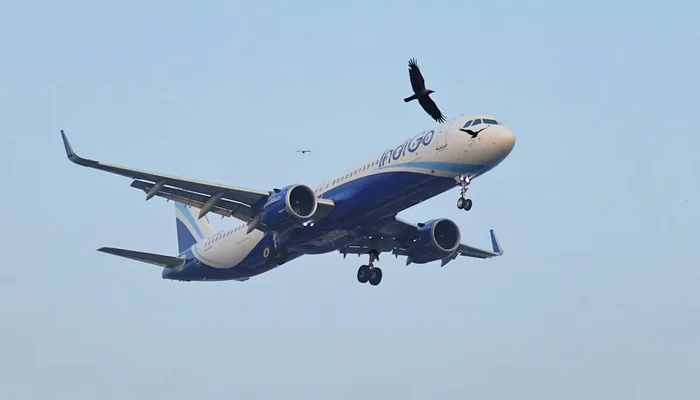
Airlines such as Air India and IndiGo are being forced to take longer routes, leading to higher fuel consumption and increased operating costs. Some IndiGo aircraft leased from Norse Atlantic Airways are also facing airspace restrictions in certain regions.
Analysts at HSBC warned that the rising geopolitical tensions could place a “significant burden” on Indian airlines.
Airspace restrictions across the Middle East due to the ongoing war involving Iran have created additional challenges for Indian carriers. The region serves as a vital flight corridor for routes connecting India with Europe and the United States.
The situation has become more difficult because Indian airlines are already unable to use Pakistan’s airspace after it was closed to Indian carriers last year. As the conflict forces airlines to reschedule and reroute flights, their options remain limited without access to Pakistani airspace.
Data from Cirium shows that Air India and IndiGo, the country’s largest international carriers, did not operate 64% of their 1,230 scheduled flights to the Middle East, Europe, and North America over the past 10 days.
“This is a double whammy for Indian airlines operating international routes,” said Amit Mittal, an independent aviation analyst.
The difficulties are compounded by Pakistan’s decision to close its airspace to Indian carriers since April last year, following military tensions between the two neighbouring countries.
According to HSBC, the ongoing geopolitical tensions in the Middle East are likely to place a “significant burden” on the cost structures and profitability of Indian airlines. The bank estimated that seven days of flight cancellations to affected regions could reduce its projected annual profit-before-tax by about 1.2%.
Although both airlines have resumed some routes in recent days, IndiGo faces additional complications. The airline relies heavily on six long-range aircraft leased from Norse Atlantic Airways to operate flights to Europe.
Because these aircraft remain registered in Norway, they must comply with guidance issued by the European Union Aviation Safety Agency, which advises airlines to avoid the airspace of Iran, Iraq, Israel, Kuwait, Lebanon, Qatar, the United Arab Emirates, and Saudi Arabia.
As a result, IndiGo has been forced to reroute some flights via Africa, increasing travel times by up to two hours, according to data from Flightradar24.
Even these alternate routes have faced complications. An IndiGo flight from Delhi to Manchester was forced to return to Delhi on Sunday after air traffic control in Eritrea denied the aircraft permission to use its airspace due to confusion over how a Norse-registered plane was being operated by IndiGo, according to a source familiar with the matter.
IndiGo later said the incident, which saw the aircraft return to Delhi after spending 13 hours in the air, was caused by “last-minute airspace restrictions.”
Another IndiGo Boeing aircraft flying from London to Mumbai faced a similar issue with airspace access in Eritrea and was forced to divert to Cairo on Monday, according to a source familiar with the matter.
The flight disruptions linked to the Middle East conflict have added to the challenges facing IndiGo. The airline’s CEO, Pieter Elbers, stepped down on Tuesday following an operational crisis that drew public and government scrutiny in December.
Neither IndiGo nor Air India responded to queries from Reuters, while Norse Atlantic Airways referred Reuters’ questions back to IndiGo.
Air India woes
Air India said on Monday it would operate 78 additional flights on routes between India and Europe and the United States over the next week to meet rising demand amid the Iran conflict.
However, flight durations to some destinations have become significantly longer because the airline must now add stopovers. This has given competitors such as Lufthansa and American Airlines an advantage on routes to and from India.
For instance, an Air India flight from Delhi to New York on Monday made a stopover in Rome, extending the total travel time to nearly 22 hours, according to Flightradar24.
Before the Iran conflict escalated, Air India could fly via Iraq and Turkey to reach the United States in around 17 hours without any stopovers.
In comparison, a American Airlines flight on Sunday completed the same route in about 16 hours, flying via Pakistan’s airspace.
Air India, which is owned by Tata Group and Singapore Airlines, has estimated that the closure of Pakistani airspace could cost the airline around $600 million annually, according to Reuters. The airline, which was privatised after being sold by the India government in 2022, has already been struggling with financial losses, reporting about $433 million in losses last year.
Longer flight routes are expected to further increase the airline’s operating costs, as extended travel times require more fuel. This adds to the financial pressure created by rising energy costs following the escalation of tensions between the United States and Israel with Iran, which has pushed global oil prices higher.
About the Author