

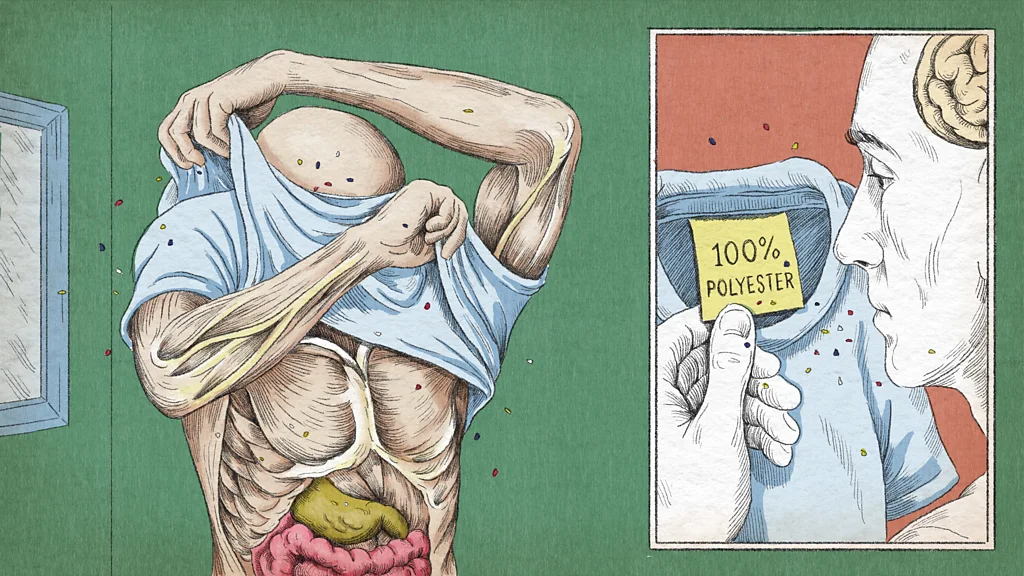
Tiny microplastics are increasingly found in the air inside our homes, meaning we could be inhaling hundreds of thousands to millions of these particles each year. However, simple lifestyle changes may help reduce our exposure.
Many of the clothes we wear today are made from synthetic fabrics. These materials are inexpensive, widely available, and come in a variety of colours, textures, and stretchy designs—but they are also a major source of indoor microplastic pollution.
Every time we wash, dry, or even wear garments made from polyester or blended fabrics, tiny fibres are released into the air. Simply putting on a jumper or moving around the house can release microscopic particles that may be inhaled without us even realising it.
Researchers are still working to fully understand how airborne microplastics affect human health, but early findings are already raising concerns.
Most scientists believe that the majority of microplastic exposure happens indoors. The positive side is that there are practical steps we can take—such as choosing natural fabrics, adjusting laundry habits, and improving home cleaning routines—to help reduce the amount we breathe in.
“Microplastics are everywhere, and there’s no way to completely avoid them,” says Dana Barr, an exposure science professor at Emory University in Atlanta. “But you can significantly reduce your exposure over time, mostly through changes in behaviour.”
The air in our homes
Tiny, invisible fragments of plastic surround us constantly. They are released from nearly every plastic product—of which more than 460 million tonnes are produced each year—and enter our bodies through food, water, skin contact, and the air we breathe.
While food and water were once considered the primary sources of exposure, some researchers now believe inhalation may actually be the main route.
For example, even when eating shellfish such as mussels, which can contain high levels of microplastics, studies suggest you may inhale more plastic particles during preparation and consumption than you actually ingest from the food itself. In regions where shellfish is a dietary staple, people might consume around 4,620 particles annually through food, but inhale three to 15 times more during everyday activities like cooking and eating.
In developed countries, people spend roughly 90% of their time indoors, which significantly increases the likelihood of inhaling microplastics compared to outdoor exposure. A 2021 study in China found that indoor air contained microplastic concentrations about eight times higher than outdoor air. Even in homes where natural fibres were more common than synthetic materials and laundry was often dried outside, indoor levels of microplastics remained higher.
About the Author