

Reviewed a meeting on implementing fuel conservation and austerity measures in light of the regional situation.
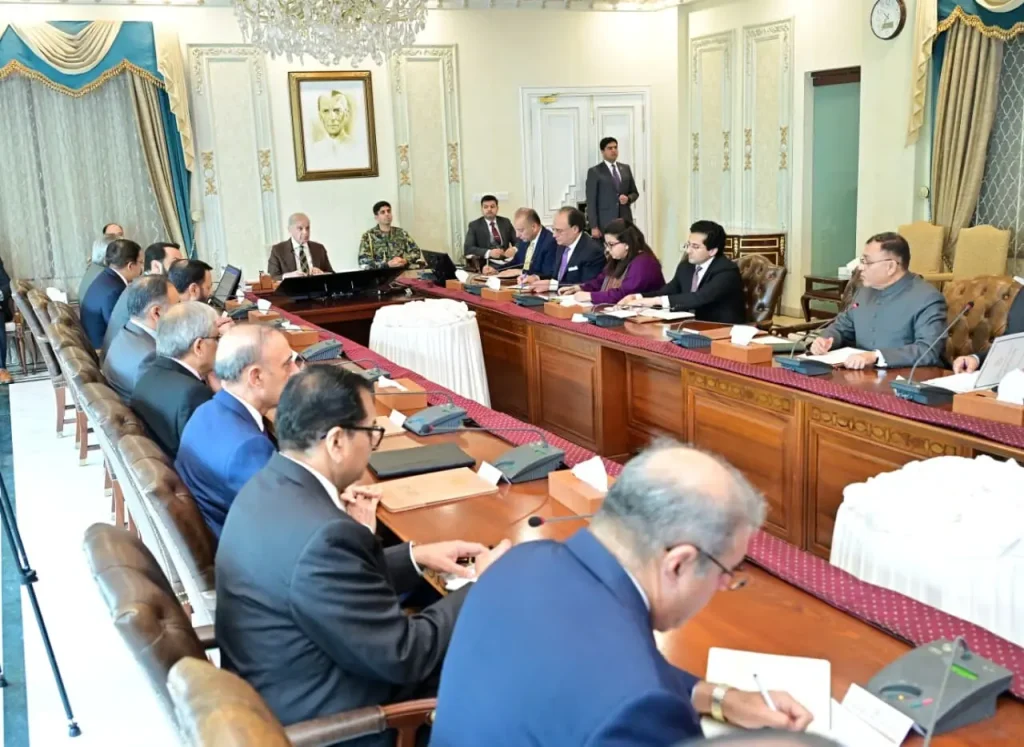
PM Shehbaz Sharif Urges Petroleum Minister to Take Proactive Steps on Fuel Supply
Prime Minister Shehbaz Sharif on Tuesday emphasized that the Minister of Petroleum should adopt a more proactive approach to improve Pakistan’s petroleum import supply chain.
The PM made the remarks while reviewing a meeting on implementing fuel conservation and austerity measures in light of the regional situation, according to a press release from the Prime Minister’s Office (PMO).
Officials at the meeting reported that the situation is being closely monitored and records of petroleum products are being maintained to detect any irregularities promptly.
PM Stresses Preparedness, Monitoring, and Fuel Savings Measures
Prime Minister Shehbaz Sharif emphasized that all relevant departments should remain ready to implement emergency measures until the situation improves. Officials informed the meeting that the country has sufficient petroleum stocks to meet demand and that the PM’s instructions are being actively enforced.
The Intelligence Bureau will provide a monitoring report on the implementation of all measures, the meeting was told.
Cabinet members have voluntarily waived their salaries, and early results indicate a reduction in fuel consumption across government departments. These savings measures are expected to provide relief to the public during the current situation.
Officials also confirmed that the country has adequate medicine stocks to meet national requirements.
Earlier, Federal Minister for Finance and Revenue Muhammad Aurangzeb highlighted that the government remains fully focused on ensuring uninterrupted availability of petroleum products nationwide. He noted that current stock levels and the supply outlook are stable, and based on reports, there is no reason for panic buying or unnecessary fuel hoarding.
The finance minister instructed all relevant ministries, regulators, and agencies to maintain close coordination and continue strict monitoring of stock levels and supply flows to ensure a smooth fuel supply chain and uphold public confidence with timely and accurate information.
At Least 16 Dead as Heavy Rain and Strong Winds Hit Karachi
At least sixteen people were killed and several others injured as heavy rain and strong winds swept through parts of Karachi, officials reported, causing collapsing structures, uprooted trees, and widespread power outages.
Intermittent showers with gusty winds were reported across the city, with some areas experiencing moderate to heavy rainfall.
According to Rescue 1122, at least thirteen people died when walls and the roof of a building collapsed in the Baldia area.
Edhi officials reported two fatalities from another roof collapse in the Landhi area.
Meanwhile, a person was killed after being struck by a falling tree, Edhi confirmed.
On Tuesday, the Pakistan Meteorological Department (PMD) forecasted that Karachi and other parts of Sindh are likely to experience rain and thunderstorms with strong winds and isolated hailstorms on Wednesday and Thursday, as a westerly wave moves into the western regions of the country.
Under the influence of this weather system, the Pakistan Meteorological Department (PMD) said that rain and thunderstorms with strong winds, isolated hailstorms, and a few moderate to isolated heavy showers are expected in Jamshoro, Hyderabad, Thatta, Sujawal, Badin, Mitiari, Tando Muhammad Khan, Tando Allah Yar, Umerkot, Tharparker, Sanghar, Mirpurkhas, Nosheroferoz, Shaheed Benazirabad, Dadu districts, and the Karachi division.
Karachi Mayor Murtaza Wahab has instructed all relevant departments to remain on high alert in anticipation of the rains.
“Staff are prepared to handle any emergency situation, and machinery has been deployed across different areas,” the mayor said in a statement.
Pakistan Temporarily Suspends Operation Ghazab lil Haq on Eid ul-Fitr
Pakistan has announced a temporary halt to its ongoing cross-border military campaign, Operation Ghazab lil Haq, targeting Afghan Taliban and other terror groups operating from Afghan territory, on the occasion of Eid ul-Fitr.
Attaullah Tarar stated that the decision was made as a goodwill gesture, both on Islamabad’s own initiative and in response to requests from friendly nations.
Pakistan Temporarily Pauses Operation Ghazab lil Haq, Warns of Immediate Resumption if Threats Arise
Attaullah Tarar clarified that while Pakistan is temporarily halting Operation Ghazab lil Haq in observance of Eid ul-Fitr, the campaign will resume immediately if any security threats arise.
“In view of Eid ul-Fitr, the Government of Pakistan has decided to announce a temporary pause in Operation Ghazab lil Haq,” Tarar said in a statement posted on X. The suspension will be effective from midnight March 19 until midnight March 23-24, 2026.
The minister noted that the pause reflects Pakistan’s commitment to regional peace and Islamic values and follows diplomatic outreach from Saudi Arabia, Qatar, and Turkiye.
However, Tarar emphasized that the suspension is conditional. “In the event of any cross-border incursion, drone strike, or terrorist activity within Pakistan, the operation will resume immediately with full force,” he said.
Launched in late February, Operation Ghazab lil Haq targets persistent cross-border terrorism from Afghanistan and has expanded into a broader campaign against militant infrastructure and support networks.
While the announcement signals a temporary de-escalation, authorities remain ready to respond swiftly to any emerging threats.
Fed Holds Rates Steady, Maintains Single 2026 Cut Plan Despite Rising Inflation
The US dollar trimmed earlier gains, with the dollar index last rising 0.27%. Meanwhile, U.S. Treasury yields also pared gains following the announcement.
Fed Holds Rates Steady, Projects Only One Cut in 2026 Amid Middle East Uncertainty
Washington, D.C. – The Federal Reserve kept interest rates unchanged on Wednesday, projecting higher inflation, stable unemployment, and only a single reduction in borrowing costs this year, as officials weighed economic risks from the ongoing U.S. and Israeli conflict with Iran.
New projections from central bank policymakers indicated that the Fed’s benchmark overnight rate would likely fall by just 0.25 percentage points by the end of 2026, with no clear timeline for the move. This outlook remains consistent with previous forecasts and contrasts with President Donald Trump’s calls for a sharper rate cut.
Following the Fed’s announcement, U.S. stocks trimmed losses slightly, with the S&P 500 down about 0.6% and the Nasdaq Composite down about 0.5%. The U.S. dollar pared earlier gains, with the dollar index last up 0.27%, while U.S. Treasury yields also eased, with the 10-year yield at 4.214%.
Inflation, measured by the Fed’s preferred gauge, is expected to end the year at 2.7%, slightly higher than the 2.4% forecast in December, reflecting the surge in global oil prices following the conflict with Iran. “Implications of developments in the Middle East for the U.S. economy are uncertain,” the Fed said in its policy statement, while noting that unemployment remains stable.
Fed Chair Jerome Powell emphasized in a press conference that higher energy costs may push inflation up in the near term, but the full scope and duration of the economic impact remain unclear. He added that monetary policy is “well positioned to determine the extent and timing of additional adjustments” based on incoming data and evolving risks.
Despite the oil shock, the Fed continues to anticipate lowering rates later this year, with inflation projected at 2.2% by the end of 2027, close to its 2% target. No policymakers currently see a need to raise rates this year, though one official forecasts a potential increase in 2027.
Economic growth projections were slightly upgraded to 2.4% for 2026, up from 2.3% in December, while the unemployment rate remains at 4.4%. Fed Governor Stephen Miran again dissented, voting for a rate cut instead of maintaining the current 3.50%-3.75% range.
The Fed’s decision to hold rates was widely anticipated, but the updated projections offer insight into how the U.S. central bank is assessing the economic impact of the Middle East conflict, which has pushed oil prices from below $80 to $108 a barrel, along with rising U.S. gasoline costs and faster-than-expected wholesale inflation.
Other than references to the conflict, the policy statement was largely unchanged from the January 27-28 meeting.
Pakistan’s Kabul Strike Targeted Ammunition and Drone Facility, Says DG ISPR
Lt Gen Ahmed Sharif Chaudhry on Wednesday clarified that Pakistan’s recent strike in Kabul targeted an ammunition and drone storage site, dismissing claims that civilian infrastructure was hit.
Speaking on ‘Capital Talk’ aired on Geo News, Lt Gen Chaudhry said the strike was based on verified intelligence and part of the ongoing Operation Ghazab lil Haq, launched last month against militant networks.
“Our intelligence was correct. We targeted an ammunition depot, and secondary explosions confirmed the presence of weapons, including old missiles, drones, and other equipment,” he stated, noting that video evidence of the strike is publicly available.
He stressed that Pakistan used precision-guided munitions (PGMs) to minimise collateral damage and that the operation strictly targeted “terrorist support infrastructure.” The DG ISPR rejected Taliban claims that a drug rehabilitation centre was hit, calling such reports “incredible” and describing the site as a “military containerised facility” likely used for training or sheltering militants.
Lt Gen Chaudhry reiterated that the strikes are part of Pakistan’s broader counter-terrorism efforts responding to threats emanating from Afghanistan. “This war has been imposed on Pakistan by terrorists and their sponsors,” he said, alleging militant groups operate from Afghan territory with external backing. He also accused India of supporting anti-Pakistan networks using Afghanistan as a “base of operations.”
The ISPR chief cited several incidents, including attacks in Islamabad and Wana, involving militants originating from Afghan soil, and named key militant leaders — including Noor Wali Mehsudmilitant leader”], Bashir Zeb leader”], and Gul Bahadur — as being sheltered in Afghanistan.
Providing operational details, he said Pakistan had targeted 81 locations inside Afghanistan, including command centres, ammunition depots, and logistical hubs used to facilitate attacks in Pakistan. He added that the escalation followed Taliban attacks on 53 locations inside Pakistan, which prompted a Pakistani response.
Lt Gen Chaudhry also raised concerns about drones being used against Pakistan, claiming that several were intercepted near Islamabad and suggesting that these capabilities were provided externally, including by India. He highlighted the evolving nature of drone and non-contact warfare and the need for technological adaptation.
He alleged that the Afghan Taliban regime shelters militants within state infrastructure and maintains links with extremist elements, echoing concerns noted by the United Nations. “Afghanistan has become a hub for multiple terrorist organisations,” he said, adding that Pakistan’s operations aim to counter global terrorism.
Despite the military action, Lt Gen Chaudhry stressed that Pakistan has no hostility towards the Afghan people but warned that Kabul must prevent its territory from being used for attacks against Pakistan. “The choice lies with the Afghan Taliban — whether they prioritise peace or continue supporting militant groups,” he said, while leaving the door open for dialogue if concrete steps are taken to dismantle terrorist networks.
About the Author