
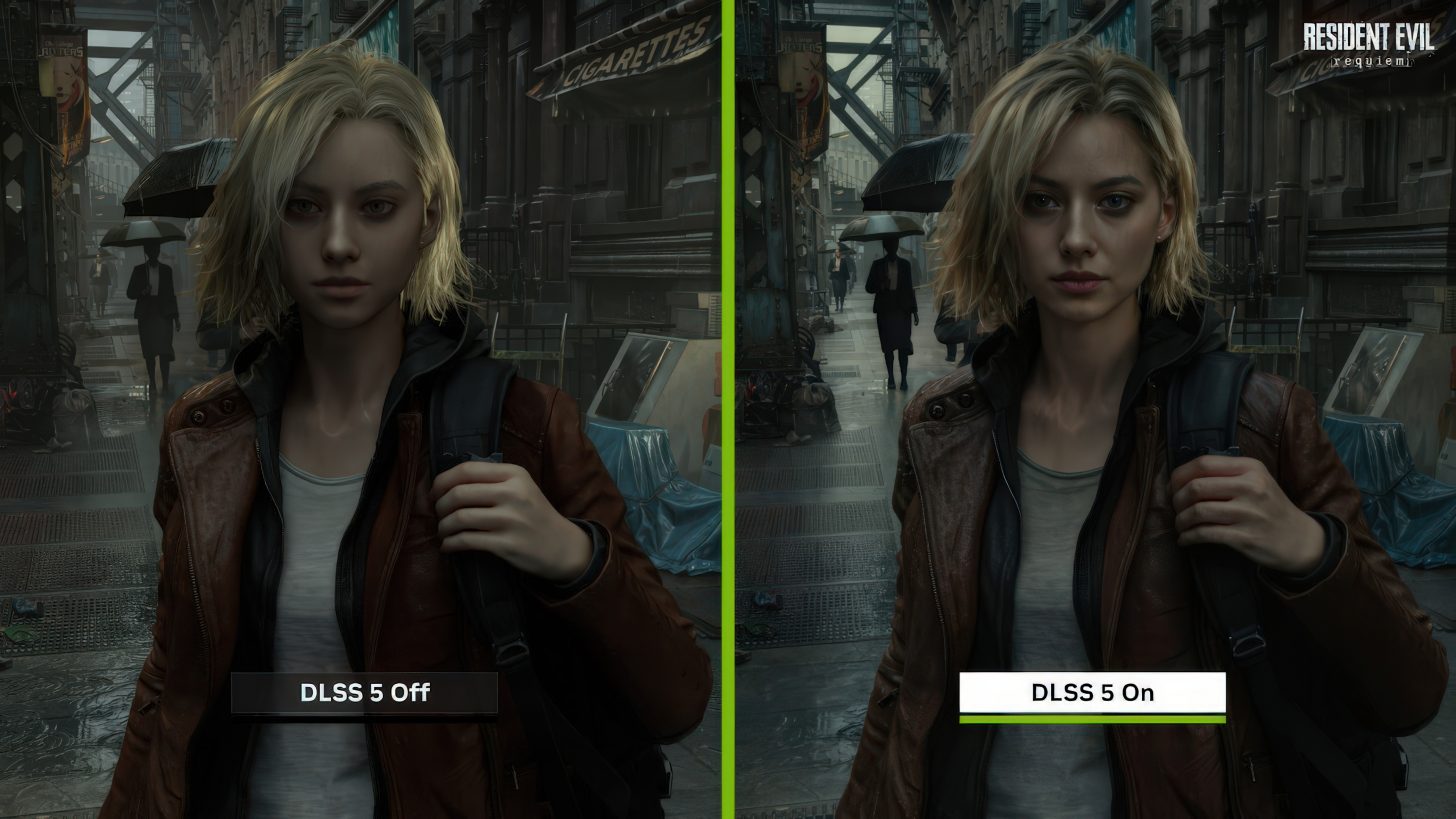
After NVIDIA’s controversial DLSS 5 reveal at GTC 2026, reactions have been all over the map—either full praise or harsh criticism. Yet, few have examined what it would actually take to make the technology viable from a game developer’s perspective.
We’ve continued consulting studios to understand this often-overlooked side of the DLSS 5 discussion. Today, coinciding with the release of their debut title Samson: A Tyndalston Story (our review is linked here), Liquid Swords Tech Director Fredrik Lönn shared insights on the practical challenges NVIDIA must address before DLSS 5 can truly work in games.
Q: I know Samson uses DLSS 4.5 and ray tracing. Did you look into the recent DLSS 5 reveal, and what are your thoughts on the technology?
Fredrik Lönn: Yes, we did review the reveal, but DLSS 5 wasn’t something we considered for Samson. At launch, it doesn’t seem production-ready yet.
For Samson, we’ve already created and animated highly detailed facial models for our characters, and it’s important they look exactly as designed. If we were to use something like DLSS 5 in the future, we’d want it fully integrated into the character production pipeline so we maintain artistic control. The real advantage of Neural Rendering and DLSS 5 would be saving production time—but that only works if it supports all users, which is currently limited because very few have the necessary hardware.
Full platform support would also be critical. In my op-ed on the DLSS 5 reveal, I highlighted the need for tighter integration into the game development pipeline to allow developers more creative control. Right now, DLSS 5 mainly uses a game’s color and motion vectors, letting developers tweak only intensity, color grading, and masking. Fully integrating it into engines like Unreal—which powers Samson: A Tyndalston Story and many other AAA games—could satisfy this requirement.
The other challenge—making it available on all platforms—seems far less realistic. NVIDIA likely wants to encourage GeForce hardware adoption, and the technology simply demands performance beyond current consoles. The GTC 2026 demo ran on two GeForce RTX 5090 GPUs; NVIDIA believes it could run on one, but that’s still far beyond PlayStation 5, PS5 Pro, Xbox Series S/X performance.
If widespread platform support is a requirement for developers, DLSS 5 could struggle to gain traction. However, some developers may be less strict and willing to adopt it under different conditions.
About the Author