

Study examines the impacts of artificial lighting at night
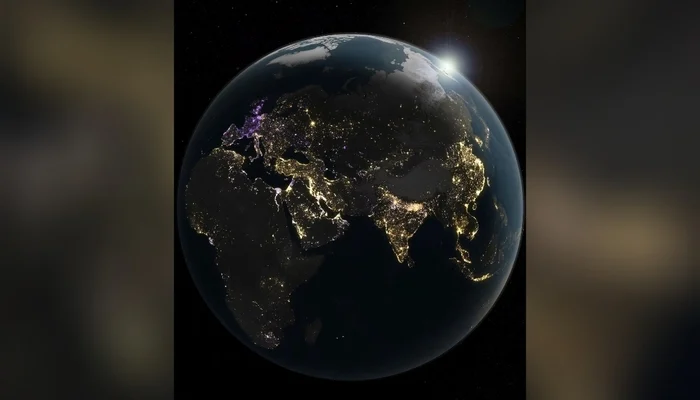
Daily satellite observations show that artificial lighting is continuing to brighten the Earth at night on a global scale, though the trend varies widely by region. Some areas, including sub-Saharan Africa and Southeast Asia, have experienced noticeable increases in nighttime brightness, while parts of Europe have seen a reduction, largely linked to efforts to cut energy use and reduce light pollution.
Researchers found that global nighttime light increased by about 16% between 2014 and 2022. However, the change was not uniform; instead, it formed a patchwork pattern of rising and falling brightness across different regions influenced by various economic and policy factors. In 2022, the United States recorded the highest total level of nighttime illumination among all countries, followed by China, India, Canada, and Brazil.
Nighttime brightness increases were found to be mainly driven by rapid urbanization, expanding infrastructure, and the spread of rural electrification projects.
However, patterns of dimming had two distinct causes. Sudden drops in light levels were often linked to natural disasters, power grid failures, or armed conflicts. In contrast, gradual dimming was usually intentional, resulting from government policies, the replacement of older lighting systems with energy-efficient LEDs, and efforts to reduce light pollution.
“For decades, we’ve assumed the Earth at night was simply getting steadily brighter as human population and economies grew,” said Zhe Zhu, a professor of remote sensing and director of the University of Connecticut’s Global Environmental Remote Sensing Laboratory, and the study’s senior author published in Nature.
“But we discovered that the Earth’s nightscape is highly volatile,” Zhu said. “The planet’s lighting footprint is constantly expanding, contracting, and shifting.”
The researchers analyzed more than a million daily images from a U.S. government Earth-observing satellite processed by NASA, offering far more detailed coverage than earlier studies that relied mainly on monthly or annual composites.
The most significant brightening was observed in emerging economies, particularly in sub-Saharan Africa and Southeast Asia, led by Somalia, Burundi, and Cambodia, followed by Ghana, Guinea, and Rwanda.
“This isn’t just urbanization—it’s a massive expansion of energy access,” Zhu explained. “Entire regions are transitioning from near-total darkness into the global electric network.”
In contrast, substantial light losses were recorded in countries including Lebanon, Ukraine, Yemen, and Afghanistan, where conflict and infrastructure collapse played a major role. Similar declines were seen in Haiti and Venezuela, linked to prolonged economic crises and unstable energy supplies.
“In Ukraine, we observed a sharp and sustained decline in light that matched the escalation of conflict in February 2022,” Zhu said, referring to Russia’s full-scale invasion.
“We see similar abrupt darkening in parts of the Middle East during periods of conflict,” he added.
Europe recorded a net 4% decrease in nighttime light emissions, largely due to technological upgrades and environmental policies.
“This shift is driven by replacing older, inefficient streetlights like high-pressure sodium lamps with modern directional LED systems, alongside strict energy-efficiency regulations and dark-sky initiatives,” Zhu said. “Europe is particularly interesting because it shows a very structured pattern of dimming.”
Zhu also highlighted France as a global leader in dark-sky conservation and energy efficiency policies.
About the Author