

Experts have identified around 24 planets located within a more precise 3D habitable zone.
Do aliens exist? It remains one of the most intriguing questions for space enthusiasts and researchers alike.
Public interest in the topic has surged since U.S. President Donald Trump authorized the release of classified government documents related to extraterrestrial life.
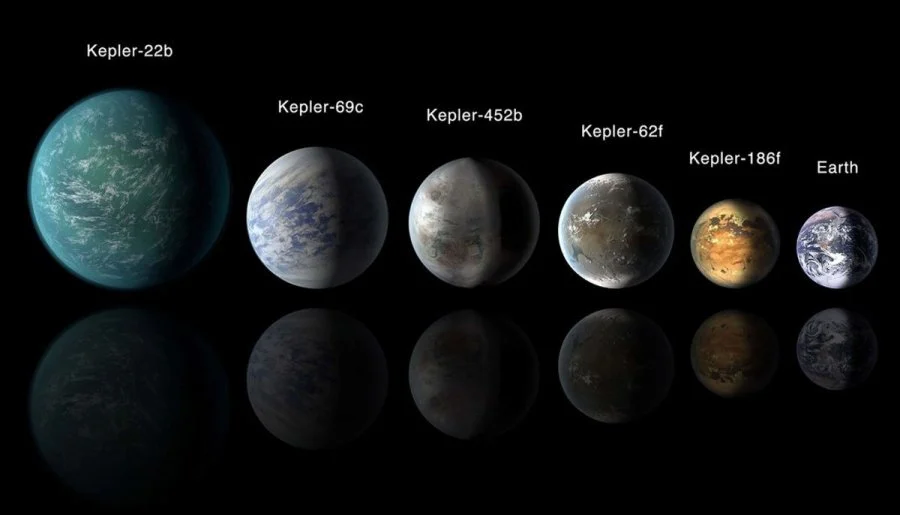
According to a report by Daily Mail, scientists from the Carl Sagan Institute at Cornell University have identified nearly 45 Earth-like planets, some located just 40 light-years from Earth, that may offer conditions suitable for extraterrestrial life.
To put that distance into perspective, a conventional human spacecraft would take about 800,000 years to travel 40 light-years.
Among these 45 newly identified planets, researchers highlighted around 24 that lie within a more narrowly defined 3D habitable zone.
Here is the list of the 45 Earth-like planets identified:
GJ 1002 b
GJ 1002 c
GJ 1061 c
GJ 1061 d
GJ 251 c
GJ 273 b
GJ 3323 b
GJ 667 C c
GJ 667 C e
GJ 667 C f
GJ 682 b
K2–239 d
K2–288 B b
K2–3 d
K2–72 e
Kepler–1229 b
Kepler–1410 b
Kepler–1544 b
Kepler–1606 b
Kepler–1649 c
Kepler–1652 b
Kepler–186 f
Kepler–296 e
Kepler–296 f
Kepler–441 b
Kepler–442 b
Kepler–452 b
Kepler–62 e
Kepler–62 f
L 98–59 f
LHS 1140 b
LP 890–9 c
Proxima Centauri b
Ross 508 b
TOI–1266 d
TOI–700 d
TOI–700 e
TOI–715 b
TRAPPIST–1 d
TRAPPIST–1 e
TRAPPIST–1 f
TRAPPIST–1 g
Teegarden’s Star c
Wolf 1061 c
Wolf 1069 b
For context, a habitable zone refers to the region around a star where conditions are neither too hot nor too cold, allowing liquid water—and potentially life—to exist.
Experts suggest that planets located within the habitable zone are more likely to contain liquid water, a crucial ingredient for life.
The study’s lead author, Professor Lisa Kaltenegger, noted that extraterrestrial life may be far more diverse than we currently imagine.
She added that the research could help guide future searches for alien life, saying, “It reveals where you should travel to find life.”
About the Author