
The finding indicates that Tehran could keep restricting passage through the Strait of Hormuz to help keep energy prices elevated as a way to exert pressure on the United States during the ongoing conflict, rather than easing its chokehold anytime soon.
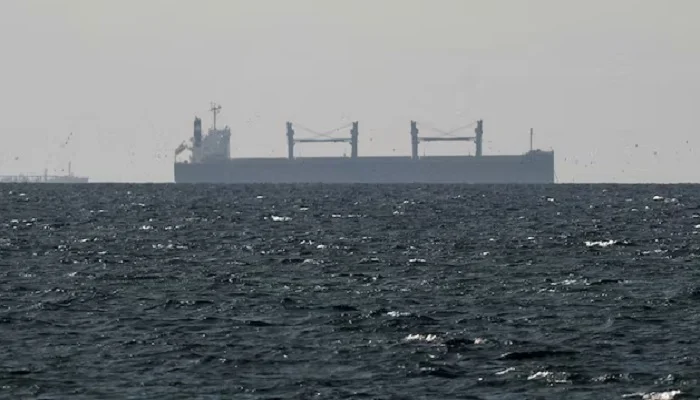
Recent U.S. intelligence reports indicate that Iran is unlikely to reopen the Strait of Hormuz in the near future, as its control over the world’s most critical oil passage provides Tehran with its primary leverage over the United States, according to three sources familiar with the matter.
The reports suggest that Iran could continue to restrict the strait to keep global energy prices elevated, using it as a tool to pressure U.S. President Donald Trump into seeking a swift resolution to the nearly five-week-long conflict, which remains unpopular among American voters.
Recent intelligence reports highlight that the war, aimed at weakening Iran’s military, may instead be boosting Tehran’s regional influence by demonstrating its ability to threaten the strategic Strait of Hormuz.
U.S. President Donald Trump has downplayed the challenges of reopening the strait, which handles roughly one-fifth of global oil trade. On Friday, he suggested he could order U.S. forces to reopen it, posting on Truth Social:
“With a little more time, we can easily OPEN THE HORMUZ STRAIT, TAKE THE OIL, & MAKE A FORTUNE.”
However, analysts caution that using force against Iran—which controls one side of the strait—could be costly and risk drawing the U.S. into a prolonged ground conflict.
“In attempting to prevent Iran from developing a weapon of mass destruction, the U.S. handed Iran a weapon of mass disruption,” said Ali Vaez, director of the Iran Project at the International Crisis Group. Vaez added that Tehran’s ability to influence global energy markets through the strait “is much more potent than even a nuclear weapon.”
Trump’s position on reopening the strait has shifted. While he has made ending Iran’s chokehold a precondition for a ceasefire, he has also urged Gulf nations and NATO allies to take the lead. A White House official, speaking anonymously, said Trump is “confident that the strait will be open very soon” and that Iran would not be allowed to control shipping traffic post-conflict. The official added that other nations “have far more at stake” in keeping the strait open. The CIA did not immediately respond to requests for comment.
Iran’s blockade and global impact
Since February 28, when Trump and Israeli Prime Minister Benjamin Netanyahu launched their campaign, Iran’s outgunned Islamic Revolutionary Guard Corps has used a variety of tactics—attacking civilian vessels, laying mines, and demanding passage fees—to make commercial transit through the strait dangerous and often uninsurable. These actions have sent global oil prices to multi-year highs and triggered fuel shortages in countries dependent on Gulf energy.
Rising energy costs risk increasing inflation in the U.S., creating political challenges for Trump ahead of the midterm elections in November. According to the intelligence sources, Iran is unlikely to relinquish its leverage over the strait anytime soon. “Now that Iran has tasted its power and leverage over the strait, it won’t soon give it up,” one source said.
Military risks of reopening the strait
Experts warn that any military operation to reopen the strait carries high risks. The waterway, which separates Iran and Oman, is 21 miles (33 km) wide at its narrowest point, with a two-mile (3 km) shipping lane in each direction, making ships and troops vulnerable. Even if U.S. forces occupy southern Iranian coasts and islands, the IRGC could maintain control using drones and missiles from inland positions.
“All it takes to disrupt traffic and deter vessels is one or two drones,” Vaez noted.
Even after the war, Iran is likely to retain its ability to regulate shipping. Charging passage fees could provide funds for reconstruction, giving Tehran long-term leverage. Former CIA Director Bill Burns told Foreign Affairs that Iran will likely use control over the strait to secure deterrence, gain material benefits, and negotiate favorable terms in any peace deal with the U.S. “That sets up a really difficult negotiation right now,” he said.
About the Author