
Rafael Grossi says the upcoming talks are expected to include discussions on missiles and security guarantees for Tehran.
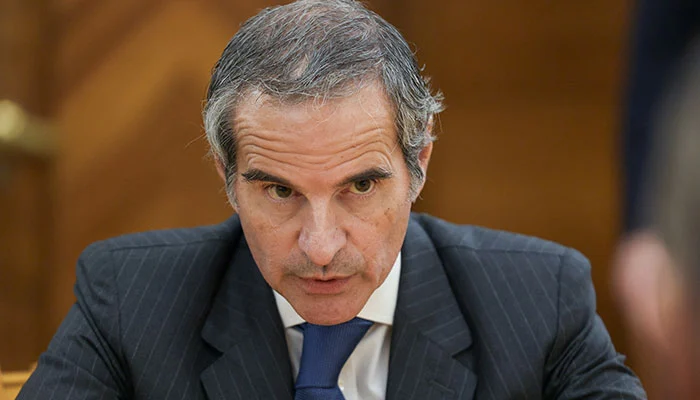
The United States and Iran are set to hold talks “broader in scope” in Islamabad this weekend, International Atomic Energy Agency (IAEA) Director General Rafael Grossi said Wednesday.
According to Turkiye’s Anadolu Agency, citing an interview Grossi gave to Italian newspaper Corriere della Sera, the discussions are expected to cover missiles, Iran-aligned militias, and security guarantees for Tehran.
Grossi added, “This time, there will also be missiles, militias allied with the Islamic Republic, [and] security guarantees for Iran on the table.”
He suggested a temporary resolution could be possible, emphasizing that military options should be avoided.
“There are alternative diplomatic approaches that could provide a solution, allowing for a temporary halt to enrichment given the current political, military, and trust conditions, with the possibility of reassessing the issue in five or ten years,” he added.
The remarks come as diplomatic efforts continue to open a window for negotiations to end the nearly month-long conflict between the US, Israel, and Iran, which began on February 28 and has impacted the broader Middle East.
Pakistan, in close coordination with Turkey and Egypt, has played a key role in back-channel diplomacy, relaying messages between Washington and Tehran to prevent further escalation and maintain regional stability.
These efforts included direct contact between Chief of Defence Forces (CDF) and Chief of Army Staff (COAS) Field Marshal Asim Munir and US President Donald Trump on Sunday, according to the White House.
Prime Minister Shehbaz Sharif also confirmed that Pakistan is ready to host talks between the US and Iran—a statement later acknowledged by Trump, who reposted it on his Truth Social account.
Following this, Pakistan delivered a US proposal to Iran, a senior Iranian source told Reuters on Wednesday. The source did not disclose details or confirm whether it was the 15-point US framework previously reported by media outlets.
Turkey is reportedly also helping explore avenues to end the conflict, with either Pakistan or Turkey being considered as the potential venue for talks, the source added.
In a recent development, Iran has rejected the US proposal, stating it will end the ongoing “imposed war” on its own terms and timeline, a senior political-security official told Press TV.
The official noted that this stance mirrors Iran’s approach in two previous rounds of negotiations in spring and winter 2025, which coincided with US military operations, reflecting Tehran’s longstanding caution.
Iran also set out five conditions for ending the conflict: a complete halt to “aggression and assassinations”; mechanisms to prevent the war from being reimposed; guaranteed payment of reparations; resolution across all fronts and resistance groups; and international recognition of Iran’s control over the Strait of Hormuz.
About the Author