
At the core of the negotiations is Iran’s nuclear programme.
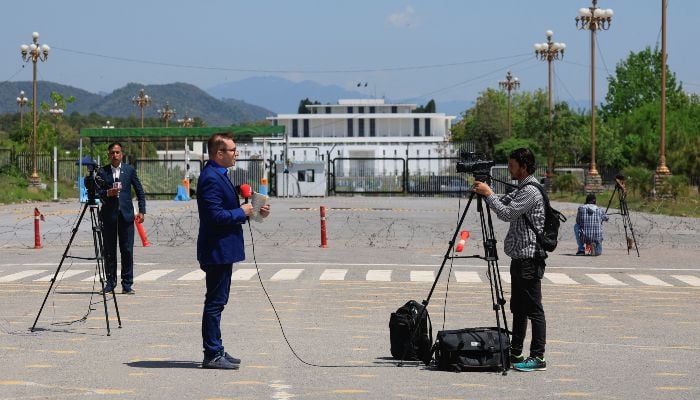
ISLAMABAD: As US and Iranian delegations meet for crucial talks in Islamabad, a broad and complex set of issues is expected to dominate the agenda.
Hosted by Pakistan, the negotiations aim to build on a fragile ceasefire and explore possible pathways toward a wider agreement. Discussions are centered on two competing proposals—a 10-point framework put forward by Iran and a 15-point plan presented by the United States. While both sides have signaled a willingness to engage, major differences persist.
At the center of the negotiations is Iran’s nuclear programme. Washington is demanding firm assurances that Tehran will not pursue nuclear weapons, along with strict limits on uranium enrichment and enhanced monitoring by the International Atomic Energy Agency (IAEA).
Iran, however, insists on its right to carry out peaceful nuclear activities, including enrichment, which it considers a matter of national sovereignty.
Sanctions relief is another key point of contention. Iran is calling for the immediate and full lifting of US and international sanctions, as well as the release of frozen assets abroad.
The US position differs significantly, favoring a gradual easing of sanctions linked to verified Iranian compliance with nuclear and security obligations.
Control and access to the strategically important Strait of Hormuz also remains a major issue. Iran seeks formal recognition of its regulatory role over the waterway, citing its geographic and economic importance.
The United States, meanwhile, insists on fully open and secure international shipping lanes without restrictions, given the strait’s critical role in global energy supply.
Regional influence is another sensitive topic. Washington is pressing for an end to Iran’s support for allied armed groups across the Middle East, while Iran is demanding an end to military actions against those groups and broader regional de-escalation.
Iran has also called for the withdrawal of US forces from the region and formal guarantees of non-aggression. The US, however, has shown no indication of scaling back its military presence, citing security commitments to allies.
Another disputed area is Iran’s ballistic missile programme. The US is seeking limits on missile development and broader defence capabilities, while Iran views such demands as an infringement on its sovereign right to self-defence.
Tehran has also raised the issue of compensation for damages from recent conflicts, while the US is expected to push for accountability measures over attacks on its interests and allies.
With the two-week ceasefire deadline approaching, sources say progress is likely to come in phases, starting with confidence-building measures from both sides. While no immediate breakthrough is expected, the process is likely to continue, potentially extending the ceasefire.
Originally published in The News
About the Author