
Women MNAs submitted 1,206 agenda items, showcasing a remarkable display of independent legislative initiative.
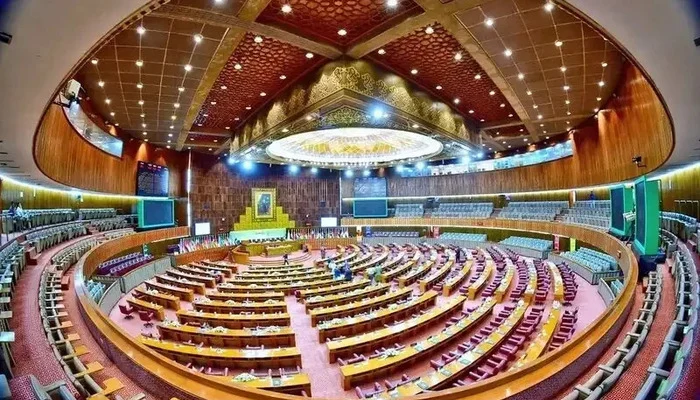
Islamabad: Female legislators are increasingly shaping parliamentary proceedings and driving the national agenda with notable effectiveness, according to a report by The News on Tuesday.
During the second parliamentary year of the 16th National Assembly, women MNAs submitted 1,206 agenda items, demonstrating a remarkable level of independent legislative initiative.
Analysis by the Free and Fair Election Network (Fafen) highlights the depth of this engagement, showing that 72% of the items addressed core national policy areas, including economic policy, taxation, national security, and governance—fields traditionally seen as male-dominated. Constituency and local issues accounted for 18% of the agenda items, while gender-specific legislation made up only 6%.
Fafen developed a subject-matter typology to assess whether female MNAs’ agenda disproportionately focused on gender-specific issues. Each agenda item was coded into categories—national policy, constituency issues, gender-specific, and procedural/cross-cutting—based on content recorded in the Orders of the Day and verbatim proceedings.
The coding drew from official National Assembly records for the period March 1, 2025, to February 28, 2026. Parliamentary effectiveness is measured not just by participation volume but also by the breadth of engagement. Members who focus solely on a narrow set of issues, no matter how important, leave a more limited legislative footprint than those engaging across the full spectrum of national policy.
According to Fafen’s analysis of the National Assembly’s second parliamentary year, the common perception that female MNAs focus primarily on women’s rights and social welfare, to the exclusion of other policy areas, is not supported by the data. Female MNAs addressed economic policy, security issues, taxation, and parliamentary procedures at rates far higher than their engagement with gender-specific legislation.
This wide-ranging focus demonstrates that women in Pakistan’s parliament are not niche legislators. They engage with the same national policy questions as their male colleagues while also pursuing legislation that directly advances women’s rights and social protection.
About the Author