

According to sources, the Pakistan Air Force deployed around two dozen jets to escort a delegation returning from Islamabad talks, ensuring its safe passage.
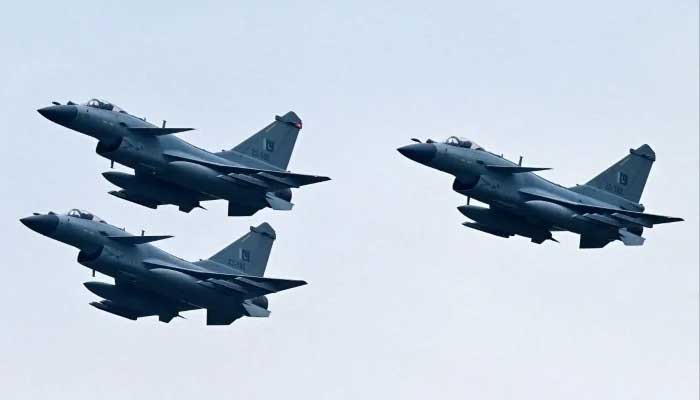
The Pakistan Air Force escorted Iranian negotiators back home following inconclusive peace talks with the United States last weekend, in what sources described as a major security operation after concerns were raised that Israel might attempt to target them.
According to three sources cited by Reuters, Pakistan deployed around two dozen fighter jets for the escort mission, along with an Airborne Warning and Control System (AWACS) aircraft to provide aerial surveillance and ensure the safe return of the delegation from Islamabad.
One source said that similar security arrangements could be extended for future rounds of talks if Iran requests them, otherwise Pakistani aircraft would continue to receive the delegation within Pakistani airspace.
A third source involved in the discussions said preparations were already underway for another expected round of talks, possibly as early as this weekend.
‘They might be targeted’
A regional diplomat briefed by Tehran said Pakistan insisted on providing the escort after Iranian delegates raised what was described as a “hypothetical” security threat.
The discussions regarding a possible risk during travel, and the decision to deploy a Pakistani air escort into Iran, have not been previously reported.
The office of the Israeli prime minister did not immediately respond to a request for comment. Iran’s mission in Geneva, the Pakistan Air Force, Pakistan’s military, and the US embassy in Islamabad also did not immediately respond to requests for comment.
A security source said, “When the talks failed, the Iranians were concerned that things had not gone right. They suspected they could be targeted.”
“This was a major operational mission from a pilot’s perspective. You are responsible for a delegation arriving for talks, providing air cover with capable fighter jets ready to respond to any threat,” the source added.
Another source involved in the negotiations—the highest-level contact between the two countries since Iran’s 1979 Islamic Revolution—confirmed the air escort but did not share operational details.
“We escorted them all the way to Tehran. Their security remained our responsibility even beyond their time here,” the source said.
According to one official, the Sunday mission included Chinese-made J-10 fighter jets, considered among the most advanced in the PAF fleet.
Security concerns and strike list
The Iranian delegation, led by Foreign Minister Abbas Araqchi and Parliament Speaker Mohammad Baqer Qalibaf, a former military officer and trained pilot, reportedly requested the heightened security escort—an arrangement described by sources as going beyond standard protocol.
However, a regional diplomat said Iran did not formally request the escort but did not dismiss concerns that Israel might attempt to target the aircraft, prompting Pakistan to insist on providing protection.
The delegation did not land in Tehran, and the diplomat declined to specify their exact drop-off location.
Reports also suggested that Israel had placed Araqchi and Qalibaf on a strike list until Pakistan urged Washington to intervene, arguing that removing them would leave no viable negotiators in the ongoing conflict involving the US and Israel.
Israeli Prime Minister Benjamin Netanyahu recently declined to rule out actions against Iranian leadership, saying, “I wouldn’t issue life insurance policies on any of the leaders,” without providing operational details.
Meanwhile, former US President Donald Trump also posted warnings about escalating conflict, while later suggesting the war could soon come to an end and that talks might resume in Islamabad over the weekend.
About the Author