
“I was introduced to football through my brother, my cousins, and my family,” says Layla.
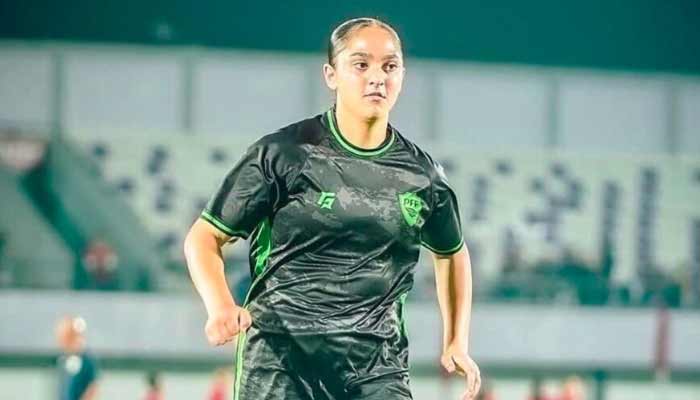
“I was introduced to football through my brother, my cousins, and my family,” says Layla.
A midfielder for Lewes FC Women in the FA Women’s National League South, Layla Banaras represents a new generation of British South Asian women breaking into elite football environments.
Her journey extends beyond football development, reflecting themes of identity, belonging, and opportunity across two cultures.
“It’s like two different worlds coming together,” she said. “It has taught me a lot about myself and about the world, and I’m really grateful that I was brought up in that kind of household.”
That dual identity has shaped her outlook both as a player and as an individual navigating the demands of professional sport.
Like many footballers, Banaras’ earliest experiences came far from stadiums and structured academies.
“I got introduced to football through my brother, my cousins, and my family. We used to play in the garden, and that’s what pushed me towards football.”
What began as informal play eventually developed into a landmark rise through English football. In January 2023, she became the first South Asian heritage woman to feature for Birmingham City in the professional era, making her debut in an FA Cup match against Huddersfield Town. She later joined Wolverhampton Wanderers on dual registration before moving to Lewes in 2025.
Now established within the English system, Banaras continues to develop in a highly competitive environment while also balancing international duties with Pakistan women’s national football team.
Her decision to represent Pakistan came at a defining point in her career. “For me, it was the right time in my life to take that next step into international football. Representing Pakistan means so much to me, so when the opportunity came, I thought—why not? It’s been a dream.”
That decision added a deeper dimension to her journey, connecting her to her roots while challenging her at the international level.
Like many players of her generation, she grew up inspired by global icons. “I used to watch clips of Messi, Ronaldo, Neymar, Ronaldinho—legends like that. They really helped me develop my game and inspired me.”
Since joining the national setup, Banaras has quickly adapted to international football. During Pakistan’s AFC Women’s Asian Cup qualifying campaign in Jakarta, she made an immediate impact, providing assists in key matches against Indonesia and Kyrgyzstan.
Her performances have highlighted both technical quality and strong game awareness—valuable traits for a young player adjusting to international demands.
She also emphasised the importance of international exposure in building team cohesion. Reflecting on Pakistan’s tour to West Africa, she said, “The experience has been amazing. The hosts were very welcoming, and we’ve really been able to bond here.”
Facing different styles of opposition has also helped identify areas for growth. “The physical aspect is really important. It showed us we need to work more in the gym. The playing style is similar, but the physical side is what stands out.”
Despite challenges, Banaras remains confident about Pakistan’s potential on the international stage. “We’re really excited. We’re the underdogs, and we want to show what we can do against top teams.”
Off the pitch, she has also contributed to athlete welfare initiatives, including developing Ramadan-specific nutrition guidance for fasting players during her time at Birmingham City.
Looking ahead, her focus remains split between club football in England and international duty. “At club level, I’m not sure yet what will happen next season. With the national team, I just want to keep helping football grow in Pakistan and show what we can achieve.”
Layla Banaras represents more than a footballer moving between two systems. She stands at the intersection of English development pathways and Pakistan’s emerging women’s football ambitions—a bridge between established professionalism and growing potential.
For Pakistan women’s football, she is not just part of the squad, but part of a wider project: building belief, experience, and identity on the international stage.
About the Author