

Researchers from the University of California may have uncovered the mystery behind the disappearance of the U.S. river from the geological record.
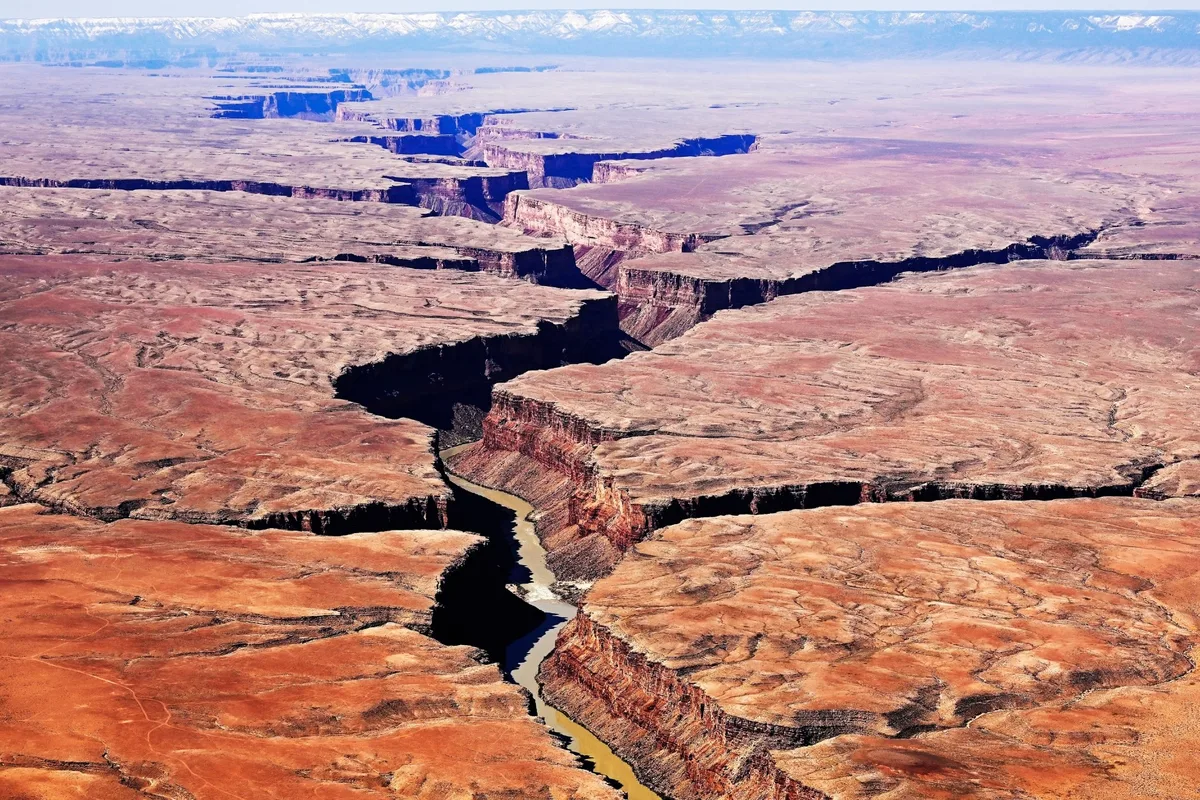
Famous for shaping the Grand Canyon, the Colorado River is one of North America’s most iconic waterways. However, it has not always flowed through the canyon, and scientists are still uncertain about when and how this connection first formed.
This question has long been debated by geologists, but a new study published last week in the journal Science may have finally offered an explanation. Led by the University of California’s John He, the research analyzed crystals found in sandstone samples and suggests that the river once flowed into an upstream lake before eventually carving its path into the Grand Canyon.
“In some ways, you could think of it as the birth of the Colorado River as we know it today,” said He, referring to the moment the river reached the Grand Canyon and evolved into a continent-spanning system.
“Rivers exist everywhere, but a river that transports water and sediment across an entire continent connects ecosystems across vast regions. The arrival of the Colorado River into the basin likely transformed the entire environment.”
Today, the Colorado River provides a vital water source for the American West, supporting more than 40 million people and over 150 threatened species in one of the driest regions on Earth.
It also serves as an important habitat for a wide range of wildlife, including endangered birds such as the Ridgway’s rail, as well as large mammals like moose, elk, bighorn sheep, and black bears.
Based on geological evidence, scientists know that the Colorado River existed in western Colorado around 11 million years ago. They also know it began flowing through the Grand Canyon about 5.6 million years ago, but its path during the intervening five million years has long remained unclear—until now.
New evidence suggests the river once collected just east of the Grand Canyon in an area that is now part of the Navajo Nation, forming what is known as the ancient Bidahochi Lake. Much of the lake’s sediment has since eroded, making it difficult to determine its original size at its peak. Scientists are also still unsure which rivers supplied it or what ultimately caused the lake to vanish.
To determine the origin of sediments in Bidahochi Lake, He and his team collected sandstone samples and analyzed them for zircons—tiny crystals that form as magma cools. Because zircons are extremely durable, they preserve a reliable geochemical record of the conditions in which they formed.
The researchers used a method called detrital zircon geochronology, which involves lasers or ion beams to measure uranium and lead isotope ratios in hundreds of zircon grains within a sample. This allows scientists to determine the crystals’ ages and, importantly, their geological sources. By doing so, they can trace where the sediments came from and estimate when they were deposited.
“Zircons are some of the oldest fragments of our Earth,” said He. “They’re like tiny time capsules, and by studying their age and geochemical signature, we can determine where river-transported sediments originally came from.
The results of He’s analysis showed that sediments deposited around 6.6 million years ago in Lake Bidahochi carried signatures that closely matched Colorado River deposits both upstream and downstream. Combined with ripple structures preserved in rock layers and fossils of large fish species typical of fast-flowing river systems, the evidence pointed to a strong river feeding into a standing body of water.
Taken together, these findings led He and his colleagues to conclude that the Colorado River once flowed into Bidahochi Lake before eventually overflowing, triggering its course into the Grand Canyon. The “lake spillover” hypothesis has long been debated, but this study provides important new support for it.
“I think there is something unique and disquieting when the planet’s history is laid out before our eyes, but we cannot fully read it,” said He. “We’ve always known the Grand Canyon is there, this solid towering wall of rock, but we’re learning more each day how it formed.”
Will Newton is a freelance science writer with a strong interest in prehistoric life, ranging from dinosaurs to Ice Age humans. He is also pursuing a PhD at the University of Manchester, where his research focuses on 400-million-year-old armored fish known as ostracoderms. He has contributed to publications including BBC Wildlife and BBC Science Focus, along with several other popular outlets. When he is not writing about ancient life, he can often be found tending to the many fish tanks that fill his home office.
About the Author