
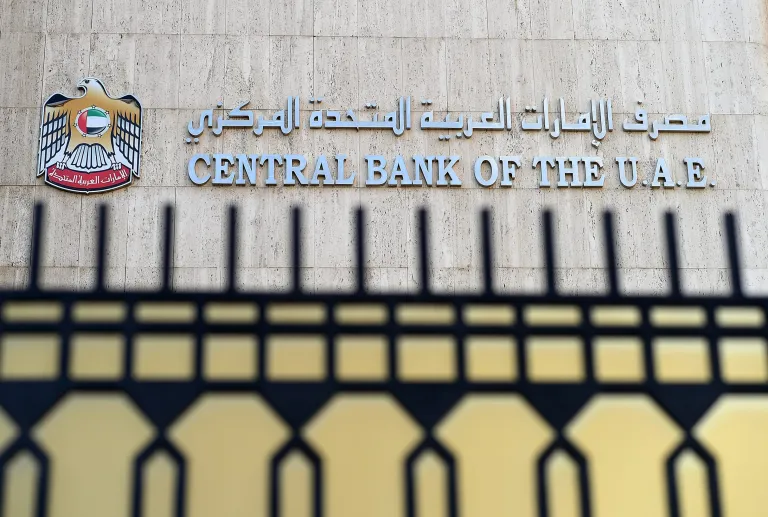
The UAE appears to be signaling that the dollar’s grip on global oil trade could weaken if the Iran war fallout intensifies.
According to the Wall Street Journal, the UAE’s central bank chief raised the idea of a currency-swap line with Treasury Department and Federal Reserve officials during meetings in Washington, D.C., last week.
To be sure, the UAE has plenty of money, including $270 billion in foreign-exchange reserves and trillions of dollars across its sovereign wealth funds.
While the UAE is not currently in crisis, the situation has been strained by Iran’s attacks on regional energy infrastructure and its closure of the Strait of Hormuz, which has disrupted oil exports and pressured dollar-based revenues.
If the conflict triggers a deeper economic slowdown, a currency swap line with the U.S. could give the UAE central bank access to low-cost dollars. This would help support the dirham—pegged to the U.S. currency—or bolster foreign exchange reserves if liquidity tightens, according to the report.
Officials also suggested that because the U.S. initiated the conflict, the UAE might have little choice but to use China’s yuan or other currencies for oil transactions if dollar supplies become constrained, sources told The Wall Street Journal. The central bank did not immediately respond to requests for comment.
Any move away from the dollar by a major oil exporter would pose a significant challenge to its global dominance. The dollar’s central role in oil markets dates back to 1974, when Saudi Arabia began pricing its exports in dollars—cementing the currency’s status in global trade.
Because oil underpins manufacturing and transportation worldwide, much of the global economy became dollar-based, further reinforcing its dominance in international payments.
However, analysts at Deutsche Bank warned that the Iran conflict could deepen existing cracks in the so-called petrodollar system. Damage to Gulf economies, they noted, could prompt a reduction in foreign asset holdings. They also flagged reports that access through the Strait of Hormuz might be exchanged for oil payments in yuan—an early sign of a potential shift toward a “petroyuan.”
Such a shift could have broader implications across global finance. The dollar’s status as the world’s reserve currency has long allowed the U.S. government to borrow at relatively low interest rates—an advantage sometimes described as its “exorbitant privilege.”
Still, not everyone is convinced the dollar’s dominance is under serious threat. Dan Alamariu, chief geopolitical strategist at Alpine Macro, argued that even if the conflict weakens U.S. influence in the region, Gulf nations like the UAE and Saudi Arabia have strong incentives to maintain close ties with Washington—especially given China’s relationship with Iran.
“The idea of a petroyuan or petroeuro replacing the dollar remains far-fetched,” he said.
Others point out that the dollar’s strength rests on deeper structural advantages. According to Paul Blustein of the Center for Strategic and International Studies, these include the size, liquidity, and openness of U.S. financial markets, as well as the ease of moving capital across its borders.
The dollar still accounts for a majority share of global foreign exchange reserves, trade invoicing, and international lending, he noted—benefiting from powerful network effects that reinforce its widespread use.
About the Author