

Donald Trump has suggested that talks aimed at ending the conflict involving Iran could resume later this week, following the collapse of negotiations over the weekend that led to a U.S. blockade of Iranian ports.
In an interview with the New York Post, Trump said, “You should stay there [Islamabad], really, because something could be happening over the next two days, and we’re more inclined to go there.”
His comments came as the U.S. military announced that American forces had “completely halted economic trade going into and out of Iran by sea” within the first 36 hours of the operation.
The ongoing standoff has raised uncertainty over a proposed two-week ceasefire set to expire next week.
Iran has not yet responded to Trump’s remarks, although United Nations Secretary-General António Guterres said it is “highly probable” that talks could restart.
Officials from the Gulf region, Pakistan, and Iran have also indicated that negotiating teams from Washington and Tehran may return to Pakistan later this week, though no official date has been confirmed, according to Reuters.
Meanwhile, hopes for renewed diplomacy have eased market concerns, with oil prices falling below $100 per barrel on Tuesday.
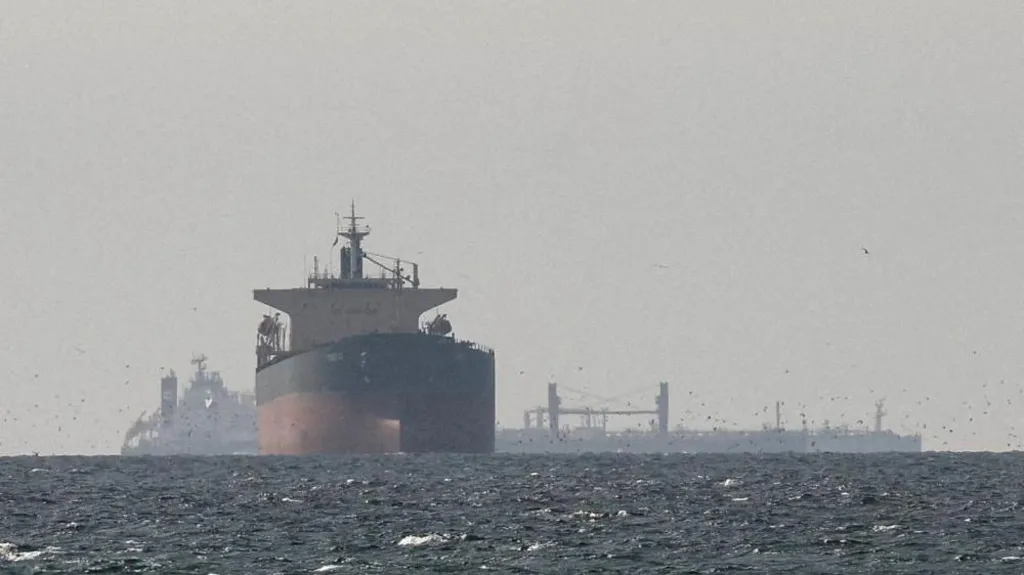
Iran has effectively shut down the Strait of Hormuz, a vital global route for oil and gas transport, following US and Israeli airstrikes on February 28.
More than a dozen US warships and around 10,000 US military personnel are now enforcing a blockade on vessels entering or leaving Iranian ports, significantly restricting the country’s key maritime trade routes.
The move is intended to increase pressure on Tehran by targeting two major sources of revenue: oil exports and tolls collected from ships passing through the strategic waterway.
US Central Command (Centcom), responsible for American military operations in the Middle East and parts of Central Asia, said on Tuesday that six merchant vessels had complied with orders from US forces to turn back to Iranian ports.
In a statement on Wednesday, Centcom commander Adm. Brad Cooper said: “A blockade of Iranian ports has been fully implemented as US forces maintain maritime superiority in the Middle East.”
He added that roughly 90% of Iran’s economy depends on maritime trade, and that within 36 hours of the blockade, US forces had effectively halted sea-based commercial traffic into and out of the country.
Ship-tracking data analysed by BBC Verify indicated that at least four Iran-linked vessels crossed the Strait of Hormuz despite the reported blockade.
According to the analysis, at least two of the ships had previously called at Iranian ports. The movements suggest that some traffic continued through the waterway even as restrictions were being enforced.
BBC Verify found that a further three vessels with no known links to Iran also crossed the Strait of Hormuz after the blockade began on Monday.
The initial round of high-level negotiations in Islamabad over the weekend ended without a deal, with the United States saying Iran had not accepted its proposed terms. A key sticking point in the talks was Iran’s nuclear programme.
According to a US official speaking to CBS News, Washington proposed a 20-year suspension of all uranium enrichment activities, while Tehran reportedly offered a five-year halt, according to sources cited by US media.
US Vice-President JD Vance, who led the negotiations in Islamabad, told a conservative event in Georgia that Iran appeared interested in reaching an agreement but warned that mutual mistrust remains a major obstacle.
“There is a lot of, of course, mistrust between Iran and the United States of America,” he said, adding that “you are not going to solve that problem overnight.”
As the International Monetary Fund warned the conflict could push the global economy toward recession, US Treasury Secretary Scott Bessent said a “small bit of economic pain” may be necessary for long-term global security.
China criticised the blockade as “dangerous and irresponsible,” warning it could worsen tensions and weaken the already fragile ceasefire.
Meanwhile, Israel and Lebanon have agreed to begin direct negotiations following talks in Washington, marking their first formal engagement since 1993. The discussions stem from Israeli strikes targeting Hezbollah in northern Lebanon.
A US official clarified that there is no connection between the Iran-US negotiations in Islamabad and the Israel-Lebanon talks in Washington.
About the Author