

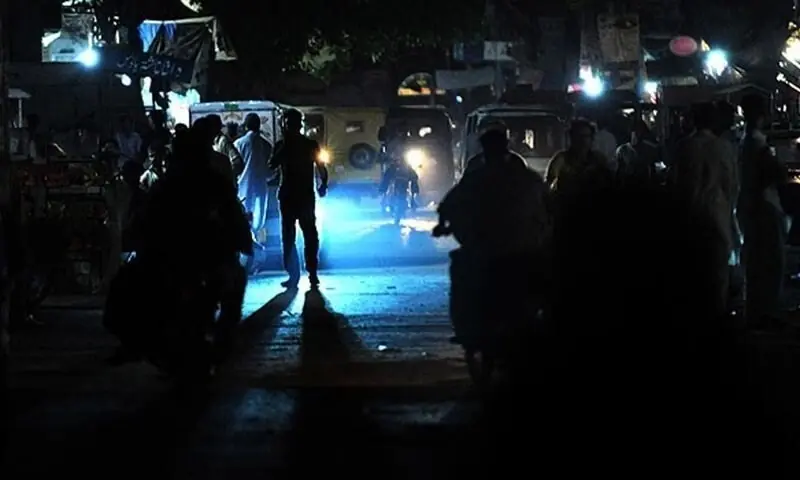
LAHORE: As the electricity shortfall continues to rise, forced load-shedding has increased significantly across Punjab, reaching up to eight hours in urban areas and between 12 to 16 hours in rural regions within the service areas of the Lahore Electric Supply Company (Lahore Electric Supply Company) and other districts.
The situation deteriorated from Monday evening when power distribution companies (DISCOs) in Lahore, nearby districts, and other cities began unannounced or forced load-shedding on an hourly basis, leaving residents without electricity for most of the period from 5pm Monday through Tuesday morning.
Meanwhile, several areas across Punjab are also experiencing gas load management, with reduced supply during cooking hours and persistently low gas pressure in tail-end regions.
“The whole night we couldn’t sleep due to the worst-ever load-shedding, which continued on an hourly basis. Tuesday was also another terrible day, as we faced prolonged power outages from morning to evening,” said Liaqat, a resident of Awan Town, while speaking to Dawn.
According to Shaukat, a resident of Township, load-shedding hours have reportedly increased significantly. “I am observing the situation daily. Last week, outages ranged between three and five hours, but now they have suddenly risen to around eight hours,” he said.
Similar complaints have been reported from several divisions and districts across Punjab, including Faisalabad, Gujranwala, Sialkot, Toba Tek Singh, Sahiwal, Kasur, Sheikhupura, Multan, Khanewal, Bahawalpur, Rahim Yar Khan, Muzaffargarh, and Dera Ghazi Khan—areas served by Lahore Electric Supply Company, Faisalabad Electric Supply Company, Gujranwala Electric Power Company, and Multan Electric Power Company.
When contacted, a spokesperson for LESCO acknowledged an increase in complaints regarding load-shedding but said the reports of eight-hour outages were not accurate. She explained that the situation is linked to limited gas supply to power plants and reduced operation of expensive oil-based generation units.
According to an official source in LESCO operations, electricity demand during peak hours on Tuesday reached 3,101MW, while the allocation was 2,300MW and actual supply stood at 2,280MW, resulting in a shortfall of about 820MW.
“On Monday, the allocation stood at 2,249MW against a demand of 2,870MW. The power drawn was 2,241MW, resulting in a shortfall of 629MW for Lahore Electric Supply Company,” he maintained.
The CEO of LESCO, Muhammad Ramzan Butt, was not available for comment despite repeated attempts by this reporter.
Gas load-shedding
Meanwhile, several parts of Punjab, including Lahore, are also experiencing gas load-shedding, with reduced supply during peak cooking hours such as breakfast, lunch, and dinner. Conditions are particularly difficult in tail-end areas, where consumers report extremely low gas pressure during meal preparation times.
“Earlier, gas was available for three to four hours each during morning, afternoon, and evening timings. Now, we are getting gas for barely two hours during cooking hours,” said a resident of Gulberg. He added that in several nearby areas where his relatives live, gas pressure is either very low or completely unavailable during peak hours due to the tail-end supply issue.
However, an official source in the petroleum division rejected these concerns, stating that Sui Northern Gas Pipelines Limited is supplying gas for around eight hours daily. The source added that by Wednesday, around 90MMCFD of gas supply was expected to resume from Khyber Pakhtunkhwa after a major pipeline was damaged by heavy rains last week.
He further noted that current domestic demand in both Punjab and KP is around 400MMCFD, which remains normal for the ongoing summer season.
About the Author