
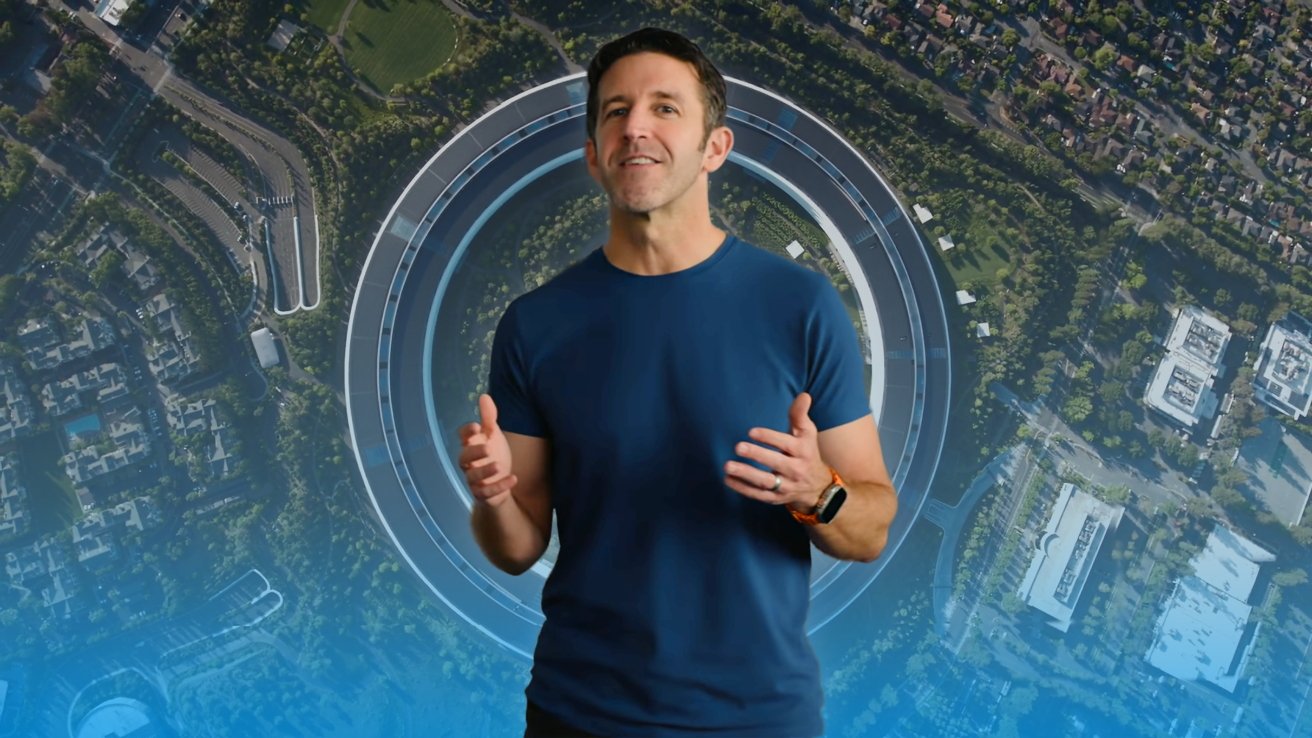
John Ternus had long been seen as a leading contender to become Apple’s next CEO—and those expectations have now been confirmed. But who is he, and how did he reach this position?
Like many major global companies with decades of history, Apple plans carefully for its future leadership. A key part of that process involves identifying a successor well in advance and preparing both the individual and the organization for a smooth transition.
For Apple, that meant finding a successor to Tim Cook. While Cook was not expected to step down in 2026, the company’s scale and complexity required early planning to ensure a seamless handover and give the next leader time to prepare.
That successor is John Ternus, Apple’s Senior Vice President of Hardware Engineering. After months of speculation naming him as a top internal candidate, Apple officially confirmed on April 20 that he will take over from Cook.
Early career
Compared to many top tech executives, Ternus followed a relatively straightforward path to Apple. His professional background is notably concise, with just one academic qualification and two roles listed—one of them being his long-standing position at Apple.
A California native, Ternus graduated from the University of Pennsylvania in 1997 with a bachelor’s degree in Mechanical Engineering, where he also competed on the varsity swim team.
For his senior project, he developed a mechanical feeding arm designed to assist quadriplegics and individuals with limited mobility, allowing them to control the device through head movements. The project reflected an early focus on human-centered engineering—an approach that aligns with some of Apple’s experimental concepts, such as robotic smart home devices and expressive machine learning prototypes.
After graduating, Ternus began his career at Virtual Research Systems, where he worked as a mechanical engineer. At the startup, he focused on developing headsets and accessories in the emerging field of virtual reality.
Much like his university project, Ternus’s early experience likely proved valuable later at Apple—particularly with products like the Apple Vision Pro and the long-rumoured Apple Glass smart eyewear.
His time at Virtual Research Systems was relatively brief. Within four years of graduating, he joined Apple in 2001.
Rise within Apple
Ternus entered Apple as part of the product design team, where his early work included contributions to the highly regarded Apple Cinema Display. It didn’t take long for him to move up the ranks, becoming a team manager roughly three years after joining the company.
According to Steve Siefert, his first manager at Apple, Ternus made a deliberate effort to remain closely connected with his team rather than adopting a top-down leadership style. When given the option of a private office, he chose instead to sit alongside his team in an open workspace to stay engaged and motivated.
This approach remained consistent throughout his career. Even after Siefert retired in 2011 and Ternus was offered his office, he opted to continue working in the shared team environment rather than move into a private space.
His rise through Apple continued in 2005, when he led a hardware engineering team working on the G5-era iMac lineup.
Around the same period, Ternus spent significant time working closely with suppliers and manufacturing partners across Asia. This experience gave him valuable insight into large-scale production and the challenges involved in turning Apple’s ambitious designs into finished products.
A major step forward came in 2013, when he was promoted to Vice President of Hardware Engineering, working under Dan Riccio, then Apple’s head of hardware. In this expanded role, Ternus took on greater responsibility, overseeing not just the Mac team but also the iPad division.
Although he formally managed the iPad group for several years, his involvement with the product line dated back much further. Apple’s leadership profile notes that he contributed to every generation of the iPad since its inception.
According to a March 2026 Bloomberg profile, Ternus also played a key role in the development of iPadOS. He reportedly believed the iPad was not fully utilising its hardware potential due to iOS limitations, particularly on larger displays and more powerful chips. This perspective helped convince software chief Craig Federighi to develop a dedicated iPad operating system, introducing features such as enhanced multitasking, along with deeper Apple Pencil integration and improved magnetic charging and pairing systems.
Beyond the iPad, Ternus contributed to several major Apple products, including the iPhone 12 and the AirPods lineup. He also influenced the introduction of LiDAR sensors in iPhone Pro models. According to a New York Times profile, he suggested limiting the relatively costly $40 component to Pro devices, targeting users more likely to appreciate advanced technology.
This willingness to advocate for unconventional but practical ideas has been a recurring theme in his career. During the G5 iMac era, for example, he supported the use of magnets to secure the glass display, helping persuade initially sceptical team members.
Ternus also played a central role in Apple’s transition from Intel processors to Apple Silicon. He was a visible figure during keynotes announcing the shift and participated in follow-up interviews explaining the change.
Becoming hardware chief
In January 2021, Apple announced a major executive reshuffle affecting its hardware division, directly impacting Ternus’s career trajectory. Dan Riccio stepped down as Senior Vice President of Hardware Engineering to take on a new role as Vice President of Engineering for a then-unnamed “new project.”
The move created a significant leadership gap, and Ternus was chosen to step into it. He was appointed Senior Vice President of Hardware Engineering, with Apple updating its Leadership page in April of the same year to reflect his new role.
In this position, he oversees all of Apple’s hardware engineering efforts, reporting directly to CEO Tim Cook.
His responsibilities expanded well beyond his existing oversight of the Mac, iPad, and AirPods teams, now also including the crucial iPhone hardware division.
Occasional challenges
Despite his strong track record, not every decision linked to Ternus has been a success. Over the years, some initiatives under his influence faced criticism or were later reversed.
He was reportedly a key supporter of the MacBook Pro Touch Bar, an idea that some sources later described as being driven more by marketing appeal than long-term practicality, and which Apple eventually phased out.
He was also associated with the controversial Butterfly Keyboard design, which drew widespread user complaints and ultimately led to repair programs and legal action.
These setbacks, combined with Apple’s broader shift toward cost efficiency under Tim Cook, are said to have created some tension with the Industrial Design team. Reports suggest that before Riccio’s departure, some designers even preferred Tang Tan as a potential successor for that leadership role.
Regarding the HomePod, Ternus was reportedly against adding a built-in camera due to concerns over increased development costs. He has also been partly credited with acknowledging Apple’s slower progress in the smart speaker space and is now said to be pushing new home-focused products to help close the gap.
Although known for a generally approachable and collaborative leadership style, there have been moments where Ternus has taken a different approach.
One notable example involves the Apple Vision Pro project, where a technical issue was discovered that prevented low-latency audio streaming to AirPods Pro—an important part of the original consumer experience pitch. The workaround reportedly involved shipping an updated AirPods Pro model in late 2023, just ahead of the Vision Pro launch.
The situation also raised internal concerns, as Ternus was said to have focused on identifying responsibility rather than immediately resolving the issue, leading to some friction within teams. However, later reporting suggested this was an unusual departure from his typically more collaborative management style.
Becoming more public-facing
After his promotion to Senior Vice President, Ternus became increasingly visible in Apple’s public communications. As the primary face of the company’s hardware division, he took on a more prominent media role, participating in interviews and product launches.
One of his early appearances in this expanded role came during the promotion of the iPad Pro powered by the M1 chip. He emphasized that the device used the same class of Apple Silicon found in Macs, stating that “iPad Pro has always had the best Apple Silicon we make.”
He later described Center Stage as one of his favourite features to develop, highlighting how it “marries the hardware and software right.” He also credited the broader engineering team, saying, “That’s a lot of talented, creative people coming together and trying to find the thing that makes it Apple-like.”
In another interview around the same period, he reiterated Apple’s position that the iPad and Mac would remain distinct product lines rather than merging. He dismissed speculation about convergence, stating that Apple was not going to get “caught up” in theories and was instead focused on making the best possible Mac and iPad separately.
Later that year, he also addressed questions about the MacBook Pro, confirming that Apple would not introduce a touchscreen Mac. “We make the world’s best touch computer on an iPad,” he said, adding that it is “optimized for that.”
When EU regulations on batteries and electronic waste came into focus in 2023, Ternus again publicly clarified Apple’s stance, distancing the company from suggestions it might adopt removable iPhone back panels. While carefully phrased, his comments reinforced Apple’s preference for sealed-device designs over user-replaceable components. He argued that although modular parts can improve repairability, they may also introduce “a potential point of failure.”
A few months later, in a television interview discussing Apple Silicon, he praised the transition as if “the laws of physics had changed,” referring to the ability to deliver MacBook Air designs with extremely thin profiles, up to 18 hours of battery life, and performance comparable to MacBook Pro machines.
He later appeared alongside Johny Srouji, Apple’s Senior Vice President of Hardware Technologies, discussing the company’s shift to Apple Silicon. Ternus explained that the transition was driven by Apple’s desire to move away from the limitations of relying on third-party technologies. He described in-house development as one of the most significant changes in Apple’s approach over the past two decades.
In mid-2024, he returned to public discussion to address Apple’s expanded self-repair program and the use of parts pairing. The system allows genuine second-hand components to be used in repairs while preventing parts taken from stolen devices from being reused.
Ternus argued that “parts pairing” is often misunderstood and unfairly portrayed as blocking third-party repairs. He maintained that the system is not intended to be restrictive, but rather to ensure component authenticity and maintain product quality. He also described parts pairing as “not evil,” but a method for Apple to verify which modules are installed in its devices.
Responding to evolving regulations, he noted that Apple is working to make its products “more repairable,” while also cautioning that “repairability in isolation is not always the best answer.” He added:
“The reality is repairability is a means to an end. The goal is to build products that last, and if you focus too much on [making every part repairable], you end up creating some unintended consequences that are worse for the consumer and worse for the planet.”
A month later, Ternus again spoke publicly about Apple’s durability testing and design philosophy, and also appeared during an Apple event presentation, where he highlighted the iPad while performing a staged segment inside a mock train carriage.
An expanded remit
Although he has served as Senior Vice President of Hardware Engineering for several years, Ternus’s responsibilities have not remained static. Beyond promoting Apple’s hardware roadmap and product engineering efforts, his scope has continued to expand.
In April 2025, his remit grew further following internal restructuring linked to delays and criticism surrounding Apple Intelligence. The rollout challenges prompted a reorganisation of Apple’s AI and Machine Learning leadership structure.
As part of this shift, John Giannandrea was moved away from Siri leadership in favour of Mike Rockwell, head of Apple Vision Pro. Additionally, Apple’s robotics team—previously under Giannandrea—was transferred to the hardware division.
While these changes have not yet had major public-facing consequences, largely because Apple’s robotics projects remain in development, they are expected to influence future products. This includes experimental concepts such as robotic smart home devices, which have been linked to Apple’s ongoing research efforts.
In January 2026, John Ternus’s responsibilities at Apple expanded further, albeit in a relatively low-profile manner. Design leadership duties previously overseen by former COO Jeff Williams were quietly transitioned to Ternus at the direction of Tim Cook.
However, he was not formally appointed as the head of design in the same way as former Chief Design Officer Jony Ive. Instead, Ternus took on the role of “executive sponsor” for design, while the teams themselves continued to report directly to Cook.
In practice, this meant he became involved in design discussions at the executive level, bridging conversations across both hardware and software divisions.
The change attracted limited public attention, largely due to Apple’s preference for keeping internal leadership shifts discreet. Nevertheless, industry observers interpreted the move as another sign of Ternus’s rising influence within the company and a potential indicator of his suitability for future CEO consideration.
Despite Apple’s efforts to downplay the adjustment, reports continued to circulate identifying Ternus as a leading candidate to eventually succeed Tim Cook.
A strong succession candidate
When it comes to CEO succession planning, major companies typically look to senior executives at the top of the leadership structure. Apple follows a similar pattern, but additional factors also play an important role.
One key consideration is age and long-term tenure potential. With Tim Cook having served more than 14 years as CEO, and Steve Jobs previously holding the role for over a decade, Apple leadership transitions tend to span long periods.
At 50 years old, Ternus is considered well-positioned in this regard, with potentially more than a decade of leadership ahead of him before typical retirement age. In contrast, other senior Apple executives are closer to retirement, making them less likely to serve long-term CEO tenures.
There is also the issue of public visibility, an important factor for a role as prominent as Apple CEO. Apple appears to have addressed this over time by increasing Ternus’s presence at major product events.
While he may not yet match the on-stage charisma of software chief Craig Federighi, Ternus has become increasingly visible and comfortable in public-facing roles.
His background also suggests a possible shift in leadership focus for Apple. Steve Jobs was known for prioritising design, while Tim Cook strengthened Apple’s global supply chain and operational efficiency, helping scale the company into a tech giant.
In contrast, a Ternus-led Apple could place greater emphasis on hardware engineering and technological innovation, building on his deep experience in product development. With Apple’s design and manufacturing foundations already well established, this approach could drive the next generation of product evolution.
Internally, Ternus is also widely regarded as a strong candidate, with support among senior leadership who view him as a natural successor.
He is additionally seen as an effective communicator who empowers teams, a leadership trait that aligns closely with Cook’s management style.
As with any company of Apple’s scale, succession planning requires long-term preparation. Cook is believed to have prioritised naming a successor early enough to ensure a smooth transition without disrupting the company’s stability.
As things stand, Ternus is positioned as the likely next CEO, with the opportunity to remain in the role long enough to fully shape Apple’s next chapter.
For companies like Apple, when a Vice President or Senior Vice President is assigned to oversee a team, it typically means they control that team’s budget and have significant influence over hiring, research and development, and overall product direction. In practice, if the design team reports to Ternus, he would likely be responsible for approving resources, managing priorities, and overseeing the work output of that group.
At Apple, Product Marketing is also a highly influential role. Greg Joswiak, for example, plays a major part in shaping which products are launched, what features they include, and how they are positioned in the market. While marketing does include advertising, at Apple it is more broadly focused on defining products and how they fit into the wider ecosystem. Joswiak tends to maintain a relatively low public profile, often appearing in interviews alongside Craig Federighi, where he plays a more reserved but steady role. He also has influence over major product decisions, including features such as iPadOS multitasking.
Another important but less visible layer is Apple’s security organization. Security teams have the authority to block or challenge features if they identify potential vulnerabilities in either hardware or software. Unlike other divisions, there is no single Senior Vice President of Security; instead, security specialists are distributed across multiple teams, integrating their oversight throughout the company’s product development process.
About the Author