

Lucas Ye from California was “really surprised and very happy” as his mascot, designed to serve as a zero-gravity indicator, prepared to soar aboard a NASA rocket.
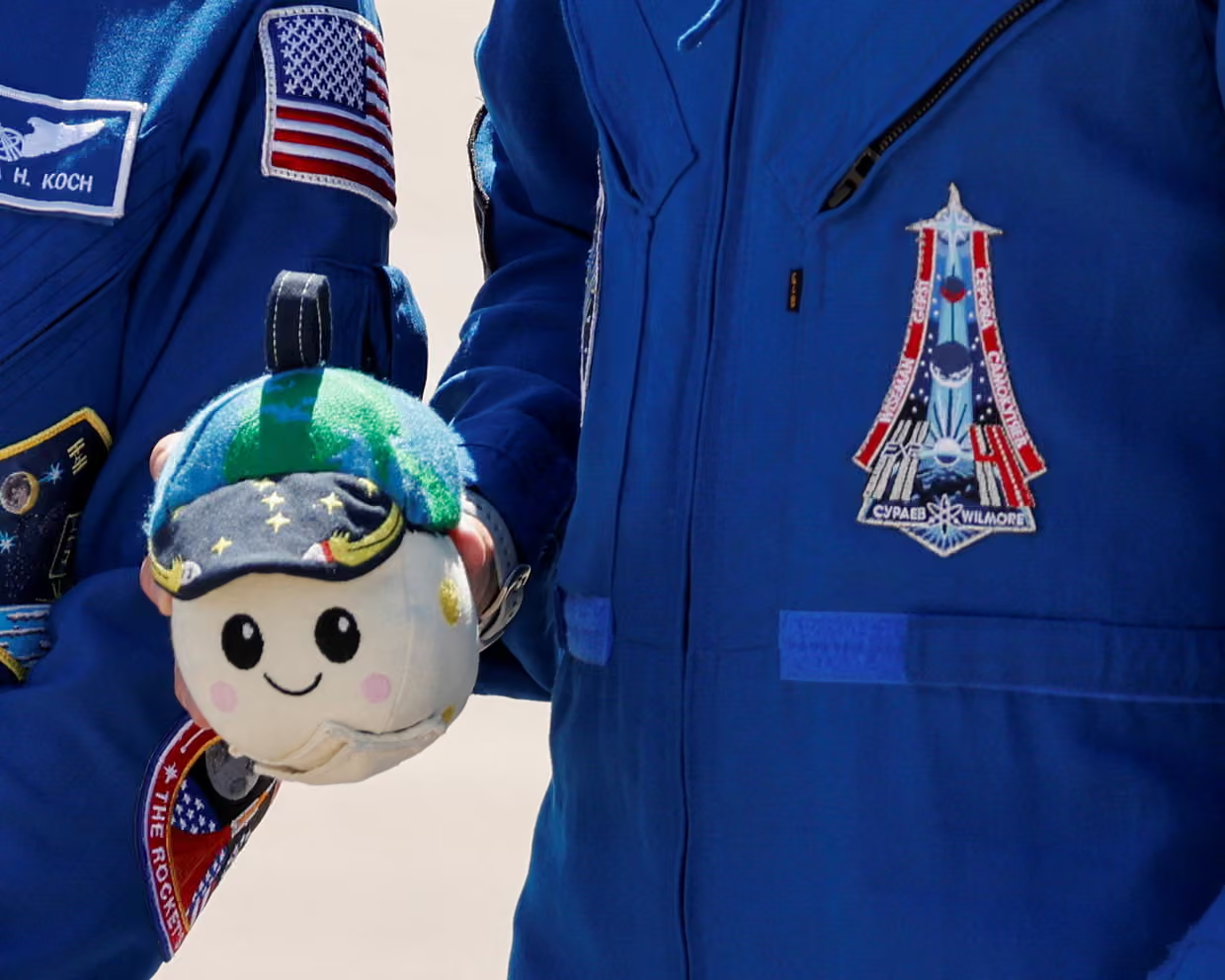
A smiley-faced plush toy designed by a San Francisco Bay Area second-grader is now aboard Artemis II, NASA’s first crewed lunar mission in more than 50 years. The zero-gravity indicator was created to float when the rocket reaches weightlessness, signaling to the astronauts that they are officially in space.
Eight-year-old Lucas Ye from Mountain View, an avid space fan, is the mastermind behind the toy. “I like rockets, I like NASA, I like the solar system, I like studying about space,” Lucas said in a video when his design made the shortlist for the global “moon mascot” competition organized by NASA and Freelancer, a crowdsourcing platform. Lucas was chosen from over 2,600 entries.
Trisha Epp, director of innovation at Freelancer, congratulated him in a news release last week: “Your design is literally going to space, which is not a sentence most people get to say.”
Lucas’s plushie, named Rise, wears a baseball cap with a star-spangled visor and a crown patterned after Earth’s blue and green surface. Parts of the design pay tribute to the Apollo 11 moon landing in 1969, while its name references the famous Earthrise photo taken by Apollo 8 astronaut William Anders in 1968.
The young designer dreams of working at NASA or becoming an astrophysicist, he told CBS News Bay Area. Hours before launch, Lucas described his feelings about seeing his creation in space: “Really, really, really, really, really, really, really surprised and very happy.”
Rise continues the tradition of zero-gravity indicators in space missions. In 1961, Yuri Gagarin, the first human in space, brought a doll with him, and in 2014, NASA astronaut Reid Wiseman — also commander of Artemis II — took a toy giraffe aboard his mission.
If Artemis II succeeds, Rise will travel more than 250,000 miles over 10 days. The mission, NASA’s first human journey toward the moon in nearly 54 years, will not land on the lunar surface but will take the crew farther from Earth than any humans in history.
The expedition also features historic milestones: astronaut Christina Koch becomes the first woman, and Victor Glover the first person of color, to fly between Earth orbit and the moon. The mission will monitor astronauts’ health and inform Artemis IV, scheduled in 2028 to return humans to the lunar surface. Donald Trump has emphasized a lunar landing by the end of his second term as a priority.
About the Author