

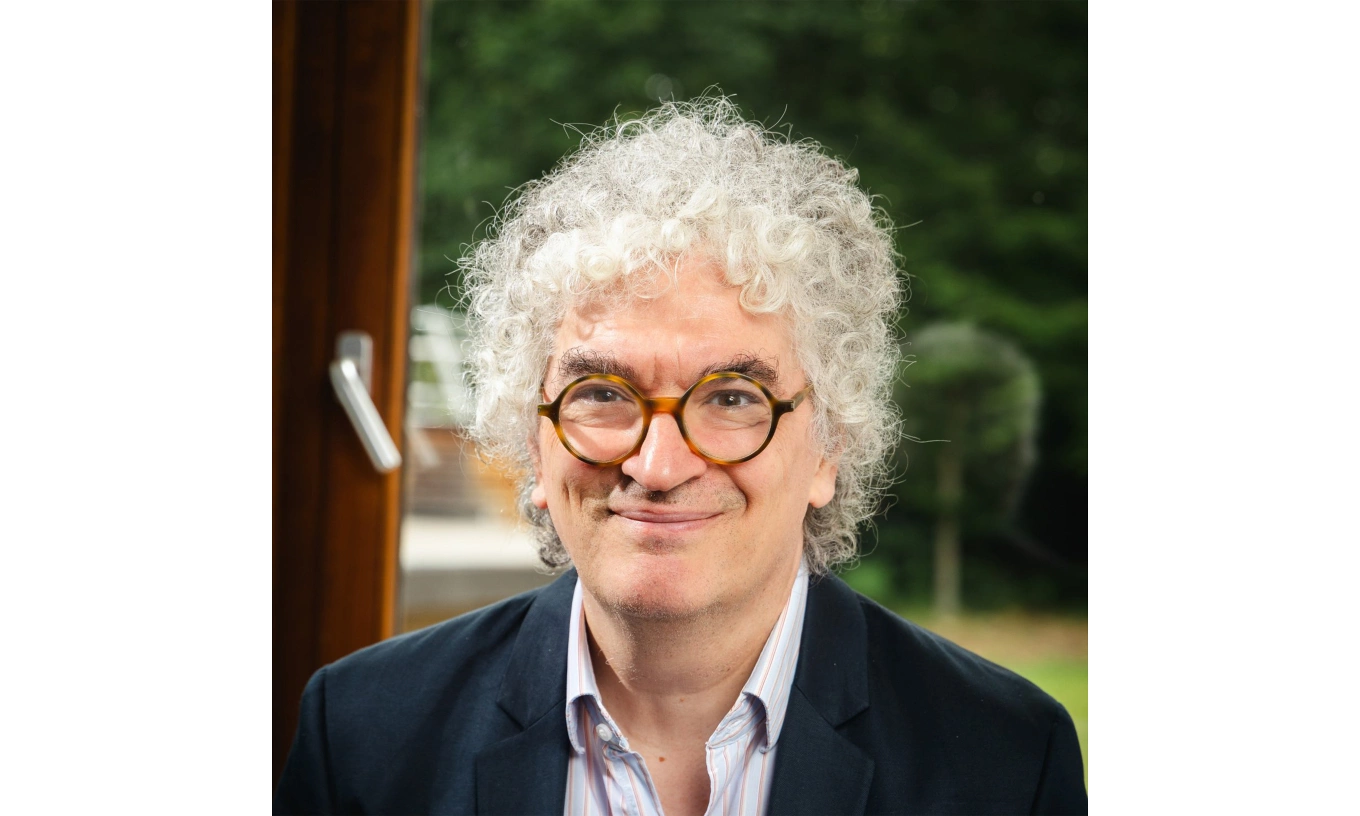
By demonstrating that systems once thought to remain stable can actually “blow up” to infinity, Professor Frank Merle has been awarded the Breakthrough Prize in Mathematics, which includes a $3 million prize.
The Breakthrough Prize Foundation, often called the “Oscars of Science,” announced its 2026 winners on April 19.
“It came as a shock—it took me some time to recover. It’s a great honor,” the 64-year-old mathematician told Scientific American.
Merle was honored for his groundbreaking contributions to the study of “nonlinear evolution equations,” mathematical models used to describe how systems such as waves, fluids like air and water, and other dynamic processes evolve over time.
According to the Breakthrough Prize Foundation, one of his most important achievements is his work on the nonlinear Schrödinger equation from quantum physics. In earlier research, he fully classified all possible ways solutions to this equation can “blow up,” meaning become unbounded.
He later made a surprising discovery by showing that even the “defocusing” version of the equation—long assumed to be stable—can also experience finite-time blow-up. This unexpected result relied on a novel connection to fluid dynamics and contributed to resolving a major open question involving smooth solutions to the compressible Euler and Navier–Stokes equations, where density and velocity can become infinite, signaling a breakdown of the fluid model.
Despite the significance of the $3 million award, Merle noted that he was especially motivated by overcoming early skepticism about his approach. Many initially doubted it would produce meaningful results.
“When I found this new way of seeing these problems, most people were not convinced that I could produce something interesting. Then one problem fell and then another one, so of course now there’s a lot of recognition of all this work,” he told Scientific American.
Across his career, Merle’s research has reshaped fundamental assumptions in mathematics, building deep links between mathematics and physics and opening new pathways for tackling long-standing unsolved problems.
In related work on the “soliton resolution conjecture,” which suggests that wave disturbances eventually break down into stable structures, Merle and collaborators developed powerful analytical tools such as the channels of energy method combined with concentration compactness techniques, according to the Breakthrough Prize Foundation.
He has also contributed to understanding how singularities form in Korteweg–de Vries (KdV-type) equations, which model phenomena ranging from shallow water waves to extreme ocean events like rogue waves.
Merle is currently a professor of analysis at the Institute of Advanced Scientific Studies and also teaches at CY Cergy Paris University. He completed his PhD at Pierre and Marie Curie University, worked at the Courant Institute of Mathematical Sciences, and has received several major honors, including a plenary lecture at the 2014 International Congress of Mathematicians and the Clay Research Award in 2023.
The Breakthrough Prize, established in 2012, recognizes achievements in mathematics, fundamental physics, and life sciences, aiming to honor scientists, inspire future researchers, and promote global scientific progress. It was founded by scientists and entrepreneurs including physicist Yuri Milner and Mark Zuckerberg.
Alongside the main awards, the foundation also presents the New Horizons Prize and the Maryam Mirzakhani New Frontiers Prize for early-career researchers, with awards ranging from $50,000 to $100,000.
Today, the Breakthrough Prizes rank among the most valuable scientific honors in the world, with total prize funding reaching $18.75 million this year. The Breakthrough Prize in Mathematics is especially notable, offering a $3 million award—more than twice the value of a Nobel Prize and far exceeding traditional honors such as the Fields Medal, often called the “Nobel Prize of Mathematics,” which carries a much smaller monetary award.
About the Author