
Karachi’s University Road BRT Project Hit by Fresh Delays Amid Contractor Disputes
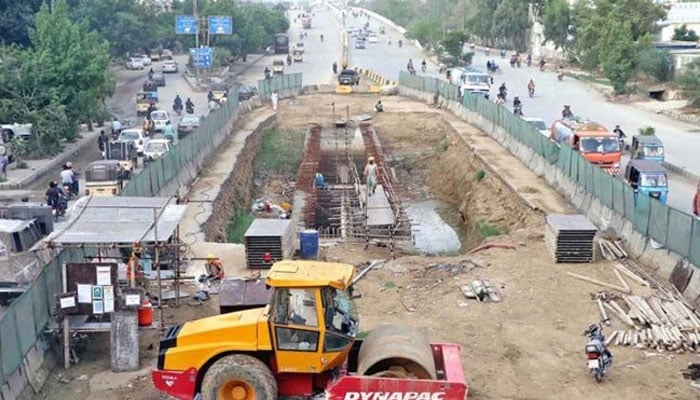
Work on Karachi’s University Road Bus Rapid Transit (BRT) Red Line continues to face major delays, with large sections still showing little to no visible progress even as the project approaches its fourth year.
Initially launched in 2022 with a planned completion timeline of 30 months, the project was expected to be finished by June 2024. However, in 2026, the deadline has already been missed, with multiple extensions granted and no clear completion date announced so far.
The most serious concerns have emerged from Lot 2 of the project, stretching from Mausamiyat to Numaish and covering a large portion of University Road, Geo News reported. This section was awarded to a joint venture between a local contractor and a Chinese firm.
Although the Chinese partner has a strong track record, on-ground execution has largely been carried out by the local contractor, who reportedly lacks experience with projects of this scale.
Officials say most of the delays are linked to the contractor’s performance. In contrast, work on Lot 1, including areas near Race Course, is progressing relatively better, though still behind schedule.
A major reason for the slowdown is an ongoing financial dispute between the contractor and the Sindh government. Last year, the contractor approached the court, after which payments exceeding Rs1.5 billion were released. However, tensions have since resurfaced, with the contractor demanding additional funds while the government maintains that work should proceed within already disbursed payments.
Sources say this deadlock has once again brought work on Lot 2 almost to a standstill. While labourers are present at some sites, machinery is largely missing and construction activity remains minimal. In several key stretches—including Peoples Chowrangi, Hasan Square, and up to NIPA—there is little to no active work despite their importance to the project.
Even where labour is visible, such as near Mausamiyat, progress remains slow and far below required levels to meet any meaningful deadline. In some areas, the activity appears limited and symbolic, with no significant advancement on the ground.
The situation has also drawn the attention of the Asian Development Bank (ADB), which is involved in the project. An ADB delegation visiting Karachi has reportedly expressed concern over the slow pace of work during discussions with officials.
Government sources say frustration is also growing over the contractor’s performance, and the possibility of contract termination is being considered, although no final decision has been made and talks are still ongoing.
Public frustration is further fueled by recurring issues such as water accumulation on the road, which turns parts of the construction zone into flooded patches after rainfall or leakage, making commuting even more difficult.
Until the financial dispute is resolved and full-scale construction resumes—especially with machinery deployed across multiple sites—officials fear the project will continue missing deadlines.
The prolonged delays have not only disrupted one of Karachi’s busiest corridors but have also drawn widespread criticism, turning the project into a symbol of stalled infrastructure development in the city.
About the Author